TRANSATLANTIC CABLES · IRISH WATERS
75%
US MULTINATIONALS IN IRELAND
850
EU DEFENCE SPEND / GDP
LOWEST
IRISH SUBMARINES
0
About 75 percent of transatlantic subsea cables pass through or near Irish waters, making Ireland a bottleneck for the digital economy connecting North America and Europe. These cables carry nearly all intercontinental data — messages, calls, and trillions of dollars in daily financial transactions. Ireland is also home to 850 US multinational operations, many running major data centres for Google, Microsoft, and Meta. The concentration is extraordinary; the defence posture protecting it is not.
Extraction Map
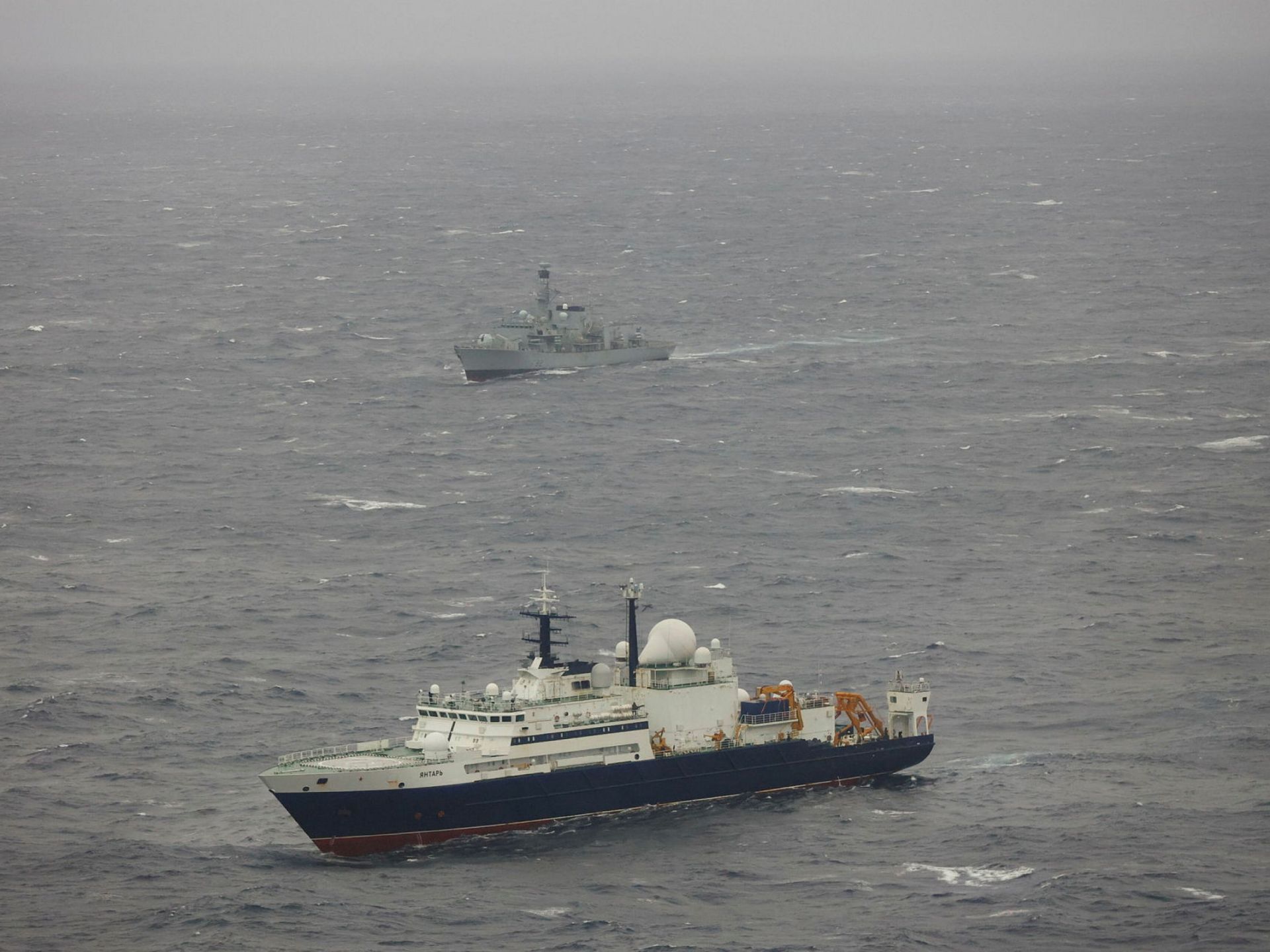
Ireland has the lowest defence spending as a share of GDP in the EU. Its navy has no submarines. The country is militarily neutral and outside NATO. Senator Tom Clonan described Ireland as "absolutely Europe's weakest link when it comes to defence in the air, maritime, ground and cyber domains," attributing the gap to a 30-year peace dividend following the Northern Ireland peace agreement and the broader European drawdown after the Berlin Wall. The threat is not theoretical. In November 2024, the Russian vessel Yantar — officially an oceanographic research ship, classified by the UK Ministry of Defence as a spy ship — was monitored near undersea infrastructure in the Irish Sea before the Irish Navy escorted it from Ireland's exclusive economic zone. Two months later, the UK said Yantar had been "caught loitering over critical undersea infrastructure in UK waters." In late 2025, the British government accused the vessel of directing lasers at RAF pilots monitoring its movements in the North Sea. The Baltic offers a preview of escalation. In December 2024, a tanker suspected of belonging to Russia's shadow fleet was investigated after power and telecoms cables were damaged in the Gulf of Finland. A year later, a cargo ship sailing from St Petersburg under the flag of St Vincent and the Grenadines damaged telecommunications cables between Finland and Estonia. A Finnish court convicted its Russian captain and Azerbaijani boatswain of aggravated sabotage; both denied wrongdoing and the conviction is appealable. Defence Minister Helen McEntee flagged the shadow fleet as a priority threat in March, and the government has expanded naval boarding and inspection powers. Moscow disputes the term "shadow fleet" as a political fabrication. But the ageing, often uninsured tankers used to circumvent Western sanctions on Russian oil pose dual risks in Irish waters: accidental damage from poorly maintained vessels and deliberate interference with undersea infrastructure. Former ambassador to the US Daniel Mulhall framed the stakes in economic terms: Ireland's position in the Western digital economy means any cyber or physical threat to subsea infrastructure could hit Ireland even if it is not the prime target. "They're the bloodstream of our economy," he said. "And if that bloodstream is interfered with, the economy will have serious trouble." He argued protection requires international cooperation, acknowledging that no single country can guarantee cable safety. The structural problem is plain: Ireland has accumulated enormous strategic value — digital infrastructure, tech multinationals, cable routing — without building the defensive capacity that strategic value demands. The mismatch between what passes through Irish waters and what Ireland can do to protect it is the central vulnerability, and closing that gap will require either a dramatic increase in Irish defence spending, deeper security partnerships despite neutrality, or both.
Worth reading?
SKIP
Score
28
/100
Extractive — decades of peace dividend produced a fragile chokepoint where 75% of transatlantic data flows through the EU's least-defended maritime zone, concentrating risk on the public while benefits flowed to tech multinationals and government budgets spared from defence spending.
What Is GRIN?
GRIN stands for Generativity, Resilience, Innovation efficiency, and Novelty openness. These four dimensions capture the essential characteristics of any memetic intelligence — whether a nation, a corporation, a religion, or a movement.
About GRINGenerativity
1/5
Resilience
1/5
Efficiency
1/5
Novelty
2/5
Extractive
3/5
Inverted
Does this create new capability or just redistribute existing value?
No new capability created. Ireland accumulated strategic value passively through geography and tax policy, not by building generative infrastructure or defence capacity to match.
Verified Facts (9)
About 75 percent of transatlantic subsea cables pass through or near Irish waters, according to the Irish government
Ireland has the lowest defence spending as a share of gross domestic product (GDP) in the EU
In November 2024, the Russian ship Yantar was monitored near undersea infrastructure in the Irish Sea before being escorted out of Ireland's exclusive economic zone by the Irish Navy
In late 2025, the British government accused Yantar of directing lasers at Royal Air Force (RAF) pilots monitoring its movements in the North Sea
In December 2024, a tanker suspected of belonging to Russia's shadow fleet was investigated after power and telecoms cables were damaged in the Gulf of Finland
In December 2025, a cargo ship sailing from St Petersburg under the flag of St Vincent and the Grenadines damaged telecommunications cables between Finland and Estonia
A Finnish court convicted its Russian captain and Azerbaijani boatswain of aggravated sabotage
850 US multinationals that have operations in Ireland
Senator Tom Clonan described Ireland as 'absolutely Europe's weakest link when it comes to defence in the air, maritime, ground and cyber domains'
More latest news
Read all