OLYMPIC GOLDS
2
TOTAL MEDALS
4
AGE AT SWITCH
29
TARGET · LA GAMES
2028
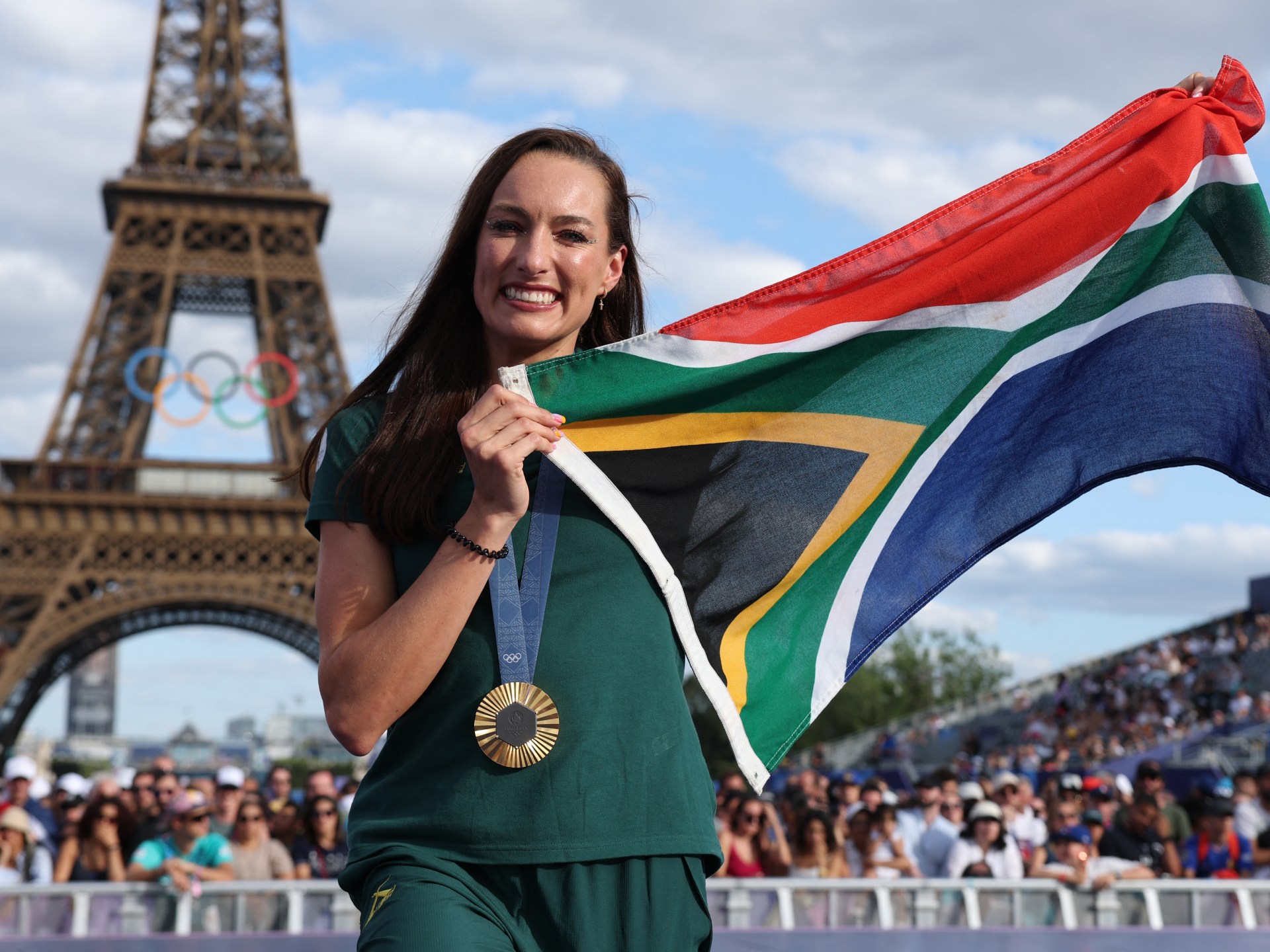
Tatjana Smith, South Africa's most decorated Olympian with two golds and two silvers across Tokyo and Paris, announced Tuesday she will compete for the Netherlands at the 2028 Los Angeles Olympics. The 29-year-old, who holds dual citizenship, cited "financial and practical challenges" and the need for "greater high performance support" — diplomatic language for a system that produces champions but cannot keep them.
Extraction Map
Smith's tearful Instagram video was carefully worded but structurally damning. She acknowledged the decision "may disappoint or break the hearts" of South African supporters, but framed it as a matter of career sustainability. "Athletes need a system in which they can thrive and not just survive," she said — a line that doubles as an indictment of Swimming South Africa's funding model. The pattern is familiar across developing and middle-income nations. Athletes emerge through individual talent and private sacrifice, win on the world stage, and then discover that the system that claimed credit for their success offers no durable career infrastructure. South Africa's sports funding apparatus prioritizes team sports — rugby, cricket — with swimming occupying a structural afterthought. Smith will continue training in South Africa, meaning the Dutch federation gains a Paris gold medallist's competitive output while South Africa retains the training costs. Smith won the 100-metre breaststroke gold at the 2024 Paris Olympics and, competing as Tatjana Schoenmaker, the 200-metre breaststroke gold at the 2021 Tokyo Games. She also claimed silver in the 100-metre breaststroke at Tokyo and the 200-metre breaststroke in Paris. She retired after Paris but announced a comeback two months ago. Fellow South African swimmer Chad le Clos also holds four Olympic medals but only one gold, making Smith's departure the loss of a singular asset. The Netherlands gains a proven world-class competitor at minimal development cost — Smith arrives fully formed, at peak experience, requiring only high-performance support infrastructure the Dutch system already provides for its swimming program. This is value capture in its purest sporting form: one nation invests in development, another provides the finishing infrastructure and reaps the competitive returns. Smith's framing — "the opportunity to explore another part of my identity and the heritage I've never experienced through sport" — is genuine but secondary. Dual citizens don't switch allegiance at 29 for identity exploration alone. They switch because one system offers a sustainable career and the other doesn't. The heritage language softens what is fundamentally an economic migration within sport. The uncomfortable question for South Africa is not whether Smith is disloyal — she plainly isn't — but whether this loss triggers any structural response. If your greatest Olympian leaves because the system cannot support a swimming career, the problem is the system. Twenty years of this pattern and South Africa becomes a talent nursery for wealthier federations, exporting its best athletes the way it exports raw minerals: unprocessed and undervalued.
Worth reading?
SKIP
Score
24
/100
Extractive — the Netherlands captures a fully developed Olympic champion at near-zero development cost, while South Africa absorbs the development investment and loses the competitive return.
What Is GRIN?
GRIN stands for Generativity, Resilience, Innovation efficiency, and Novelty openness. These four dimensions capture the essential characteristics of any memetic intelligence — whether a nation, a corporation, a religion, or a movement.
About GRINGenerativity
1/5
Resilience
1/5
Efficiency
1/5
Novelty
2/5
Extractive
4/5
Inverted
Does this create new capability or just redistribute existing value?
Zero new capability created. Value shifts from one national federation to another. The global talent pool is unchanged — only the flag on the cap switches.
Verified Facts (9)
Smith won the 100-metre breaststroke gold medal at the 2024 Paris Olympics
As Tatjana Schoenmaker, she won the 200-metre breaststroke at the Tokyo Games held in 2021
She also took two silvers, in the 100-metre breaststroke at Tokyo and the 200-metre breaststroke in Paris
She holds dual citizenship with the Netherlands
The 29-year-old Smith retired from competitive swimming after Paris and announced a comeback two months ago, targeting the 2028 Los Angeles Olympics
She said she would continue training in South Africa
Fellow South African swimmer Chad le Clos also has four medals although just one gold
Smith cited 'financial and practical challenges' that can make a swimming career difficult to sustain
Smith said athletes need a system in which they can thrive and not just survive
More latest news
Read all