ATTACKS ALLEGED
~20
MEN CHARGED
3
AIRCRAFT PULLED
12+
UK BASES AFFECTED
2
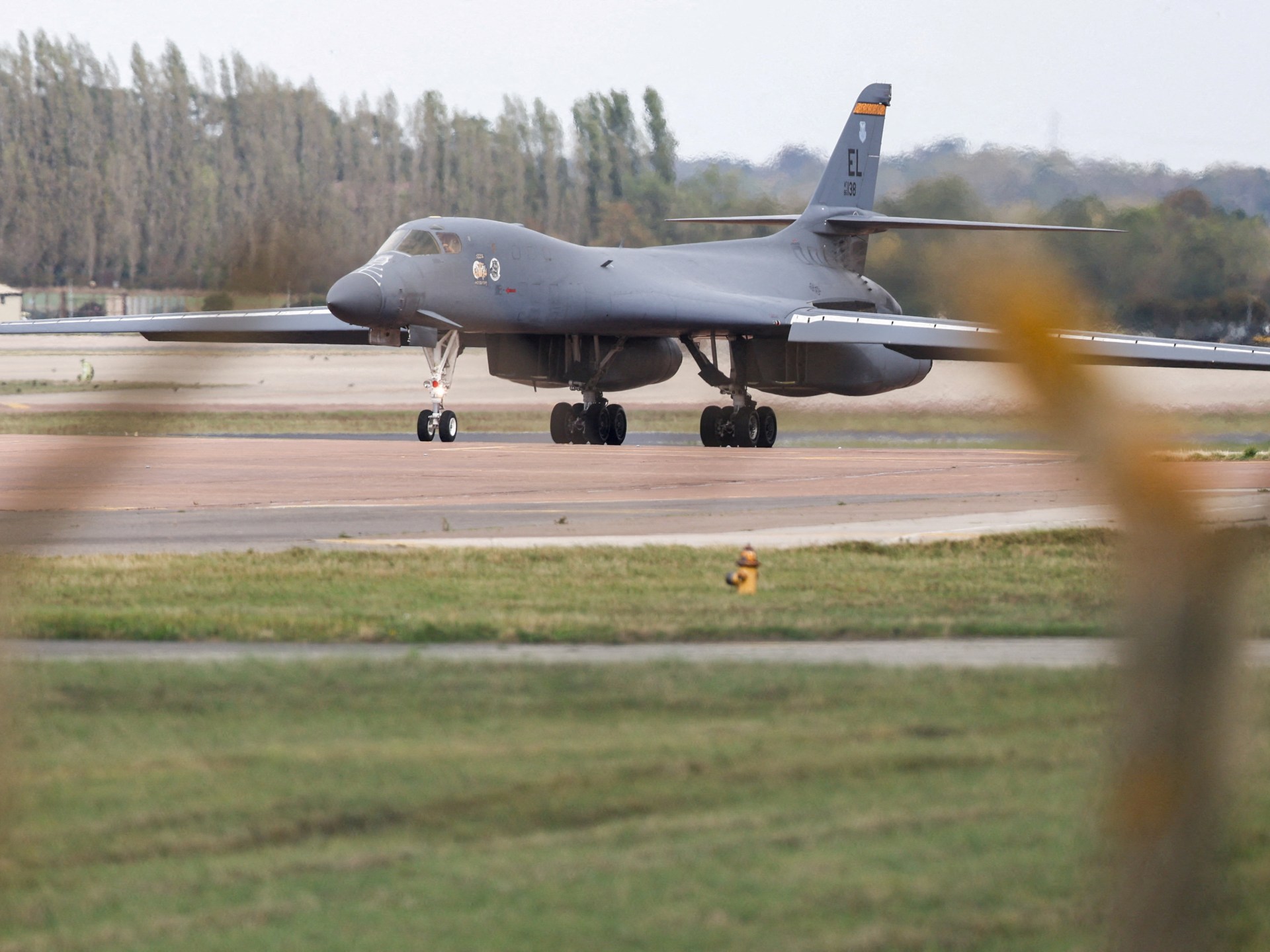
The US Department of Justice has charged three men — Mohammad Baqer Saad Dawood al-Saadi, Mohsen Mohajeri, and Mohammad Ali al-Hassani — with terrorism-related offenses tied to Iran's Islamic Revolutionary Guard Corps and Iraq's Kataib Hezbollah. The indictment covers nearly 20 attacks and attempted attacks across the United States and Europe, but the centrepiece is an alleged plot against RAF Fairford in southwest England, the staging base for American B-1 bombers deployed in the US war against Iran.
Extraction Map
The Fairford operation, as described in the charging document, was not subtle. Al-Hassani, a 35-year-old Iraqi national, allegedly directed a group to drive white vans to the base, some carrying fuel barrels. Prosecutors say he had earlier funded the purchase of metal objects to serve as shrapnel and ordered the vans disguised as fuel delivery vehicles. A local farmer spotted the group and called police in September. Six men were arrested; two were later re-charged under the UK's National Security Act for assisting Iran's intelligence service. Iran has denied involvement. Al-Saadi, who holds Iranian and Iraqi citizenship and has been in US custody since May, allegedly served as the communications hub. Prosecutors say he passed coded messages to al-Hassani and Mohajeri — a 48-year-old Iranian — through phone calls to his mother and sister in Iraq using coded language. In June, al-Saadi pleaded not guilty and described himself as a "prisoner of war." He remains held without bail. The broader campaign attributed to these operatives extends well beyond military targets. The indictment alleges al-Saadi directed attacks on Jewish communities across Europe, including the nonfatal stabbing of two Jewish men in London in April and arson attacks on synagogues, Israeli businesses, and Jewish schools. The target set — military bases, Jewish civilians, Israeli commercial interests — maps directly onto IRGC proxy doctrine: spread cost across as many domains and geographies as possible to complicate deterrence. The operational fallout is already visible. Days after the Fairford incident, the US withdrew all B-1 bombers from the base. Flight-tracking data on Tuesday showed at least a dozen aircraft removed from a second UK base, RAF Mildenhall, following what the Wall Street Journal reported as a separate Iranian threat. The US is pulling high-value assets out of reach, which is precisely what an asymmetric adversary wants — strategic disruption achieved with vans and fuel barrels, not missiles. Manhattan US Attorney Jamie McDonald framed the threat bluntly: "The threat presented by Iran and Iran-backed terrorist groups to America and our allies is not hypothetical — it is very real." The charges land at a moment when the US-Iran conflict has escalated beyond the usual proxy shadowboxing into direct military exchange, and when IRGC-linked networks are demonstrating operational reach deep into NATO territory. The prosecutorial structure reveals the limits of the response. Al-Saadi is in custody; Mohajeri and al-Hassani's whereabouts are undisclosed, likely meaning they are beyond US reach. The UK charges under the National Security Act cover only two of the six originally arrested. The network is partially exposed, partially disrupted, and partially intact — which is the standard outcome when state-backed asymmetric actors operate across multiple jurisdictions with disposable operatives.
Worth reading?
SKIP
Score
16
/100
Extractive. Iran's proxy network imposes outsized costs on US/UK force posture and civilian security through low-investment asymmetric operations, extracting strategic advantage while bearing minimal direct risk.
What Is GRIN?
GRIN stands for Generativity, Resilience, Innovation efficiency, and Novelty openness. These four dimensions capture the essential characteristics of any memetic intelligence — whether a nation, a corporation, a religion, or a movement.
About GRINGenerativity
0/5
Resilience
1/5
Efficiency
1/5
Novelty
2/5
Extractive
5/5
Inverted
Does this create new capability or just redistribute existing value?
Zero generative value. The entire dynamic destroys trust, displaces military assets, and forces defensive spending. No new capability is created for anyone except the attacker's coercion toolkit.
Verified Facts (10)
Three men charged: Mohammad Baqer Saad Dawood al-Saadi, Mohsen Mohajeri, Mohammad Ali al-Hassani
Al-Saadi has been in US custody since May; pleaded not guilty in June, called himself a 'prisoner of war'
Al-Hassani described as 35-year-old Iraqi national who directed others to drive vans to RAF Fairford
Mohajeri described as 48-year-old Iranian
Six men originally arrested at Fairford in September; two later re-charged under National Security Act
Iran has denied involvement in the Fairford incident
US withdrew all B-1 bombers from Fairford days after the September incident
Flight-tracking data showed at least a dozen aircraft removed from RAF Mildenhall
Attacks attributed include nonfatal stabbing of two Jewish men in London in April
Manhattan US Attorney Jamie McDonald: 'The threat presented by Iran and Iran-backed terrorist groups to America and our allies is not hypothetical – it is very real'
More latest news
Read all