COUNTS GUILTY
10/11
YEARS OF ALLEGED FRAUD
20+
NATIONS BANNED/RESTRICTED
15+
NVIDIA MKTCAP (CONTEXT)
$4.4T
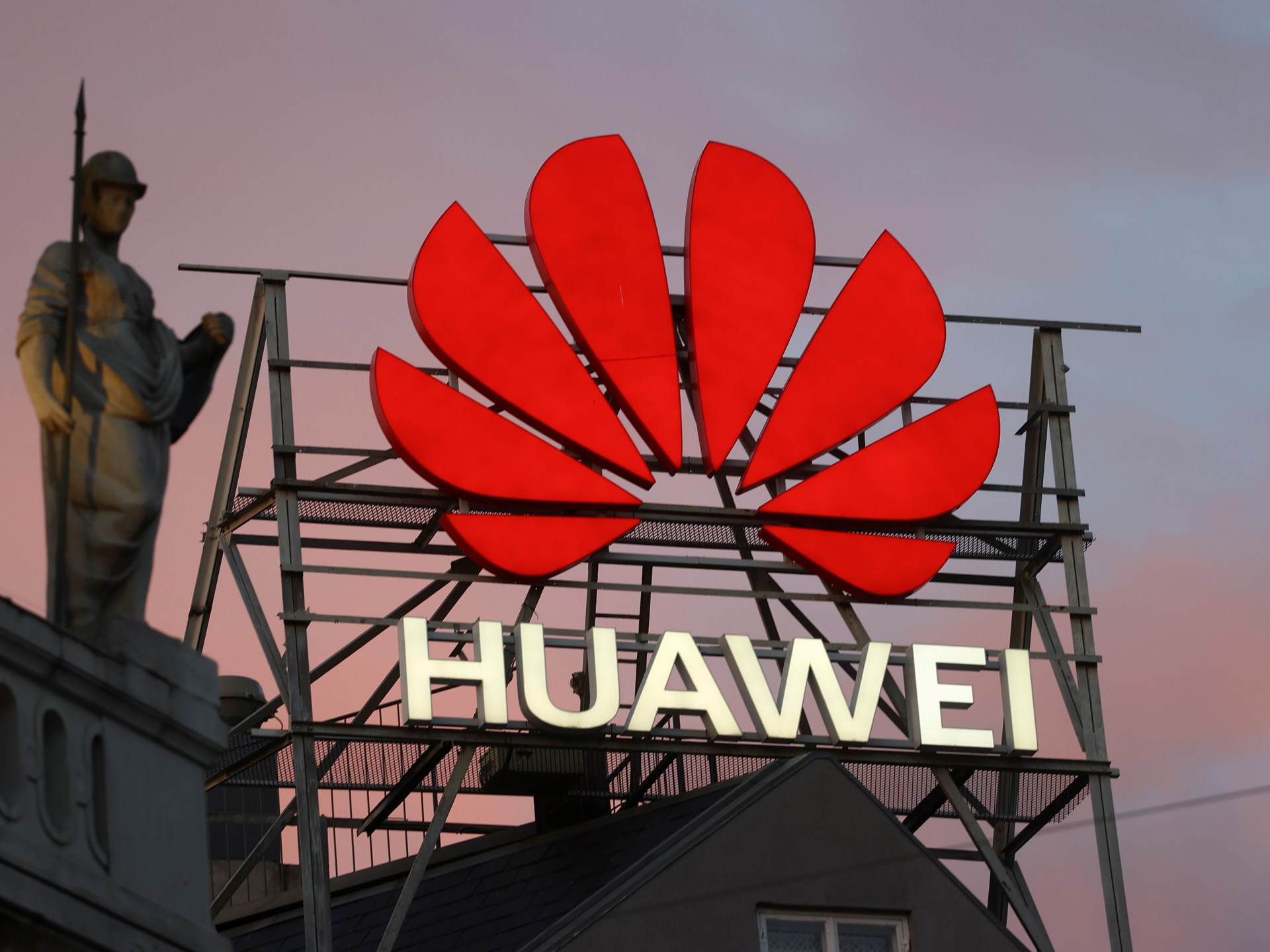
A US federal jury in New York convicted Huawei and three subsidiaries on 10 of 11 counts, including conspiracy to steal trade secrets, wire and bank fraud, sanctions evasion related to Iran and North Korea, and money laundering conspiracy. The company was acquitted on the most serious charge — criminal racketeering conspiracy. Sentencing is set for September, with Huawei expected to pay substantial penalties and planning to appeal.
Extraction Map
The specific misconduct allegations are granular and damning. A Huawei employee stole information about T-Mobile's Tappy robot despite a nondisclosure agreement. Engineers copied Cisco router source code. Another employee allegedly disguised their identity to infiltrate CNEX, a firm that had explicitly declined to work with Huawei. These are not abstract policy disputes — they are conventional corporate espionage charges backed by a jury verdict. But the verdict cannot be separated from the broader US-China technology contest. Beijing immediately condemned it as an attempt to "contain and suppress" Chinese firms. The timing is notable: the conviction landed alongside the Nvidia scandal, in which CEO Jensen Huang faces investigation over potential intelligence leaks to China through a romantic relationship with a suspected Chinese operative. Washington is prosecuting both sides of the technology boundary — punishing Chinese firms for reaching in and American firms for leaking out. Huawei's legal and commercial isolation is now nearly global. Australia and New Zealand banned its 5G equipment in 2018. Britain banned new purchases after 2020 with a 2027 removal deadline. Canada barred it from 4G and 5G networks in 2022. Germany's major providers agreed to strip Chinese telecom gear by 2029. Estonia, Denmark, France, Italy, Latvia, Lithuania, Portugal, Romania, Sweden, Japan, Taiwan, and India have all restricted or excluded the company. The Meng Wanzhou episode remains instructive. Canada arrested Huawei's CFO and founder's daughter in 2018 on US allegations she misled HSBC about Huawei's Iran business. Charges were eventually dropped in a prisoner swap — a resolution that demonstrated how intertwined criminal prosecution and diplomatic leverage have become in this contest. The conviction crystallizes a pattern that has been building for over two decades. The US has moved from suspicion to restriction to blacklisting to criminal prosecution. Each escalation narrows Huawei's operating space while forcing allied nations to choose sides in telecom infrastructure. The company built the world's largest telecom equipment business; it now faces a world where most wealthy democracies have legislated its exclusion. Assistant Attorney General A Tysen Duva's statement frames the arc plainly: "For over two decades, Huawei built its global empire on a foundation of fraud, theft and deception." Whether you read that as justice or as weaponized prosecution depends largely on which side of the Pacific you sit. What is not in dispute is the outcome: Huawei's access to the world's richest markets is functionally over, and the global telecom supply chain is splitting along geopolitical lines.
Worth reading?
SKIP
Score
28
/100
Extractive. The verdict is the legal endpoint of a strategy that redistributes telecom market share from one national champion to others, primarily through state coercion rather than market competition. No new capability is created; existing supply chains are fragmented at enormous cost.
What Is GRIN?
GRIN stands for Generativity, Resilience, Innovation efficiency, and Novelty openness. These four dimensions capture the essential characteristics of any memetic intelligence — whether a nation, a corporation, a religion, or a movement.
About GRINGenerativity
1/5
Resilience
3/5
Efficiency
1/5
Novelty
1/5
Extractive
4/5
Inverted
Does this create new capability or just redistribute existing value?
Zero-sum redistribution. Banning Huawei doesn't create better telecom gear — it shifts contracts to Nokia, Ericsson, and Samsung at higher cost. Market share moves; the technology frontier does not advance.
Verified Facts (14)
Huawei convicted on 10 of 11 counts along with Huawei Device Co Ltd, Futurewei Technologies Inc, and Huawei Device USA Inc
Acquitted of criminal racketeering conspiracy charge
Sentencing set for September
Criminal charges first brought against the company in 2019
A Huawei employee stole information about Tappy, a robot developed by T-Mobile
Huawei engineers accused of copying the source code of Cisco routers
Another employee allegedly disguised as someone else went to work for CNEX
Australia and New Zealand banned Huawei from 5G in 2018
Britain banned new Huawei 5G equipment purchases after 2020 with 2027 removal deadline
Canada barred Huawei from 4G and 5G networks in 2022
Meng Wanzhou arrested in Canada in 2018, charges later dropped in prisoner swap
Deutsche Telekom agreed to remove Chinese telecom equipment before 2029 deadline
Nvidia market capitalisation of more than $4.4 trillion
Assistant Attorney General A Tysen Duva quote: 'For over two decades, Huawei built its global empire on a foundation of fraud, theft and deception'
More latest news
Read all