CHIPS APPROVED
879K
TO MILITARY-LINKED
30%+
CHIPS REQUESTED
3.4M
AMD STOCK DROP
-7.7%
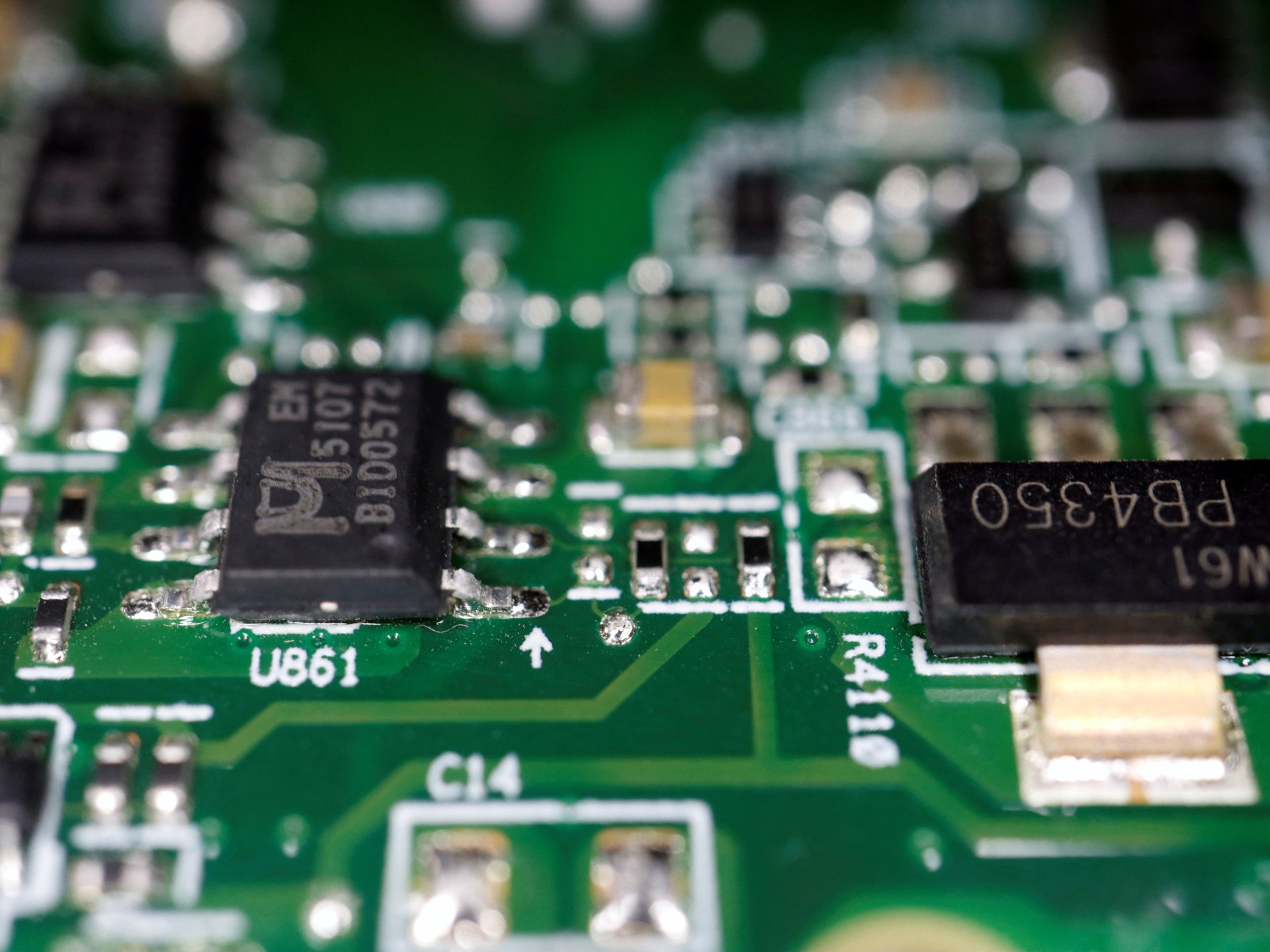
The House Foreign Affairs Committee just ripped the lid off six months of AI chip export approvals, and the numbers are damning. Between December 2025 and May 2026, the Commerce Department greenlit 879,000 advanced AI chips from Nvidia and AMD for Chinese buyers — roughly a quarter of the 3.4 million chips companies had sought permission to ship. The approvals included Nvidia's H200 and AMD's MI325X, the most capable commercially available AI accelerators.
Extraction Map
The recipient list reads like a who's who of China's tech-military complex. Tencent: 150,000 chips. Alibaba: 75,000. Baidu: 43,000. BYD: 4,000. All four sit on the Pentagon's list of alleged Chinese military-backed companies. That over 30% of approved chips were headed to firms the Department of Defense itself flags as military-adjacent is, as former US official Chris McGuire put it, "astonishing" — and raises the question of whether Commerce conducted any serious national security review at all. The timing of the disclosure is inseparable from the Huang scandal. Revelations about former Nvidia CEO Jensen Huang's affair with an alleged Chinese spy have supercharged congressional scrutiny, turning a simmering policy debate into a political firestorm. Reports of Nvidia chips being smuggled to China without consequence had already eroded confidence in enforcement. The licensing data dumps gasoline on that fire. The policy reversal is sharp. Biden had restricted Chinese access to these chips explicitly to prevent them from supercharging China's military AI capabilities and eroding the US lead. Trump rolled back those restrictions in December, authorizing H200 shipments to China and drawing fierce criticism from China hawks across the political spectrum. Nvidia now says it has "since stopped shipping H200s to China," but the horse-and-barn dynamics are obvious — hundreds of thousands of chips already had approval. Markets registered the blowback immediately. Nvidia dropped 3.3%, AMD slumped 7.7%, and the broader Nasdaq and S&P 500 fell 2.2% and 1.8% respectively. The selloff reflects not just reputational damage but investor recalculation of regulatory risk — if Congress reasserts export controls, the revenue streams that drove these stocks become liabilities. The structural problem is bipartisan and older than any single administration. The US semiconductor industry generates enormous revenue from Chinese sales, creating a permanent lobbying force against restriction. Every chip approved is revenue for Nvidia and AMD shareholders; every chip denied is a potential sale lost to competitors or indigenous Chinese chip development. The Commerce Department sits at the center of this tension, tasked simultaneously with promoting exports and protecting national security — objectives that collide head-on in advanced AI hardware. What we're watching is the classic extraction pattern of privatized gains and socialized risk. Chipmakers capture the profits from these sales. The national security costs — adversary capability gains, intelligence vulnerabilities, erosion of technological advantage — are diffused across the entire country and its allies. The Huang affair has cracked the story open, but the structural incentive hasn't changed: someone is always making money selling the rope.
Worth reading?
SKIP
Score
24
/100
Extractive. Chip sales concentrate profit at Nvidia/AMD and their shareholders while distributing strategic risk — adversary military AI capability — across the entire US national security apparatus and allied nations.
What Is GRIN?
GRIN stands for Generativity, Resilience, Innovation efficiency, and Novelty openness. These four dimensions capture the essential characteristics of any memetic intelligence — whether a nation, a corporation, a religion, or a movement.
About GRINGenerativity
1/5
Resilience
1/5
Efficiency
1/5
Novelty
2/5
Extractive
4/5
Inverted
Does this create new capability or just redistribute existing value?
Net negative. Exporting frontier AI chips to military-linked adversaries transfers generative capability abroad rather than building it domestically. Revenue accrues to two firms; strategic capacity leaks to a competitor.
Verified Facts (10)
879,000 chips approved for export to Chinese companies from December 2025 through May 2026
75,000 chips approved for Alibaba, 150,000 for Tencent, 43,000 for Baidu, 4,000 for BYD
Companies sought permission to ship 3.4 million chips to China during the period
All four Chinese companies are on the Pentagon's list of alleged Chinese military-backed companies
Chips included Nvidia's H200 and AMD's equivalent MI325X
Nvidia stock ended the day down 3.3%, AMD slumped 7.7%
Nasdaq down 2.2% and S&P 500 down 1.8%
Trump in December gave the green light for Nvidia to ship its H200 chip to China
Nvidia said it has 'since stopped shipping H200s to China'
Committee chair Brian Mast exercised authorities under the Export Control Reform Act to reveal the data
More latest news
Read all