NASDAQ 100 FROM HIGH
-17%
NEOCLOUD ETF DRAWDOWN
-61%
NVIDIA SINCE OCT
-40%
WELLS FARGO EARNINGS SCENARIO
-33%
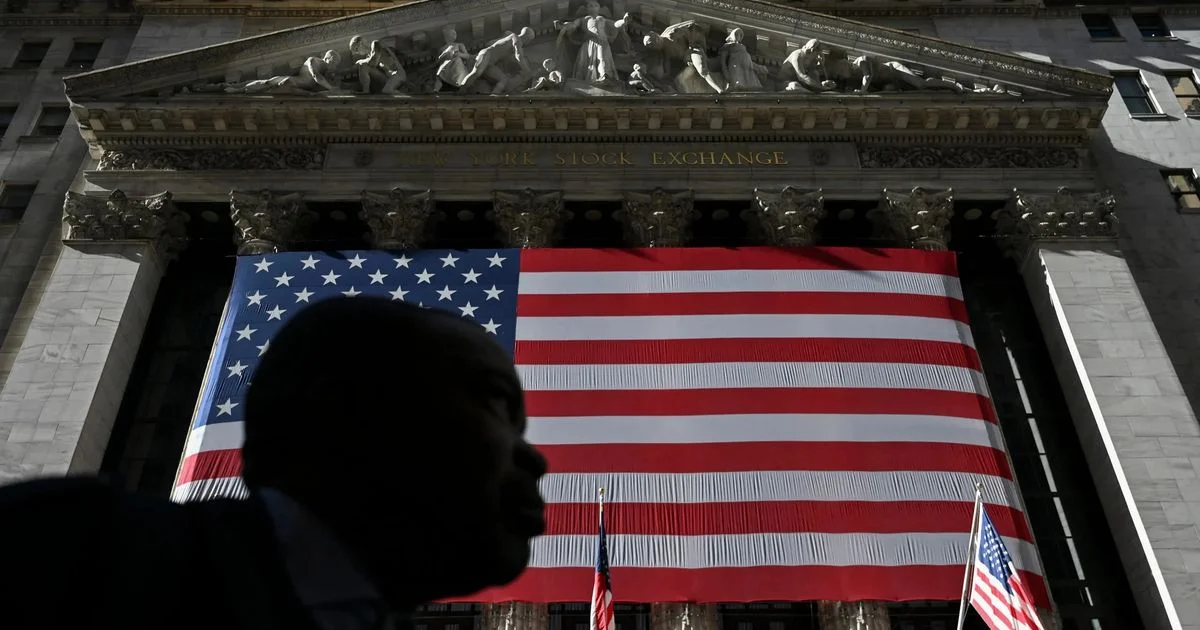
The AI bull market isn't dying in a single dramatic event. It's dying the way most bubbles do — through a slow accumulation of doubt, each week slightly more credible than the last. The Nasdaq 100 is down 17% from its 2026 highs, flirting with official bear market territory, while the sectors that supplied the AI buildout are already deep in the red: semiconductor ETFs down 41%, memory down 56%, neocloud infrastructure down 61%.
Extraction Map
The proximate triggers are stacking up. Capital expenditure guidance from the hyperscalers is softening. Legislative action against new data center construction threatens the physical substrate of the AI boom. Nvidia — the trade's load-bearing stock — has shed 40% since early October, compounded by Jensen Huang's departure as CEO, which some investors treat as an existential risk to the company's narrative primacy. And Anthropic's record-breaking IPO, expected to inject fresh optimism into the sector, instead acted as a liquidity sponge, pulling capital from the broader market without lifting sentiment. Wells Fargo is now publicly warning of a broad AI valuation reset, driven by higher rates, elevated oil prices, weak economic signals, and tightening AI regulation. Sameer Samana, the bank's global equities head, floated a scenario in which earnings growth collapses 33%, dragging valuations down with it. The bank is steering clients toward communications services, industrials, and materials — explicitly away from AI-heavy positions. TS Lombard has gone further, cutting global equity exposure to underweight and specifically reducing US and Taiwan AI holdings. Their bear scenario: by late 2027, a "明顯的氛圍轉變" — a clear sentiment shift — triggers a 40% crash in AI stocks by early 2028 as tech companies slash capex guidance. Their core question is devastating in its simplicity: can AI generate unprecedented revenue at scale when the underlying technology is increasingly commoditized and most consumers remain indifferent? Capital Economics, which has warned about an AI bubble for years, now frames a 2027 AI crash as its baseline forecast, projecting a 9% decline in the S&P 500 by end of next year with potential for steeper losses. Their analysis identifies a compounding risk: even modest regulatory tightening on AI construction, combined with tighter AI-related financing, could puncture valuations that require extraordinary revenue growth to justify trillions in investment. Citi has reduced US equity risk exposure and flagged contagion risk from Nvidia, which underpins a vast ecosystem of data center projects, neocloud vendors, and AI startups. Gary Marcus, the persistent AI skeptic, observed that losses are spreading across the entire AI technology stack and warned that a "death spiral" he has long predicted appears to be underway. The structural question is not whether AI technology works — it does, incrementally. The question is whether the financial architecture built on top of it can survive the gap between investment scale and revenue reality. Trillions have been deployed on the premise that AI will generate unprecedented returns. The market is now stress-testing that premise, and the early results are not encouraging.
Worth reading?
SKIP
Score
24
/100
Extractive. Trillions in investment justified by revenue that hasn't materialized; value flowed to early insiders, IPO underwriters, and infrastructure vendors while public market investors now absorb the drawdown.
What Is GRIN?
GRIN stands for Generativity, Resilience, Innovation efficiency, and Novelty openness. These four dimensions capture the essential characteristics of any memetic intelligence — whether a nation, a corporation, a religion, or a movement.
About GRINGenerativity
1/5
Resilience
1/5
Efficiency
1/5
Novelty
2/5
Extractive
4/5
Inverted
Does this create new capability or just redistribute existing value?
Near-zero generativity at the financial layer. AI capex created hardware capacity, but the investment thesis required unprecedented revenue that never arrived. Wealth destruction now exceeds creation for late entrants.
Verified Facts (18)
Nasdaq 100 down 17% from 2026 highs
Global X Data Center & Digital Infrastructure ETF down 30%
iShares Semiconductor ETF down 41%
Roundhill Memory ETF down 56%
Roundhill Neocloud ETF down 61%
Nvidia stock down 40% since early October
Wells Fargo warned of AI valuation reset citing higher rates, oil prices, weak economy, and regulatory tightening
Sameer Samana is Wells Fargo's global equities and real assets head
Wells Fargo hypothetical scenario: earnings growth drops 33%
TS Lombard downgraded global equities to underweight, cutting US and Taiwan AI exposure
TS Lombard scenario: 40% AI stock crash by early 2028
Capital Economics predicts S&P 500 down 9% by end of next year
Capital Economics has long held a 2027 AI crash as core forecast
Citi reduced US equity risk exposure last month
Anthropic IPO described as record-breaking public offering
Jensen Huang departed as Nvidia CEO
Gary Marcus warned of death spiral in his Substack newsletter Marcus on AI
Global X Artificial Intelligence & Technology ETF down 24% from summer highs
More latest news
Read all