COMPLIANCE DEADLINE
10 DAYS
REINSTATEMENT SIGNATURES
100K+
HUANG FOUNDATION
$9B
EMPLOYEE RELATIONSHIPS
2
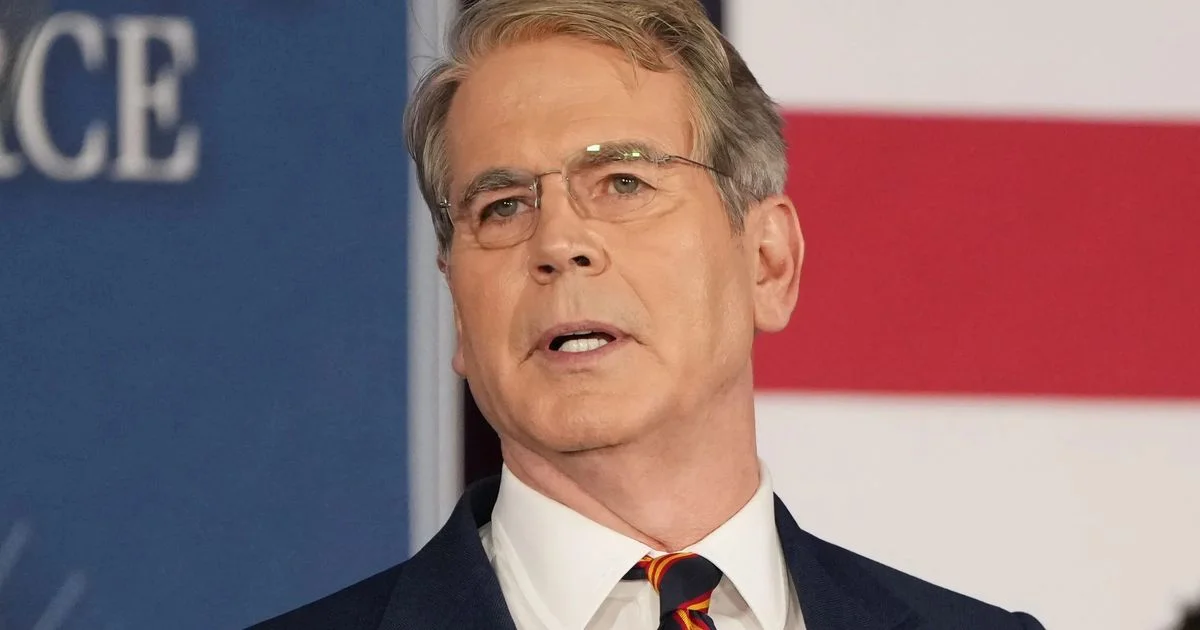
US Treasury Secretary Scott Bessent went on Fox's Sunday Morning Futures and told Nvidia's board, in plain language, to find their next CEO outside the company. "They need a major overhaul," he said. The statement is remarkable not for its content — boards hire externally all the time — but for the speaker. A sitting Treasury Secretary publicly steering CEO succession at a $3-trillion-plus chipmaker is not normal corporate governance. It is industrial policy delivered through a cable-news interview.
Extraction Map
Jensen Huang resigned last week after Nvidia's board launched an investigation into whether he had been "the target of a foreign intelligence operation." The same day, Huang acknowledged an extramarital affair in a memo to employees. The New York Times and Reuters subsequently reported he had relationships with two Nvidia employees. A key figure is Alice Huang (黃愛麗絲), a former tech executive whom US officials believe may have been passing information to China. Beijing denies the espionage allegations, and the US Department of Justice has not reached a conclusion. Bessent's 10-day deadline for Nvidia to answer questions about export-compliance is the sharpest edge of his remarks. Nvidia has been the central battleground in US-China chip export controls for years. Huang had been a consistent advocate for selling chips to China. Whether the espionage allegations are solid intelligence or, as a growing faction in the tech industry suspects, inflated by China hawks to remove a CEO who stood in the way of stricter controls — the effect is the same. Huang is out, and the compliance pressure on his successor will be immense. Nvidia's board says it will consider both internal and external candidates. CFO Colette Kress is serving as interim CEO. Analysts and investors have begun floating names, but the board has made no public disclosures about its shortlist. Meanwhile, a petition to reinstate Huang has surpassed 100,000 signatures and includes prominent tech figures. The company is being pulled in opposite directions simultaneously. The structural question is whether a Cabinet official publicly dictating succession criteria at a private company is a one-off or a template. Bessent framed Huang as an "incredible innovator" while insisting that innovation doesn't exempt a company from compliance. That framing — praise the founder, demand the overhaul — is the language of leverage, not advice. It signals that Nvidia's next CEO will be chosen not just by the board but by the political environment surrounding US chip policy. The espionage dimension complicates everything. If the Alice Huang allegations prove substantial, the board's investigation was justified and the resignation was inevitable. If they prove exaggerated, then a CEO who built one of the most valuable companies in history was ousted through a combination of personal scandal and geopolitical manipulation. The DOJ has not concluded either way. That ambiguity is itself a governance risk — it means the intelligence community's unresolved assessments can function as a veto over corporate leadership. What is clear: Nvidia's next CEO will operate under a degree of political scrutiny that no predecessor faced. The job is no longer just running a chip company. It is navigating a company that sits at the exact intersection of AI supremacy, US-China rivalry, and export-control enforcement — with a Treasury Secretary who has already shown he will use a Sunday talk show to tell the board what to do.
Worth reading?
SKIP
Score
24
/100
Extractive. Political actors are capturing corporate governance decisions at Nvidia, concentrating leverage over AI chip supply chains in the hands of national-security hawks while the company's generative capacity — built by the ousted founder — faces disruption.
What Is GRIN?
GRIN stands for Generativity, Resilience, Innovation efficiency, and Novelty openness. These four dimensions capture the essential characteristics of any memetic intelligence — whether a nation, a corporation, a religion, or a movement.
About GRINGenerativity
1/5
Resilience
1/5
Efficiency
1/5
Novelty
2/5
Extractive
4/5
Inverted
Does this create new capability or just redistribute existing value?
Net negative. Removing the architect of Nvidia's AI platform without a clear successor risks stalling the generative engine that powers global AI infrastructure. Political selection criteria may prioritize compliance over innovation.
Verified Facts (10)
Scott Bessent told Fox's Sunday Morning Futures that Nvidia should look outside the company for its next CEO
Bessent said Nvidia's board should answer export-compliance questions within 10 days
Jensen Huang resigned after the board investigated whether he was the target of a foreign intelligence operation
Huang acknowledged an extramarital affair in a memo to employees
NYT and Reuters reported Huang had relationships with two Nvidia employees
Alice Huang (黃愛麗絲) is a former tech executive whom US officials believe may have been passing information to China
China has denied the espionage allegations and the DOJ has not reached a conclusion
CFO Colette Kress is serving as interim CEO
A petition to reinstate Huang has surpassed 100,000 signatures
Growing faction in tech industry believes espionage allegations may have been inflated by US China hawks to remove Huang
More latest news
Read all