VALUED
$1.3M
KEYCHAIN SOLD
$10.50
IN-STORE LISTED
$80
JACKET PRICED
£2
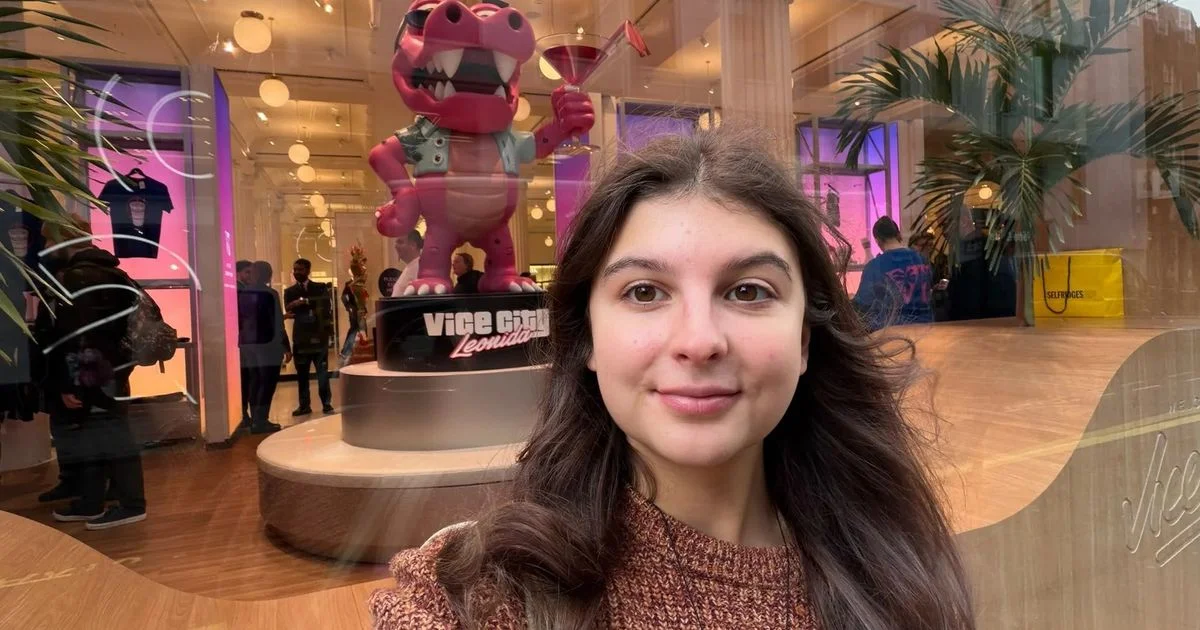
The GTA 6 pop-up at Selfridges on Oxford Street is not really a shop. It is a physical manifestation of hype — a place where the anticipation surrounding a video game has been converted into a retail experience, complete with queues in the rain, near-empty shelves, and a $1.3 million Ferrari Testarossa nobody can buy. Reporter Georgia Hennessy went to see what the fuss was about and found something more interesting than merch. The queue was mostly male, wrapped in rain gear, waiting to see what remained after online stock sold out almost immediately. A retail worker named JD was there for "competitive analysis" and openly wondered who the target customer was: "If you're willing to spend £2,000 on a jacket, you're surely not standing in line with the rest of us." He had a point. The pop-up straddles an odd demographic canyon — streetwear-priced accessories next to luxury pieces, served in a department store where the regular clientele glanced at the queue with London-grade indifference. Inside, the shelves were largely bare. A man clutching a roll of cash paced the floor asking staff for specific items; every answer was the same — nothing more was coming. He found the last football jersey on a folding table, unrolled it, and discovered it was an extra-small women's crop top. He put it back. The display cases held a mirrored tray with a sunglasses-wearing crocodile, a small silver spoon, and a razor-blade keychain — adult-coded accessories that might surprise the excited children outside. The resale economy was the quiet engine beneath the whole exercise. A keychain that sold for $10.50 in-store was listed on eBay at $80. When David, a 33-year-old visitor from Paris, pulled up the listing on his phone, three strangers stared at the screen together. "Wow," said JD. The three-item purchase limit per customer was clearly designed to slow flippers, but scarcity is its own accelerant. Every empty shelf is a signal that whatever remains is worth grabbing. The most telling moment belonged to Jon and his 10-year-old son Jonny, who had traveled from the Netherlands and returned to the pop-up the next morning hoping to get in. Jonny had pre-ordered GTA 6 months ago and wanted a hat. When a "burger-shot" visor materialized from behind the counter — almost magically — Jon placed it on the boy's head, and Jonny grinned. That grin was the transaction Rockstar actually engineered: not the sale of a visor, but the conversion of anticipation into a physical memory. A group of schoolchildren, perhaps seven or eight years old, walked past in high-vis vests. Several boys cheered and pointed. One literally jumped. These kids are almost certainly too young to know what GTA is, but they recognized the event. And that is the structural achievement here: Rockstar has turned a game launch into something that registers as culturally important even to people who will never play it. The pop-up is not selling merchandise. It is selling participation in a moment. Whether that moment sustains past launch day on Thursday is the only question that matters. The merch will sell out or it won't. The resale market will cool or it won't. But Rockstar has demonstrated that a video game franchise can command the same retail-event logic as a Supreme drop or a luxury fashion collaboration — with the added advantage that the core product hasn't even shipped yet.
Worth reading?
OPTIONAL
Score
52
/100
Marketing professionals studying hype mechanics, gaming-culture watchers interested in how entertainment IPs colonize luxury retail, and anyone deciding whether to queue at a pop-up for a game that launches in days.
Cultural Placement
Like a Supreme drop crossed with a museum gift shop for a film that hasn't premiered yet, staged inside Harrods' cooler rival. The closest precedent is Nike's SNKRS-era scarcity theater or Travis Scott's McDonald's collaboration — engineered shortage as brand narrative — but Rockstar is doing it for an entertainment product that won't exist for days. The mechanism is closer to Banksy's Dismaland than to a typical game-merch launch: the experience of being there is the product, and the objects are souvenirs of participation.
Honest assessment
Rockstar's pop-up is a competent execution of scarcity-theater retail applied to gaming for the first time at this price tier. It's culturally interesting as a signal — games now command fashion-drop logistics — but the objects themselves are unremarkable, and the experience is designed to evaporate. Worth reading about; worth visiting only if you're within walking distance and enjoy the anthropology of queues.
What Is NOVEL?
52
/ 100
BedrockNews applies a structured analytical framework called NOVEL to cultural works — games, books, film, music, and more.
How NOVEL worksNerve
2/5
Originality
3/5
Voice
3/5
Endurance
2/5
Lineage
3/5
What did the artist risk? What could have failed?
Moderate risk in pricing and scarcity design — a $1.3M Ferrari and razor-blade keychains in a kids-adjacent space — but the drop model itself is proven territory. No real chance of failure.
Verified Facts (9)
Ferrari Testarossa on display is valued at $1.3 million
Keychain sold for $10.50 in-store listed at $80 on eBay
Jacket priced at £2,000 (~$2,650)
Each customer limited to 3 items, no duplicate purchases
GTA 6 launches Thursday (from publication date of November 18, 2026)
Pop-up located at Selfridges on Oxford Street, London
Jon (45) and son Jonny (10) traveled from the Netherlands
David (33) visited from Paris
Online merchandise sold out prior to in-store availability
More latest news
Read all