JOBS "DOING NOTHING"
40%
AMODEI · ENTRY JOBS AT RISK
50%
MORPH · BATCH
YC S23
Tejas Bhakta, a former Tesla machine learning engineer and founder of Y Combinator-backed AI infrastructure startup Morph, has offered a contrarian take on AI's labor market impact: the technology won't destroy jobs so much as generate a metastasizing layer of pointless ones. His thesis, delivered in an MTS Live interview in November 2026, inverts the dominant Silicon Valley anxiety about mass displacement.
Extraction Map
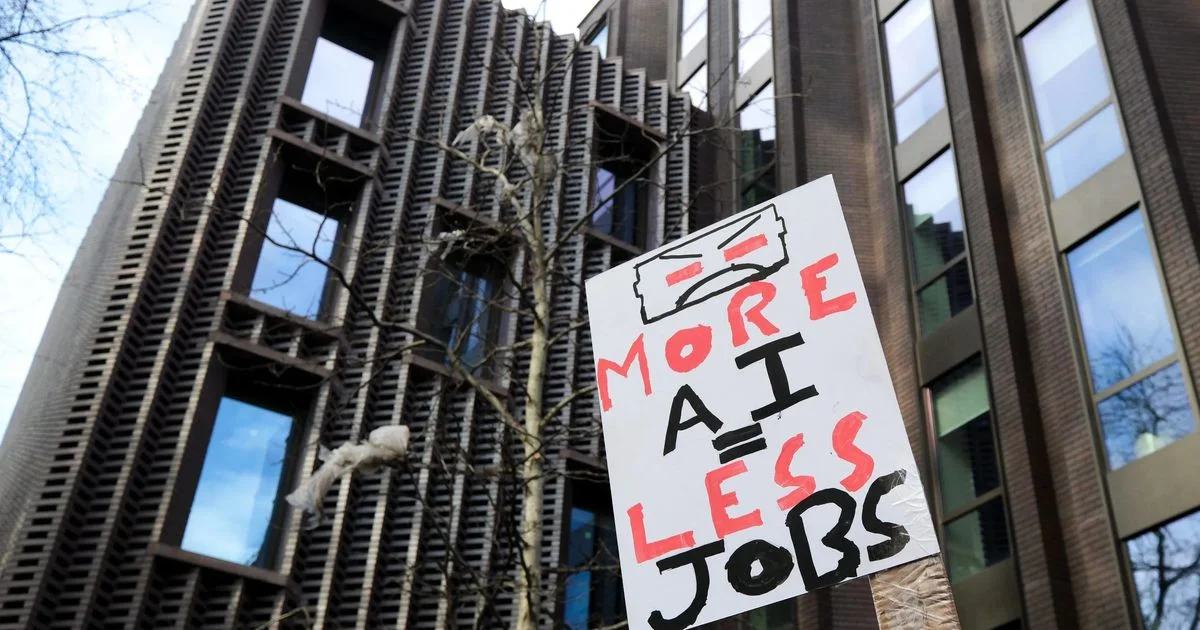
Bhakta's core claim is blunt: "Basically, most jobs right now are UBI." He estimates 40% of internet-era work "isn't really doing anything" — procurement officers generating paperwork nobody reads, compliance layers that exist to justify headcount, administrative busywork that functions as a disguised welfare system. AI, he argues, won't eliminate this stratum but inflate it, because the economy needs these people employed to avoid collapse. The framing is provocative but not new. Anthropologist David Graeber's 2018 book "Bullshit Jobs" laid the intellectual groundwork for exactly this argument — that advanced economies generate enormous volumes of work whose primary function is distributing income rather than producing value. Bhakta is essentially updating Graeber's thesis for the AI era: if automation handles the productive work, the make-work layer must grow to absorb the surplus labor. This positions Bhakta somewhere between the doomers and the boosters. Anthropic CEO Dario Amodei warned in May 2025 that AI could eliminate 50% of entry-level white-collar jobs. By 2026, AI executives had pivoted to predicting a hiring boom. Bhakta agrees hiring will continue — he just thinks the new jobs will be as hollow as the old ones, or more so. "When AGI does all the work, we'll just have more fake jobs," he said. The uncomfortable implication is structural: if Bhakta is even partially right, AI productivity gains won't flow into GDP growth or consumer surplus but into organizational bloat. Companies will use AI to automate the 60% of work that matters, then backfill headcount with roles that exist primarily to maintain employment levels and consumer spending. The efficiency gains get captured; the busywork expands. What's missing from Bhakta's analysis is any mechanism for who decides which jobs are real and which are theater. The 40% figure is unsubstantiated — a vibes estimate, not data. And the implicit assumption that the economy self-organizes around employment-as-welfare glosses over the actual power dynamics: employers don't create pointless jobs out of charity. They create them because organizational complexity, regulatory compliance, and management empire-building incentivize headcount growth regardless of output. The real question Bhakta raises but doesn't answer: if AI makes the productive fraction of labor smaller while the performative fraction grows, who captures the surplus? The answer almost certainly isn't the workers filling fake jobs at stagnant wages — it's the firms and shareholders pocketing the productivity delta while maintaining the appearance of a functioning labor market.
Worth reading?
SKIP
Score
20
/100
Extractive. The scenario Bhakta describes — productivity gains captured by firms while workers cycle through hollow roles at stagnant pay — is a textbook value-extraction pattern dressed up as employment stability.
What Is GRIN?
GRIN stands for Generativity, Resilience, Innovation efficiency, and Novelty openness. These four dimensions capture the essential characteristics of any memetic intelligence — whether a nation, a corporation, a religion, or a movement.
About GRINGenerativity
1/5
Resilience
1/5
Efficiency
1/5
Novelty
1/5
Extractive
4/5
Inverted
Does this create new capability or just redistribute existing value?
Zero new capability created. Bhakta's scenario explicitly describes AI productivity gains absorbed into organizational bloat rather than expanding the economic pie for workers or consumers.
Verified Facts (8)
Tejas Bhakta is a former Tesla machine learning engineer and founder of Morph, an AI infrastructure startup
Morph was part of Y Combinator's 2023 summer batch
Bhakta estimated 40% of internet-era work 'isn't really doing anything'
Anthropic CEO Dario Amodei warned in May 2025 that AI could eliminate 50% of entry-level white-collar jobs
AI executives adjusted their tone in 2026, suggesting the technology could create a new hiring boom
Bhakta stated: 'Basically, most jobs right now are UBI'
Bhakta stated: 'When AGI does all the work, we'll just have more fake jobs'
Bhakta did not immediately respond to Business Insider's interview request
More latest news
Read all