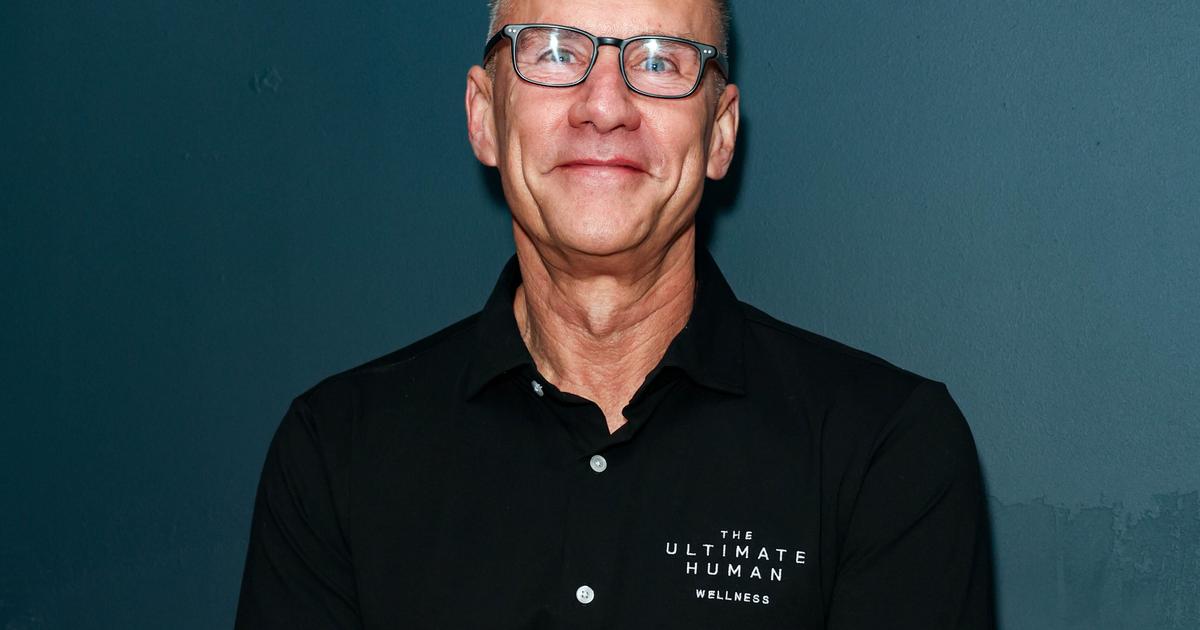
Gary Brecka is a 56-year-old biologist who spent years at insurance companies building predictive models for when policyholders would die. He left after discovering a potentially fatal medical error in a patient's file he couldn't disclose. Now he co-runs the Ultimate Longevity Center and says he plans to live to 120. The biographical arc is genuinely interesting — a man who modeled death for profit, pivoting to sell life extension. The advice itself is less so. Brecka's four longevity habits are: daily movement, quality sleep, avoiding processed food, and maintaining community. He emphasizes that sedentary behavior now rivals smoking as a mortality risk factor, that fad diets like keto and carnivore lack scientific backing, and that your body already detoxes through urination, defecation, and sweat — no juice cleanse required. He also notes, from his actuarial work, that high blood pressure alone doesn't necessarily correlate with increased mortality the way conventional wisdom suggests. The most honest thing Brecka says is that his own expensive toys — a hyperbaric oxygen chamber, an infrared bed — matter less than the basics. Sleep and community outrank technology. This is refreshingly direct from someone who runs a longevity center that presumably sells access to exactly those technologies. The self-undermining honesty is either genuine or very good marketing. The insurance-data angle is the article's load-bearing claim, and it's also the least examined. Brecka says actuarial data contradicted standard medical assumptions, but the piece offers zero specifics — no dataset names, no sample sizes, no published findings. The high-blood-pressure-doesn't-necessarily-kill-you claim is presented without context about confounders, treatment, or severity gradations. For a piece built on the authority of data science, there's remarkably little data. What we're actually looking at is a personal-brand essay dressed as health journalism. Business Insider interviewed Brecka and restructured his answers into a first-person narrative. The four habits are real and well-supported by decades of epidemiological research — but that research belongs to thousands of scientists, not to one man's insurance career. The packaging implies proprietary insight where none exists. The article's most useful function is as a permission slip: if you've been paralyzed by conflicting longevity advice from supplements-hawkers and biohackers, Brecka is telling you the boring stuff works and the expensive stuff is optional. That's genuinely valuable messaging in a wellness landscape drowning in noise. The 120-year target is aspirational theater — no human has verifiably exceeded 122 — but the underlying habits would serve anyone well at any target age. The piece is incomplete: page two (sleep hygiene and community) is behind a pagination click, so we're evaluating half an argument. What's here is competent lifestyle journalism that neither advances longevity science nor misleads dangerously. It's a smoothie made from ingredients you already had in the fridge.
Worth reading?
OPTIONAL
Score
28
/100
Someone overwhelmed by conflicting longevity advice who needs a credentialed voice telling them the basics are enough. If you've read Attia's 'Outlive' or follow Huberman, you already have this and more.
Cultural Placement
Like a TED Talk compressed into print — the narrative arc of Michael Lewis (unlikely expert, dramatic pivot moment) applied to advice-column content with the specificity of a Men's Health sidebar. Closest predecessors are Dan Buettner's Blue Zones franchise and Peter Attia's 'Outlive,' but without Buettner's fieldwork or Attia's clinical rigor. The insurance-actuary framing is doing the work that Nassim Taleb's 'skin in the game' rhetoric does — lending quantitative gravitas to qualitative lifestyle recommendations.
Honest assessment
A personal-brand essay with a compelling biographical hook wrapped around advice so conventional it's essentially a public-health pamphlet. The insurance-actuary angle promises data-driven insight but delivers anecdote. Useful as a permission slip to ignore expensive biohacking; useless as science journalism.
What Is NOVEL?
28
/ 100
BedrockNews applies a structured analytical framework called NOVEL to cultural works — games, books, film, music, and more.
How NOVEL worksNerve
1/5
Originality
1/5
Voice
2/5
Endurance
1/5
Lineage
2/5
What did the artist risk? What could have failed?
Zero risk taken. Every recommendation is pre-validated conventional wisdom. The insurance backstory adds biographical drama but no intellectual danger — nothing here could be wrong in an interesting way.
Verified Facts (8)
Gary Brecka is a biologist, currently 56 years old, co-founder of Ultimate Longevity Center
Brecka aims to live to 120
He previously worked at insurance companies predicting policyholder death timing
He owns a hyperbaric oxygen chamber and infrared bed
He states sedentary behavior rivals smoking as a mortality risk factor
He claims actuarial data showed high blood pressure alone doesn't necessarily increase mortality
He says keto and carnivore diets lack scientific evidence for extending lifespan
He left the insurance industry after finding a potentially fatal medical error he could not disclose to the patient
More latest news
Read all