THREATENED SURCHARGE
$5
READER COMMENTS
~30
AMZN ANNUAL REV
$600B+
NYC DELIVERY WORKERS
100+
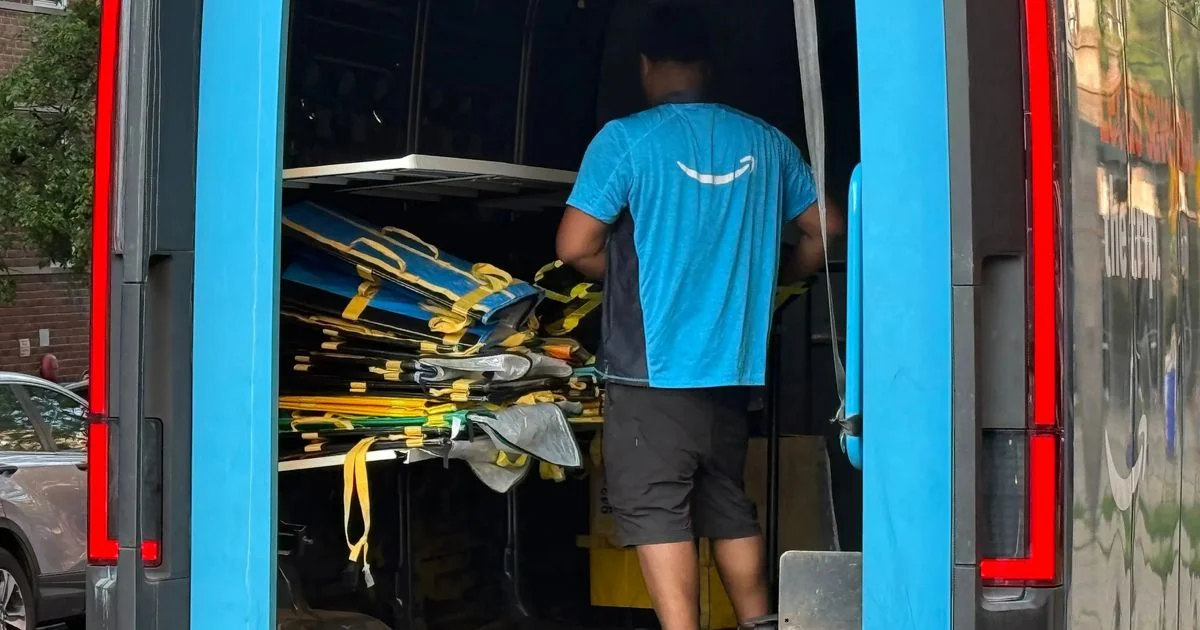
Amazon has begun displaying red-flagged "ATTENTION" notices inside its app and website to New York City customers, warning that a proposed city council bill — the Delivery Worker Protection Act — would add up to $5 per order in delivery fees. The bill, backed by Mayor Zohran Mamdani, would require Amazon and similar platforms to directly employ their delivery drivers rather than routing them through contractor intermediaries.
Extraction Map
The move is a textbook corporate counter-mobilization tactic: bypass the political debate entirely and recruit your own customers as anti-regulation foot soldiers. Amazon is not arguing the merits of its labor model in council chambers. It is telling 8 million potential voters that their wallets are under threat, and hoping they do the rest. Business Insider's comment section — roughly 30 responses — split predictably. Pro-bill readers argued that trillion-dollar companies can afford to pay workers properly and that contractor models are designed to suppress wages and shift risk. Some invoked the language of robber barons. Others said New Yorkers would absorb the cost or simply shop elsewhere, daring Amazon to leave a market it cannot afford to abandon. Opponents of the bill, many claiming industry experience, argued that last-mile delivery is inherently unpredictable and chaotic — better suited to flexible contractor relationships than rigid full-time employment. They warned the bill would destroy the existing Delivery Service Partner ecosystem, costing jobs rather than improving them. One commenter predicted the only losers would be consumers and the 100-plus delivery workers currently serving the city. The structural question neither side addresses cleanly: Amazon's DSP model was designed to externalize labor costs and liability while maintaining operational control. Drivers wear Amazon uniforms, drive Amazon-branded vans, follow Amazon routing algorithms, and meet Amazon performance metrics — but they are not Amazon employees. The Delivery Worker Protection Act targets this specific arbitrage. Amazon's $5 threat is the price tag it assigns to closing that gap. Whether the $5 figure is real or inflated for political effect is unknowable from this reporting. Amazon has every incentive to overstate the cost to consumers and every capability to absorb much of it within its margins. The company's annual revenue exceeds $600 billion. The question is not whether Amazon can afford to employ drivers directly, but whether it can be compelled to. The broader pattern is now familiar: when cities or states attempt to reclassify gig workers, the platforms respond with consumer-facing scare campaigns. Uber and Lyft ran the same playbook in California with Proposition 22. Amazon is now running it in New York. The playbook works because it converts a labor rights question into a consumer price question — and consumers vote.
Worth reading?
SKIP
Score
24
/100
Extractive — Amazon is deploying its consumer platform as a political weapon to preserve a labor arbitrage model that shifts risk and cost onto workers while maintaining operational control.
What Is GRIN?
GRIN stands for Generativity, Resilience, Innovation efficiency, and Novelty openness. These four dimensions capture the essential characteristics of any memetic intelligence — whether a nation, a corporation, a religion, or a movement.
About GRINGenerativity
1/5
Resilience
1/5
Efficiency
2/5
Novelty
1/5
Extractive
4/5
Inverted
Does this create new capability or just redistribute existing value?
Zero new value created. Amazon's $5 threat is designed to preserve an existing extraction model, not build anything. The bill itself might generate worker stability; Amazon's response generates only fear.
Verified Facts (6)
Amazon displayed red 'ATTENTION' notices on its app and website opposing the Delivery Worker Protection Act
The bill is currently under review by the NYC City Council and is supported by Mayor Zohran Mamdani
Amazon stated delivery fees could increase by up to $5 per order if the bill passes
The bill would require Amazon and similar companies to directly employ delivery drivers rather than use contractors
Approximately 30 reader comments were posted on the Business Insider article
One commenter referenced 'more than 100 delivery workers' who would be affected
More latest news
Read all