PETITION SIGNERS
100K+
ALTMAN'S OWN OUSTER
~5 days
NVIDIA FOUNDER / CEO
1
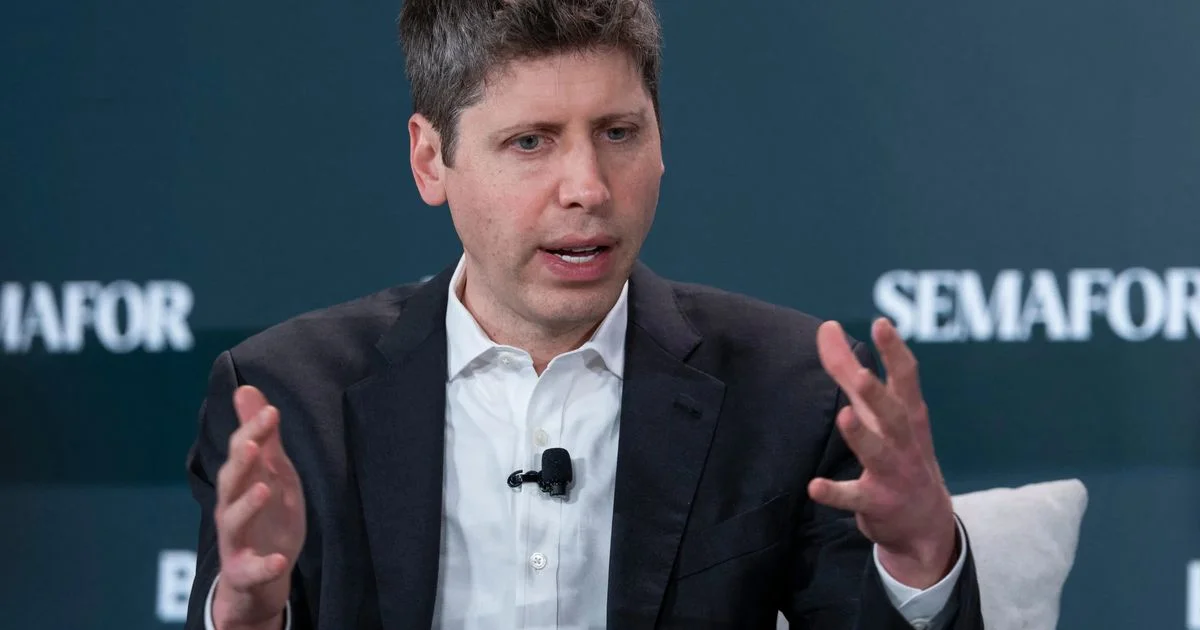
Sam Altman, speaking at Semafor's "Silicon Valley and the World" event on Monday, declined to endorse calls for Nvidia founder Jensen Huang to return as CEO. "I don't think I know enough to answer that question," Altman said, breaking from a growing list of tech luminaries — including Elon Musk and over 100,000 petition signatories — who have urged Huang's reinstatement following his resignation last week amid multiple affair allegations.
Extraction Map
The non-answer is itself a strategic position. By claiming ignorance, Altman avoids alienating Nvidia's board (a crucial supplier relationship for OpenAI) while also not opposing the populist wave demanding Huang's return. Trump himself endorsed Huang's reinstatement on Monday, making the issue increasingly political. Altman did offer personal warmth, calling Huang "one of my heroes" and expressing empathy rooted in his own 2023 ouster from OpenAI — a firing that lasted only days before he was reinstated. "I do have personal and strong empathy for a situation like this. I remember what it felt like," Altman said, drawing the parallel himself while carefully avoiding the prescription. The more consequential signal came in Altman's market assessment. He expressed confidence that the AI industry would weather Nvidia's leadership turmoil, citing strong demand, real revenue growth, and the now-undeniable reality of AI adoption. "I think demand is very robust, and it's very clear that AI is real and people want to use it," he said. This framing serves OpenAI's interests directly. If the market narrative becomes "Nvidia is destabilized without Huang," GPU supply chains and pricing could be disrupted — bad for OpenAI as the world's largest consumer of Nvidia hardware. Altman's reassurance is as much self-interested as it is analytical. The episode reveals the structural dependency at the heart of the AI boom: the company building the most prominent AI products cannot afford to honestly assess the governance crisis at its most critical hardware supplier. Altman's "I don't know enough" is diplomatic code for "I can't afford to have an opinion." Whether Huang returns or not, the incident exposes how thin the leadership bench is at the companies undergirding the entire AI stack. One founder's personal conduct can trigger a petition with 100,000+ signatures, presidential commentary, and market anxiety — because no succession planning was visible to the outside world.
Worth reading?
SKIP
Score
28
/100
Extractive — a founder-dependent ecosystem where one person's departure creates systemic risk, while insiders manage optics to protect their own supply relationships rather than address structural fragility.
What Is GRIN?
GRIN stands for Generativity, Resilience, Innovation efficiency, and Novelty openness. These four dimensions capture the essential characteristics of any memetic intelligence — whether a nation, a corporation, a religion, or a movement.
About GRINGenerativity
1/5
Resilience
1/5
Efficiency
2/5
Novelty
1/5
Extractive
3/5
Inverted
Does this create new capability or just redistribute existing value?
Zero new capability created. This is pure crisis management and diplomatic positioning. No technology, product, or institution is built — only narratives are managed.
Verified Facts (8)
Altman said at Semafor's 'Silicon Valley and the World' event: 'I don't think I know enough to answer that question.'
Elon Musk and several prominent Nvidia employees have called for Huang's reinstatement.
Nvidia's board announced last week that Huang resigned following multiple affair allegations.
Trump on Monday expressed support for Huang's return.
Altman called Huang 'one of my heroes' and said: 'I'm grateful for the company he built.'
Altman was briefly ousted from OpenAI in 2023 and returned within days.
Petition for Huang's reinstatement has surpassed 100,000 signatures.
Altman said: 'I think demand is very robust, and it's very clear that AI is real and people want to use it.'
More latest news
Read all