ŌKUMA RESIDENTS
~1,700
POP. DECLINE
85%
KIWIS HARVESTED
4-5K
PRICE / FRUIT
¥200
Ōkuma, Fukushima — the town that housed the Fukushima Daiichi nuclear plant — lost 85% of its residents after the 2011 triple disaster. Of roughly 1,700 people living there now, nearly half are post-disaster newcomers. Into this vacuum, two university students planted kiwi vines in 2023 and just harvested their first crop.
Extraction Map
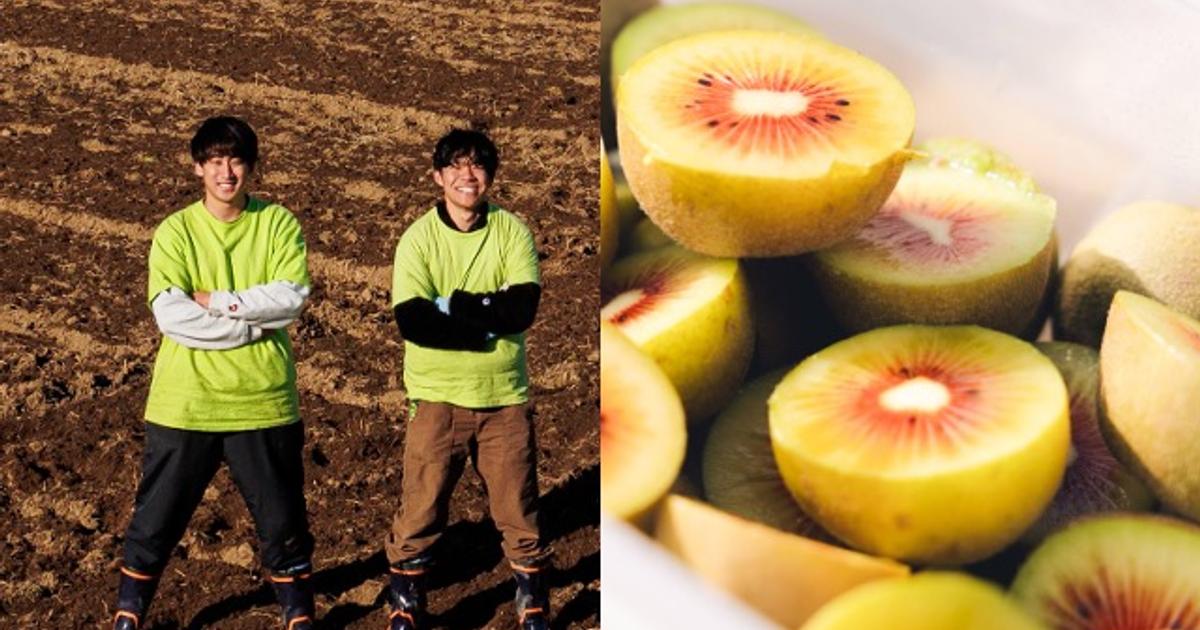
ReFruits co-founders Takuya Haraguchi (26, Wakayama University systems engineering) and Shōtarō Abe (25, Keio University) chose the town through a logic more venture-capital than NGO. Haraguchi toured 30+ farms nationwide and considered mandarin oranges — but recognized that established citrus regions offer brutal competition for outsiders with no land and no connections. Kiwi, by contrast, has no dominant domestic brand in Japan. Ōkuma was once a kiwi-growing area, and critically, its depopulation meant farmland was available to newcomers for the first time. The numbers are modest but real. The company holds 2.5 hectares of leased farmland, 1.5 hectares under kiwi cultivation. The inaugural harvest yields an estimated 4,000-5,000 fruits at ¥200 each — roughly ¥800K-¥1M in gross revenue, barely subsistence-level. A direct-sales shop opened in November 2026, with plans to supply supermarkets and a Tokyo café for dessert ingredients. The strategic bet is legible: position as Japan's first-recall domestic kiwi brand before anyone else occupies that mental shelf space. Haraguchi explicitly frames it as 'taking first-mover advantage in a category where no one has claimed top-of-mind.' The evacuation that emptied Ōkuma also eliminated the normal barriers to entry — entrenched landowners, local politics, legacy claims on the best plots. The town actively welcomes new ventures because it has no alternative. This is a micro-scale case study in what economists call 'institutional vacuum arbitrage.' Disaster wiped the slate; reconstruction subsidies and community goodwill lower the cost of experimentation. Neither founder studied agriculture — Haraguchi is a systems engineer, Abe a Keio grad. Their edge is not agronomic expertise but willingness to accept the reputational and logistical costs of operating in a nuclear-evacuation zone, which keeps competition away. The fragility is obvious. Three years from planting to first harvest means zero revenue runway. The 839 post-disaster immigrants are the only local customer base. Kiwi from a town synonymous with nuclear disaster carries a branding challenge that no amount of quality can fully neutralize in some consumer segments. And ¥200/fruit pricing competes directly with Zespri imports that dominate Japanese shelves with massive marketing budgets. Still, the underlying logic — that depopulated disaster zones offer the lowest barriers to entry for young entrepreneurs with no capital, no land, and no network — is a genuinely generative insight. If ReFruits can survive the brutal unit economics of year one and build a brand story that converts Ōkuma's stigma into provenance cachet, the model is replicable across dozens of hollowed-out rural Japanese municipalities facing identical demographic collapse.
Worth reading?
RECOMMENDED
Score
64
/100
Generative — two founders are creating productive capacity on fallow land with no displacement of incumbents, though scale is minimal and sustainability unproven.
What Is GRIN?
GRIN stands for Generativity, Resilience, Innovation efficiency, and Novelty openness. These four dimensions capture the essential characteristics of any memetic intelligence — whether a nation, a corporation, a religion, or a movement.
About GRINGenerativity
4/5
Resilience
2/5
Efficiency
2/5
Novelty
4/5
Extractive
1/5
Inverted
Does this create new capability or just redistribute existing value?
Genuine new capacity on abandoned land. No one is displaced; value is created from zero. But 4,000 kiwis at ¥200 is a proof-of-concept, not a business yet.
Verified Facts (9)
Pre-disaster Ōkuma population: approximately 11,500
Current residents: approximately 1,700, of which 839 are post-disaster migrants
ReFruits farmland: approximately 2.5 hectares total, 1.5 hectares under kiwi
First harvest: approximately 4,000-5,000 fruits
Retail price: approximately ¥200 per fruit
Founders: Takuya Haraguchi (26, Wakayama University) and Shōtarō Abe (25, Keio University)
Company founded: 2023; first harvest: autumn 2026
Haraguchi visited 30+ farms nationwide before choosing kiwi and Ōkuma
Direct sales shop opened in Ōkuma in November 2026
More latest news
Read all