FORMAT AT RISK
5W1H
TAIPEI MEDIA FORUM
10th
AI TOOLS USED
3
VS YEARS · PROTOTYPING
Weeks
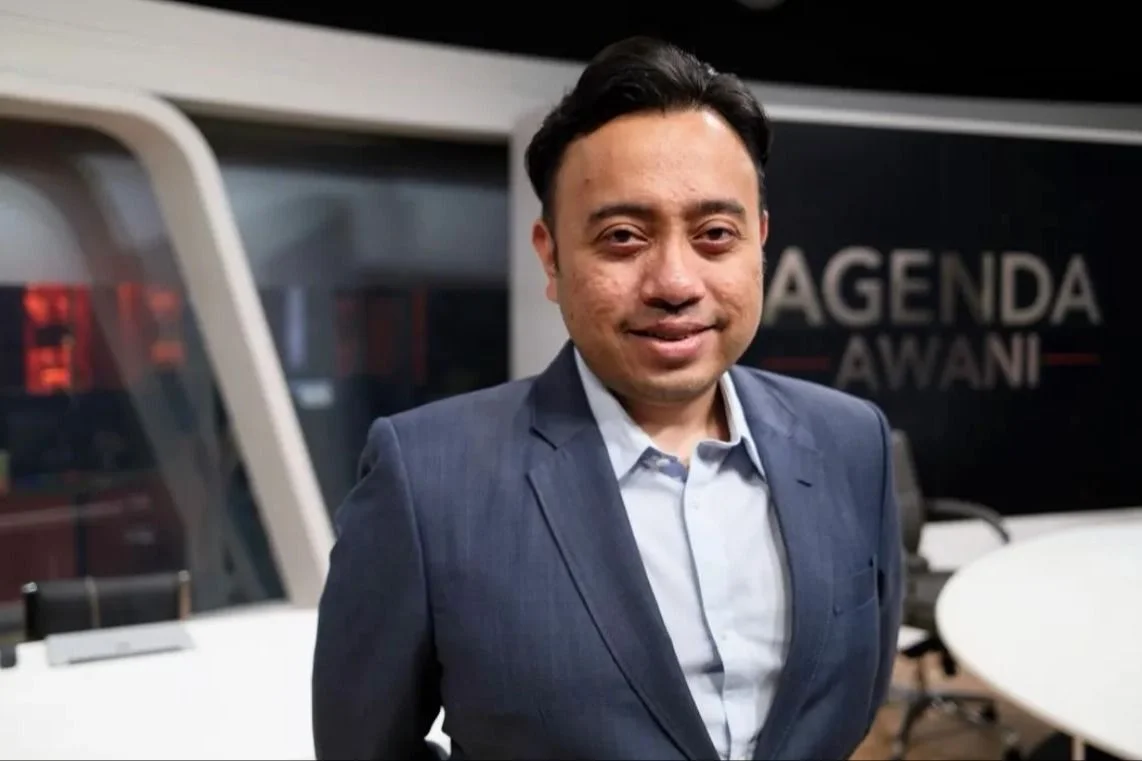
A decade ago, a Malaysian minister who wanted to announce a policy had exactly one path to the public: through reporters. Today that minister has a social media account, a livestream button, and an audience that arrives without editorial intermediation. AI tools can summarize the resulting public information into text, audio, or image formats in minutes. Shafizan Johari, a Malaysian media transformation practitioner interviewed by Business Insider Taiwan at the 10th Taipei International Media Forum, frames the structural shift bluntly: if a reporter's job is rewriting a press release into 5W1H format, the reader can now get roughly equivalent value from an AI summary.
Extraction Map
Johari, speaking in a personal capacity and not representing his employer, argues that journalism has always been a technology-dependent industry — print, broadcast, television, internet, mobile — and when the underlying technology changes, content formats, workflows, and audience-access methods change with it. The current shift is not just another platform migration. It is a compression of the information-intermediary role itself. Search entry points have fragmented, reading time is atomized, and news competes with social posts and short video for the same sliver of attention. The prescription is not layoffs but role redefinition. Johari splits news production into a data layer and a process layer. AI can handle writing, editing, and format conversion on the process side. But obtaining first-hand information, conducting interviews, verifying content, and maintaining relationships with officials, police, and other sources — these remain human tasks. If the initial data is wrong, automating the downstream process only industrializes the error. Newsrooms adopting AI face a tool-selection problem that mirrors the broader fragmentation. Johari himself uses Claude for research, ChatGPT for general content processing, and Gemini for other tasks. Data journalists, visual producers, and investigative reporters need different toolsets. The organizational capability to match tools to tasks matters more than standardizing on a single platform. But the harder problem is organizational, not technical. Many Malaysian newsrooms are staffed by reporters, editors, and broadcasters — nobody trained in change management. When an organization demands rapid workflow changes, existing professional habits and news values create resistance. Johari recommends dedicated change-management or AI-specialist roles to establish usage boundaries and verification standards, preventing individual experimentation from producing low-quality output that damages reader trust. AI also collapses production timelines. Projects that once took years can now be prototyped in weeks, letting newsrooms test more products with less investment. But Johari flags a critical gap: faster production does not automatically produce revenue. Reaching customers, securing subscriptions, and converting attention into money still depend on human relationships and sales capability. The speed dividend is real; the business-model dividend is not guaranteed. The transition from print to broadcast to television gave media decades to adapt. The current shift — where news may appear in cars, games, or any connected environment — compresses that timeline dramatically. Importing AI tools is only one piece. Newsrooms must answer who drives transformation, what data and capabilities must stay in human hands, and what value reporters add when both sources and AI can deliver information directly to the audience.
Worth reading?
OPTIONAL
Score
44
/100
Mixed — generative for audiences who gain faster, cheaper information access, but extractive against newsroom labor and institutional journalism, which lose leverage without a clear new value proposition.
What Is GRIN?
GRIN stands for Generativity, Resilience, Innovation efficiency, and Novelty openness. These four dimensions capture the essential characteristics of any memetic intelligence — whether a nation, a corporation, a religion, or a movement.
About GRINGenerativity
2/5
Resilience
2/5
Efficiency
3/5
Novelty
2/5
Extractive
3/5
Inverted
Does this create new capability or just redistribute existing value?
Modest generative potential. AI tools let newsrooms prototype faster and test more formats, but no new revenue model emerges — faster production without monetization just accelerates the treadmill.
Verified Facts (6)
Shafizan Johari is a Malaysian media transformation practitioner interviewed at the 10th Taipei International Media Forum organized by the Taipei Magazine Business Association
Johari stated his comments were personal and did not represent his employer
Johari uses Claude for research, ChatGPT for general content processing, and Gemini for other tasks
Johari recommends media organizations set up change management or AI specialist roles
Johari stated that projects that once took years to develop can now potentially be completed in weeks
Interview conducted by Business Insider Taiwan, authored by Webber Lo (羅弘旭), published November 20, 2026
More latest news
Read all