PRIZE YEAR
35th
CANDIDATES
118
LAUREATES
2
GREEN NEW DEAL
2008
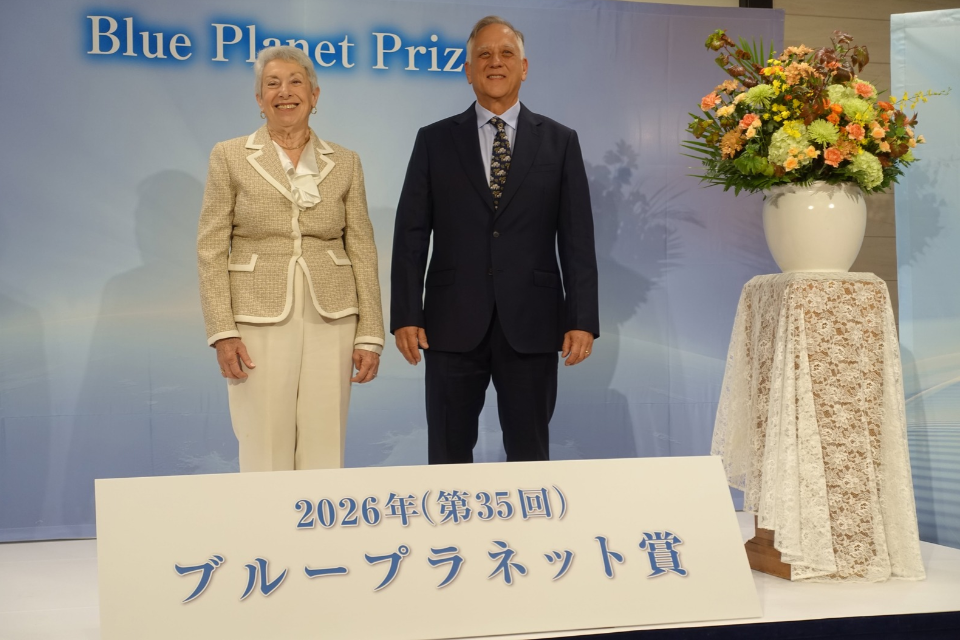
The 2026 Blue Planet Prize — sometimes called the Nobel for environmental science — went to two researchers whose careers embody the frustrating gap between scientific knowledge and political will. Dr. Linda S. Birnbaum, former director of the U.S. National Institute of Environmental Health Sciences (NIEHS), was recognized for transforming how we assess chemical risk, particularly for vulnerable populations like fetuses and children. Professor Edward Barbier of Colorado State University was honored for formalizing the concept of "natural capital" and engineering the intellectual framework behind the global green economy.
Extraction Map
Barbier's influence traces directly to the 2008-2009 financial crisis, when the UN Environment Programme commissioned him to write 'A Global Green New Deal.' That report proposed integrating economic recovery with decarbonization and ecosystem protection — a framework that shaped how international institutions talk about sustainability to this day. Asked about the current state of green economy implementation, Barbier offered a split verdict: the direction of travel on clean energy is correct, but the pace is dangerously slow. "There is room for further improvement on the policy front," he said, in the kind of diplomatic understatement that scientists deploy when the situation is worse than they can politely say. The private sector, Barbier argued, is the current source of hope. Clean energy expansion, growing demand for sustainable agriculture and fisheries, and a rising awareness that environmental risk equals business risk are all pulling capital in the right direction. Insurance companies, shareholders, and consumers are now pressuring corporations on climate, water scarcity, and biodiversity loss. But Barbier's framing of the core question was blunt: "Is this movement in the private sector enough? Or is it already too late?" Birnbaum's contribution is quieter but structurally important. Her research linked the pharmacokinetics of persistent chemicals — how they enter and leave the body — to their toxic effects, establishing that exposure timing matters as much as dose. Her work showing that fetal and early-childhood exposure to certain chemicals can permanently alter biological systems, raising lifetime risks of cancer and metabolic disease, reshaped risk assessment standards globally. The regulatory shift toward protecting vulnerable populations rather than averaging across healthy adults is substantially her doing. The timing of this award is politically loaded. The U.S. midterm elections on November 3 returned both chambers of Congress to Democratic control, creating a potential legislative counterweight to the Trump administration's hostility toward environmental regulation. Whether this translates into actual policy movement — or merely gridlock — is the immediate question. Trump has called climate change a fabrication; a Democratic Congress can block rollbacks but passing new climate legislation requires either presidential cooperation or veto-proof majorities. The deeper structural tension the laureates identified is not about any single election. It is about whether market forces alone, however encouraging, can substitute for coordinated policy action at the speed the climate crisis demands. The private sector responds to price signals and risk premiums; it does not spontaneously build the regulatory infrastructure, public investment, or international coordination that systemic decarbonization requires. Barbier's career has been spent arguing that natural capital must be measured and priced; Birnbaum's has been spent arguing that chemical risks must be regulated before harm occurs, not after. Both are arguments for governance, not just markets. Birnbaum's message to the next generation of researchers was personal but pointed: "Remember that meaningful change comes as a result of persistent effort." In context, this is less inspirational boilerplate than a warning. The scientists have done their part. The question is whether the political systems that are supposed to translate knowledge into action will do theirs.
Worth reading?
OPTIONAL
Score
48
/100
Weakly generative in theory — the green economy framework and chemical risk science create real public value — but the policy vacuum means generative potential is being captured by private actors while systemic costs remain socialized.
What Is GRIN?
GRIN stands for Generativity, Resilience, Innovation efficiency, and Novelty openness. These four dimensions capture the essential characteristics of any memetic intelligence — whether a nation, a corporation, a religion, or a movement.
About GRINGenerativity
3/5
Resilience
2/5
Efficiency
2/5
Novelty
2/5
Extractive
2/5
Inverted
Does this create new capability or just redistribute existing value?
Genuine intellectual infrastructure created: natural capital metrics, chemical risk frameworks. But without policy uptake, these tools generate papers and ESG reports, not binding systemic change.
Verified Facts (7)
Blue Planet Prize created in 1992 by the Asahi Glass Foundation, coinciding with the Earth Summit (UNCED)
2026 marks the 35th year of the prize, with 118 candidates considered
Dr. Linda S. Birnbaum: former director of NIEHS, recognized for environmental chemical risk assessment and science-based policy formation
Professor Edward Barbier: Colorado State University Department of Economics, recognized for indexing natural capital and driving international green economy implementation
Barbier authored 'A Global Green New Deal' report commissioned by UNEP after the 2008-2009 global financial crisis
US midterm elections held November 3, with Democratic Party reported to have secured majorities in both chambers of Congress
Press conference held October 27 in Tokyo
More latest news
Read all