SENTENCES · EMAIL RULE
3
MCNEILL TENURE
2015–18
SOURCE · ENTIRE STORY
1
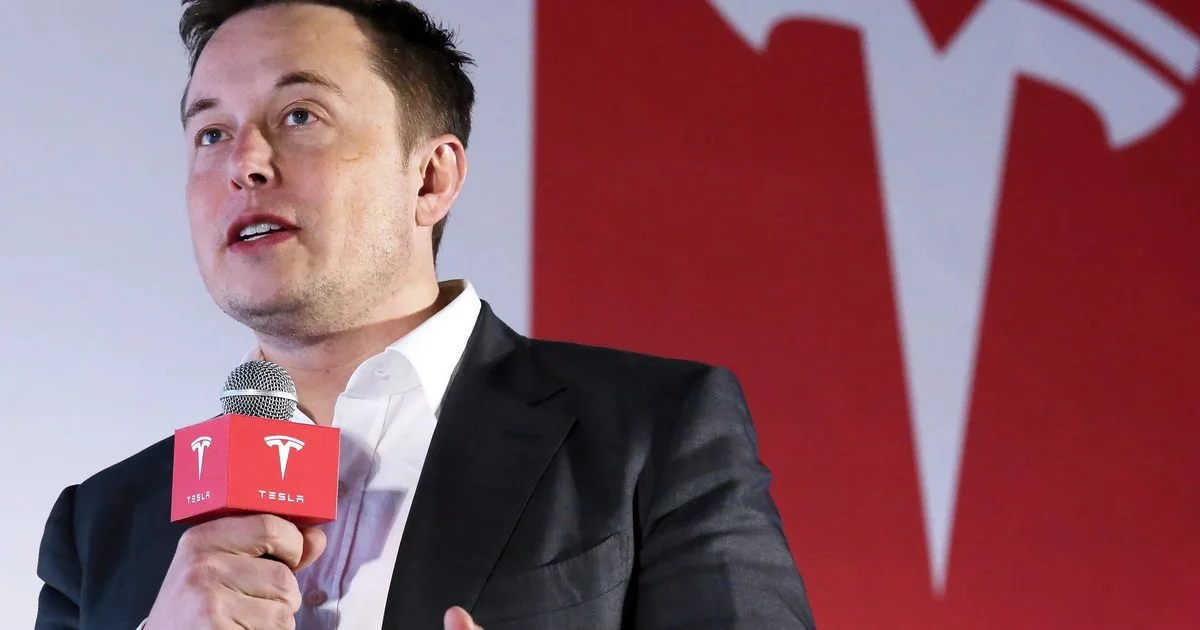
Jon McNeill, who served as Tesla's president of global sales, marketing, policy, and service from 2015 to 2018, appeared on The Knowledge Project podcast to describe the operating philosophy that defined Elon Musk's management of Tesla during a critical growth period. His core thesis is simple: Musk's competitive advantage is speed, applied universally — to decisions, to internal cash movement, to response times, to communication.
Extraction Map
The most concrete artifact of this philosophy is the three-sentence email. First sentence: state the problem. Second: propose a solution. Third: name what you need. McNeill frames this not as a quirk but as an information-filtering mechanism — anyone sending a message to Musk must have already done the analytical work of diagnosing, proposing, and scoping before they hit send. It compresses the decision loop. The second rule McNeill highlights is the bad-news-first imperative. Musk demanded problems be surfaced immediately, on the logic that bad news compounds with time. Concealing problems was treated as a firing offense. This is a standard high-reliability-organization principle — the US Navy's nuclear submarine program runs on the same doctrine — but McNeill presents it as distinctly Muskian. McNeill joined Tesla before the company was profitable. During his tenure, Tesla expanded its retail and Supercharger networks while preparing the Model 3 launch — the car that transformed Tesla from a niche luxury EV maker into a mass-market manufacturer. The speed doctrine, as McNeill tells it, was the operating system that made this scaling possible against slower-moving incumbents. What's missing from this account is the cost side of the ledger. Speed-first cultures generate enormous value when the direction is correct, but they also produce catastrophic errors when it isn't — Autopilot safety controversies, production hell, quality control issues, and the reputational damage of impulsive public communications. McNeill's framing is that of a former insider offering a success narrative, not a balanced operational assessment. The interview is a single-source retrospective from someone who left Tesla six years before this podcast aired and subsequently moved to Lyft as COO. It offers a useful window into Musk's management mechanics during a specific high-growth phase, but it is not an independent evaluation. The three-sentence email and bad-news-first rules are operational heuristics, not proprietary innovations — what McNeill is really describing is the intensity of enforcement, not the novelty of the ideas.
Worth reading?
SKIP
Score
24
/100
Extractive — a single-source hagiographic interview repackaged as insight, functioning primarily as reputation management for both Musk and McNeill rather than generating new understanding.
What Is GRIN?
GRIN stands for Generativity, Resilience, Innovation efficiency, and Novelty openness. These four dimensions capture the essential characteristics of any memetic intelligence — whether a nation, a corporation, a religion, or a movement.
About GRINGenerativity
1/5
Resilience
1/5
Efficiency
1/5
Novelty
1/5
Extractive
3/5
Inverted
Does this create new capability or just redistribute existing value?
Zero new capability created. Three-sentence emails and speed-first management are decades-old heuristics. The article generates brand value for Musk and McNeill, not transferable knowledge.
Verified Facts (6)
Jon McNeill served as Tesla president of global sales, marketing, policy, and service from 2015 to 2018
McNeill left Tesla to join Lyft as COO
McNeill appeared on The Knowledge Project podcast, episode aired Monday
Musk proposed running Tesla on three-sentence emails: problem, solution, next step/resource request
Musk demanded bad news be reported immediately; concealing it would generate negative reaction
Tesla was not yet profitable when McNeill joined
More latest news
Read all