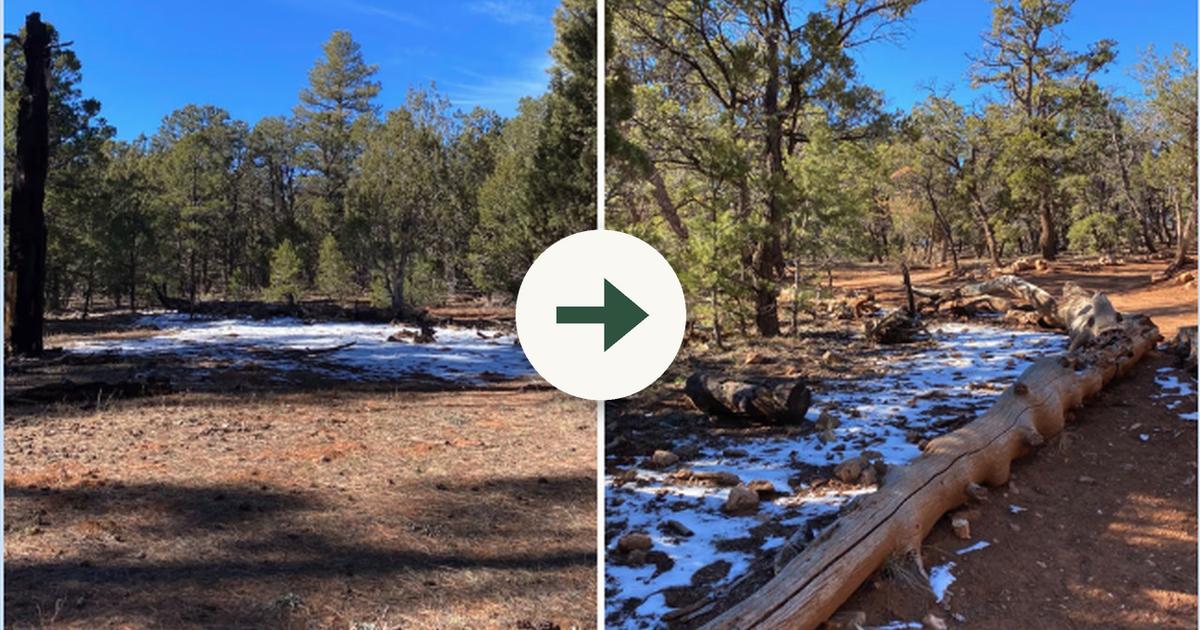
Kiliii Yüyan, a National Geographic photographer who has worked from the Amazon to the Arctic Ocean, gave Business Insider reporter Joey Hadden a single piece of advice that reframes how most people think about landscape photography on a phone: pay as much attention to the foreground as the background. The logic is straightforward. Mountains, waterfalls, and dramatic skies are easy to spot — everyone points their phone at the same thing. The differentiator is what sits between you and that vista. A wildflower, a tide pool, a gnarled tree branch — these elements create depth and make a flat rectangle feel three-dimensional. Without them, you get a postcard. With them, you get a photograph that feels like standing there. Hadden illustrates with her own before-and-after pairs from Santa Cruz, California, and Prescott, Arizona. In each case, the first shot from a convenient vantage point (a parking lot, a flat beach) captured the scenery but produced a dead lower half — just sand or asphalt. Walking into the landscape and finding foreground interest (rocks, reflections, low scrub) transformed the composition immediately. Yüyan frames this in a broader context worth noting: we are drowning in photos. The sheer volume of images people produce means that competent-but-generic shots disappear. Foreground composition is not a filter or an edit — it is a decision you make with your feet before you tap the shutter. That physicality is what makes it effective and what most casual shooters skip. The advice is not new to photographers — foreground interest is a staple of landscape composition taught in every intro course. What makes this piece useful is the specificity: Yüyan names the difficulty (finding foreground subjects in the right position is harder than finding background subjects) and Hadden shows real examples of the difference on a phone, not a $3,000 DSLR rig. There is a limit to how far one tip can take you. Lighting, timing, and subject choice still matter enormously, and no amount of foreground trickery saves a blown-out midday shot. But as a single high-leverage adjustment for someone who already takes a lot of landscape photos and wonders why they feel flat, this is the right answer.
Worth reading?
OPTIONAL
Score
32
/100
Casual smartphone photographers who take a lot of landscape shots and have never studied composition. If you've read any photography book or watched a single YouTube composition tutorial, you already know this.
Cultural Placement
Like a Bryan Peterson composition primer distilled into a single blog post, with the accessibility of a Chase Jarvis iPhone tutorial but none of the gear-fetishism. The lineage runs through National Geographic's field-photography tradition — shoot with your feet, not your zoom — filtered through the smartphone-era democratization that channels like Peter McKinnon and Sean Tucker brought to YouTube. Closest print ancestor is Michael Freeman's 'The Photographer's Eye,' specifically the chapter on foreground/background relationships, reduced to one actionable takeaway.
Honest assessment
This is one correct, well-illustrated tip from a credible source, packaged as a short service piece. It will genuinely help people who have never thought about foreground composition — which is most smartphone shooters. It is not deep, original, or lasting as a piece of writing, but it delivers exactly what it promises in under three minutes.
What Is NOVEL?
32
/ 100
BedrockNews applies a structured analytical framework called NOVEL to cultural works — games, books, film, music, and more.
How NOVEL worksNerve
1/5
Originality
1/5
Voice
2/5
Endurance
1/5
Lineage
3/5
What did the artist risk? What could have failed?
Zero risk taken. Foreground composition is Photography 101 repackaged for a general audience. The advice is correct but could not possibly fail or surprise anyone who has held a camera.
Verified Facts (4)
Kiliii Yüyan is a National Geographic photographer who has worked from the Amazon to the Arctic Ocean
The reporter has been taking photos for over 10 years
Yüyan stated people are 'drowning in a flood of photos'
Example locations include Santa Cruz, California; Prescott, Arizona (Watson Lake); Belfast, Maine; and Jackson Hole, Wyoming
More latest news
Read all