Read the paper
Case study: Richard Morgan indoor rowing physiology
on Journal of Applied Physiology
HIS TRAINING
+70%
TRAINING LOW-INTENSITY
+20%
LOW-INTENSITY MODERATE
+10%
BODY FAT
+15%
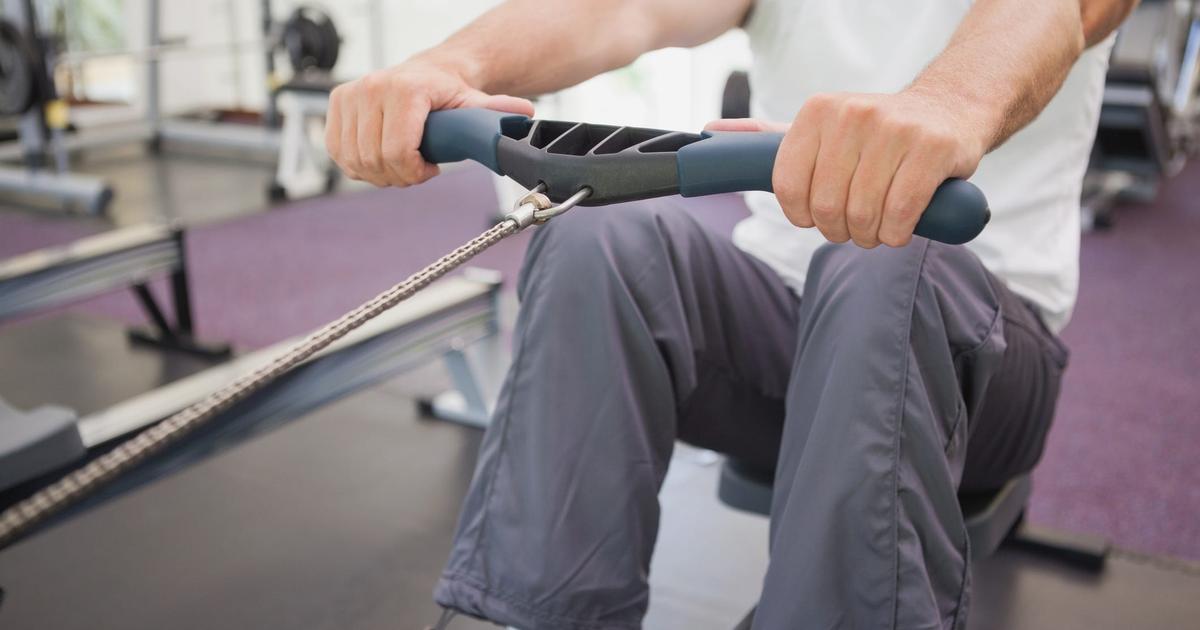
Richard Morgan is 93, lives in Ireland, rows in a shed behind his house for 40 minutes a day, and has the cardiovascular profile of someone five decades younger. A December 2023 case study in the Journal of Applied Physiology measured his heart health, muscle mass, and overall fitness, and found metrics that matched healthy 30- and 40-year-olds. He has won four world championships in indoor rowing. His body fat sits at 15%, a level most young men would envy. His lean muscle mass is 47 kg on a 75 kg frame. These are not normal numbers for a nonagenarian. The genuinely interesting detail is that Morgan didn't start exercising until he was 73. No athletic background, no lifelong fitness habit. He picked up rowing as a hobby in his early seventies, and twenty years of consistent, unglamorous work produced these results. The case study's authors are careful to note that genetics may play a role, but the routine itself aligns precisely with what exercise science already recommends. His training splits roughly 70% low-intensity cardio (Zone 2, where you can hold a conversation), 20% moderate, and 10% high-intensity. This is the same distribution elite endurance coaches prescribe. The Zone 2 work builds mitochondrial capacity — the cellular machinery that sustains effort over time. The high-intensity bursts train the body's ability to consume oxygen under stress, the metric (VO2 max) that correlates most strongly with longevity. Twice a week he does strength training with dumbbells — lunges, rows, curls, three sets each, taken to near-failure. Not to actual failure, which increases injury risk without meaningful additional benefit, but to the point where one more rep would break form. Recent research confirms that 30 to 60 minutes of strength training per week is enough to reduce risk of chronic disease and early death. Morgan's sessions fit comfortably inside that window. His diet centers on protein: roughly 1 gram per pound of bodyweight daily, well above the standard guideline of 0.7 grams per pound. This likely explains his exceptional muscle retention. As people age, the body becomes less efficient at building and maintaining muscle from dietary protein, so the literature increasingly supports higher intake for older adults. Morgan's numbers suggest he has been ahead of this curve for years. The case study is a single subject — no control group, no randomization, no way to separate genetics from behavior with any rigor. That's the structural limitation, and it's real. But the value here isn't in proving causation. It's in demonstrating that the same principles exercise scientists keep recommending — Zone 2 cardio, near-failure strength work, adequate protein, and above all consistency — produce results even when you start in your seventies. The boring answer is the right one. What Morgan's story quietly argues against is the longevity-optimization industry — the supplement stacks, the biohacking protocols, the $1,000-a-month anti-aging regimens. A retired baker rowing in his shed, eating enough protein, and not stopping for twenty years outperforms all of it. The intervention is free. The only cost is showing up.
Worth reading?
OPTIONAL
Score
36
/100
Someone who hasn't yet internalized the basic longevity exercise consensus — Zone 2 cardio, strength training, protein — and needs an inspiring example to start. If you've read Attia's Outlive or follow any exercise science content, this tells you nothing new.
Cultural Placement
Like a well-executed Men's Health longevity profile crossed with the rigor-lite approach of a Blue Zones article, but grounded in a single peer-reviewed case study rather than anecdote or population-level epidemiology. The closest antecedent is the Washington Post's coverage of the same subject, which Business Insider acknowledges and extends. It sits in the tradition of 'one remarkable person illustrates what the science already says' — a form perfected by outlets like The Atlantic's health desk and popularized by Peter Attia's Outlive. The mechanism is familiar: extraordinary individual as proof-of-concept for consensus recommendations.
Honest assessment
A clean, competent execution of the 'remarkable elder as longevity proof-of-concept' template. It correctly identifies the key findings from the case study and contextualizes them against existing exercise science. But it adds no original analysis, takes no risks, and will be forgotten the moment the next nonagenarian athlete surfaces. Useful as a nudge for sedentary readers, redundant for anyone already engaged with the literature.
What Is NOVEL?
36
/ 100
BedrockNews applies a structured analytical framework called NOVEL to cultural works — games, books, film, music, and more.
How NOVEL worksNerve
1/5
Originality
1/5
Voice
2/5
Endurance
2/5
Lineage
3/5
What did the artist risk? What could have failed?
Zero risk taken. The article confirms consensus exercise science through a feel-good anecdote. No controversial claims, no structural challenge to the reader's assumptions, no editorial danger.
Verified Facts (11)
Richard Morgan is 93 years old and lives in Ireland
Case study published December 2023 in Journal of Applied Physiology
Four-time world champion in indoor rowing
Started rowing at age 73; no exercise before age 70
~70% of his training is low-intensity, ~20% moderate, ~10% high-intensity
Strength training twice weekly: lunges, rows, curls, 3 sets to near-failure
Protein intake approximately 1 gram per pound of bodyweight daily
Body weight 75 kg, lean muscle mass 47 kg, body fat 15%
Heart health and fitness comparable to healthy 30- and 40-year-olds
Research shows 30-60 minutes of weekly strength training sufficient to reduce chronic disease and early death risk
Current protein guidelines recommend ~0.7 grams per pound of bodyweight
More latest news
Read all