HUANG CEO GAP
6 days
AMD INTRADAY DROP
-10%
CHIPMAKERS · CHINA RISK
2
DAYS BOARD HELD LINE
0
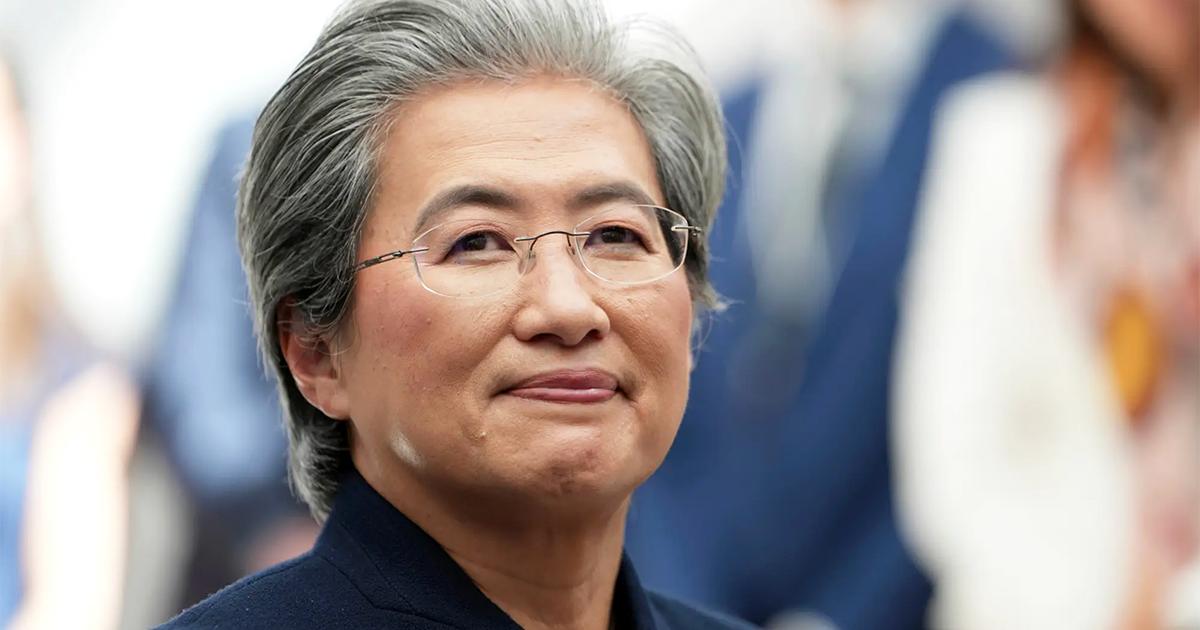
Lisa Su broke her silence on the Nvidia leadership crisis at the TomorrowX Summit in Austin on November 17, threading a needle that only a CEO who is also a distant cousin of the ousted founder could face. She praised Jensen Huang as a "wonderful leader" and an asset to the industry, then immediately pivoted to the word she repeated like a mantra: "noise." AMD's official posture is that the scandal engulfing its largest competitor is temporary turbulence, not a structural opportunity to exploit publicly.
Extraction Map
The timing of Su's restraint looks more strategic in retrospect. Huang resigned after Nvidia's board launched an investigation into whether he had been targeted by a foreign intelligence operation. He apologized for infidelity. The board installed CFO Colette Kress as interim CEO and stated explicitly it had no intention of reinstating Huang — a position that lasted exactly six days before Huang returned on November 23. The speed of the reversal undercuts the board's earlier firmness and raises questions about whether the investigation's findings changed or the economic pressure of losing a founder-CEO proved insurmountable. Su's careful framing — emphasizing AMD's "enormous opportunity" in AI infrastructure rather than Nvidia's vulnerability — was disrupted two days later when short-seller Hunterbrook published a report alleging AMD firmware had been repeatedly found in Chinese entities on the U.S. blacklist and three affiliated companies. AMD stock dropped 10% intraday before partially recovering. The company did not immediately respond to requests for comment. The Hunterbrook report opens a second vector of regulatory risk across the entire AI chip sector. The U.S. is tightening restrictions on AI semiconductor flows to China, and both Nvidia and AMD now face scrutiny over how their products end up in prohibited hands. Su's talk of "noise" may have been aimed at the Huang scandal, but the China export-control question is structural, not noisy — it touches revenue, compliance architecture, and geopolitical positioning for every major chipmaker. Su also made a notable pivot toward social license. She argued that communities affected by data center construction should "feel the benefits" and that AI should improve lives beyond Silicon Valley. This is not altruism — it is preemptive defense against the growing backlash to hyperscaler infrastructure buildouts that has already slowed permitting in multiple U.S. regions. AMD needs those data centers built to sell its chips. The deeper structural question is whether the AI chip duopoly's governance and compliance infrastructure can keep pace with the geopolitical weaponization of semiconductor supply chains. Nvidia's board just demonstrated it cannot sustain a leadership transition for a week. AMD is now facing allegations that its own export controls leak. Both companies sit at the center of a U.S.-China technology contest where the rules change quarterly and enforcement is tightening. Huang's return as CEO six days after the board said he would not return is the most revealing data point. It suggests Nvidia's institutional resilience without its founder is essentially untested — the board blinked before the market could price in a permanent transition. For AMD, the competitive window that briefly opened has already closed, replaced by a shared sectoral vulnerability on China compliance that neither company has fully addressed.
Worth reading?
SKIP
Score
28
/100
Extractive — value is concentrated in two companies whose governance structures and compliance regimes are weaker than the geopolitical forces acting on them, creating fragility that the broader AI ecosystem absorbs as risk.
What Is GRIN?
GRIN stands for Generativity, Resilience, Innovation efficiency, and Novelty openness. These four dimensions capture the essential characteristics of any memetic intelligence — whether a nation, a corporation, a religion, or a movement.
About GRINGenerativity
1/5
Resilience
1/5
Efficiency
1/5
Novelty
2/5
Extractive
3/5
Inverted
Does this create new capability or just redistribute existing value?
No new capability created. A leadership crisis, a short-seller attack, and a premature CEO return redistribute attention and risk without expanding the pie for anyone outside the duopoly.
Verified Facts (10)
Lisa Su spoke at the TomorrowX Summit in Austin on November 17
Su was interviewed by T. Rowe Price's Dominic Rizzo
Jensen Huang resigned; Nvidia board investigated whether he was targeted by a foreign intelligence operation
Huang apologized for infidelity
Colette Kress was named interim CEO
Nvidia board stated it had no intention of reinstating Huang as CEO
Jensen Huang returned as Nvidia CEO on November 23
Hunterbrook published a short-seller report on November 19 alleging AMD firmware found in U.S.-blacklisted Chinese entities and three affiliated companies
AMD stock dropped approximately 10% intraday following the Hunterbrook report before partially recovering
AMD did not immediately respond to Business Insider's request for comment
More latest news
Read all