FROM OCT HIGH
-27%
DAY OF EXIT
-11%
DIRECT REPORTS
55
BERNSTEIN TARGET
$200
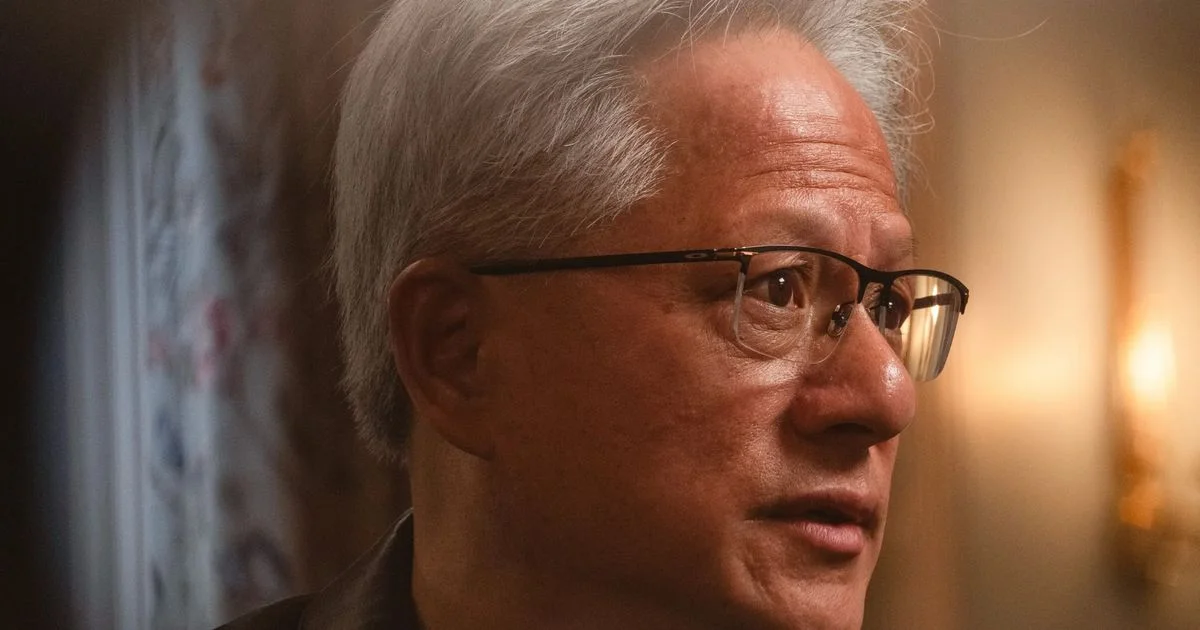
Jensen Huang resigned as Nvidia CEO on Thursday after reports surfaced of extramarital affairs — one with an alleged Chinese spy, another with Kimberly Powell, Nvidia's VP of healthcare. CFO Colette Kress steps in as interim CEO. The stock has fallen 27% from its October high, with an additional 11% drop on the day of departure.
Extraction Map
The speed of the analyst reversal is the real story. Nvidia was effectively undowngradable — almost no analyst on Wall Street carried even a neutral rating. Within 72 hours, Bernstein slashed from Outperform to Market Perform and cut its target from $400 to $200. Oppenheimer downgraded and pulled its target entirely. KeyBanc, William Blair, and others followed. Dan Ives, a perennial Nvidia bull, cut his target from $300 to $225 and called it a "dark moment" for American tech. The core vulnerability is now visible: Huang had 55 direct reports. He was deeply embedded in every strategic decision. As Oppenheimer noted, his role as the face of AI "cannot be overstated." Multiple firms flagged the absence of any obvious succession plan. William Blair warned that Nvidia's competitive moat — built on Huang's personal relationships and creative dealmaking — may not transfer to anyone else, putting market share at risk against Broadcom and AMD from 2027 onward. Analysts are now naming risks they previously treated as unthinkable. Oppenheimer flagged "brain drain" — top talent leaving because the gravitational center is gone. KeyBanc argued the stock now requires a higher risk premium and lower valuation multiples. William Blair noted that GPU alternatives are gaining traction, and Nvidia's competitive buffer around AI infrastructure is narrowing independent of the leadership crisis. The bull case isn't dead. Dan Ives maintained his rating and called Nvidia the "clear leader" in AI chips. Citi kept a Buy rating while cutting its target to $225. The underlying business — data-center GPU demand, AI training and inference workloads — hasn't changed. But the market is now pricing in something it never had to before: the possibility that Nvidia without Huang is a fundamentally different company. The most revealing detail is Bernstein's quip: "Where did he find the time?" It captures both the absurdity of the scandal and the deeper analytical point — if a CEO running a company this complex was this distracted, what else was being neglected? The question extends beyond personal conduct to governance. A board that allowed this concentration of decision-making authority in one person created a single point of failure worth trillions. Tim Cook's name surfaced as a dark-horse candidate for the permanent CEO role, floated by Ives. Whether or not that materializes, the search itself will be the next chapter. Every week without a permanent leader widens the window for competitors, unsettles employees holding vested stock, and forces customers to hedge their AI infrastructure bets.
Worth reading?
SKIP
Score
20
/100
Extractive — decades of value concentration into a single irreplaceable leader created a governance structure that now extracts value from shareholders, employees, and the broader AI ecosystem through fragility and uncertainty.
What Is GRIN?
GRIN stands for Generativity, Resilience, Innovation efficiency, and Novelty openness. These four dimensions capture the essential characteristics of any memetic intelligence — whether a nation, a corporation, a religion, or a movement.
About GRINGenerativity
1/5
Resilience
0/5
Efficiency
1/5
Novelty
2/5
Extractive
4/5
Inverted
Does this create new capability or just redistribute existing value?
Purely destructive in the short term. No new capability created; hundreds of billions in market cap destroyed by governance failure. The AI chip business itself is unchanged, but the strategic engine is offline.
Verified Facts (10)
Jensen Huang resigned as CEO Thursday after reports of affairs, one with an alleged Chinese spy, another with Kimberly Powell, Nvidia VP of healthcare
CFO Colette Kress will serve as interim CEO
Bernstein downgraded from Outperform to Market Perform, target cut from $400 to $200
Dan Ives cut target from $300 to $225, previously said stock could fall up to 30% if Huang left
Oppenheimer downgraded from Outperform to Perform, pulled target price
KeyBanc downgraded from Overweight to Sector Weight, fair value estimate $170
William Blair downgraded from Outperform to Market Perform
Citi cut target to $225 per share, maintained Buy rating
Stock down 27% from early October high, fell additional 11% on departure day
Huang had 55 direct reports as of 2024
More latest news
Read all