TECH SECTOR GAIN · 5YR
107%
BIG 5 CAPEX · 2026
~$800B
NON-TECH GDP GROWTH
~1%
MAX S&P 500 DRAWDOWN
15%
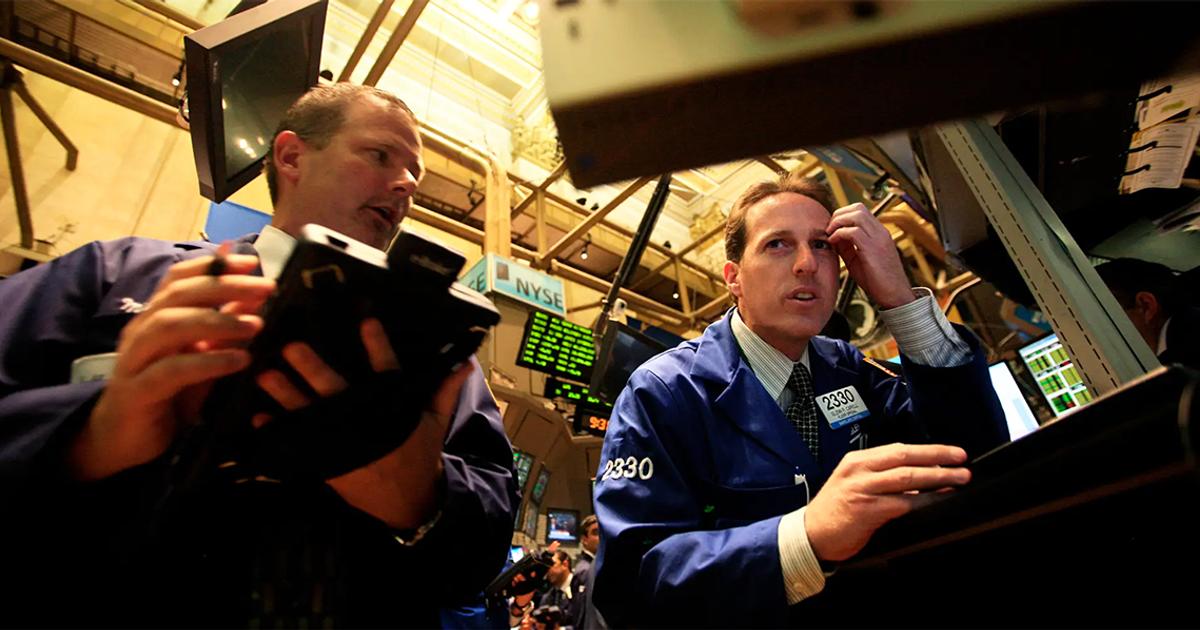
Jim Paulsen, formerly chief investment strategist at the Leuthold Group, is making a structurally specific call: the gap between tech stocks and everything else has grown wider than it was at the peak of the dot-com bubble, and that gap will close — violently. His scenario: a 20-30% correction in tech stocks, dragging the S&P 500 down 10-15% to roughly the 6400 level, a price not seen since the Iran war selloff earlier in 2026.
Extraction Map
The numbers underpin the thesis. The S&P 500 tech sector has gained 107% since November 2021, while most other sectors have barely moved. Paulsen calculates non-tech GDP growth at approximately 1% annually — recession-tier performance — while tech-driven inflation and elevated interest rates actively suppress the old economy. The five largest AI spenders (Amazon, Alphabet, Meta, Microsoft, SpaceX) are on track to deploy roughly $800 billion in capex during 2026, a figure that keeps financial conditions tight for everyone else. The fragility is structural, not sentimental. Goldman Sachs projects S&P 500 EPS growth will decelerate from ~36% to 11% in 2027, below the historical average of ~15%, as hyperscalers pull back on data center spending. Because investor capital is so heavily concentrated in tech, even a modest deceleration in AI investment could produce outsized price moves. Paulsen puts it bluntly: if tech hits an air pocket, the fall will be steep. Two catalysts are already in play. Regulatory headwinds threaten new data center construction in the United States — the physical infrastructure on which AI earnings growth depends. And the abrupt resignation of NVIDIA CEO Jensen Huang, the most visible champion of the AI trade, has shaken investor confidence across the entire AI supply chain. NVIDIA stock was hammered this week, and contagion spread to adjacent names. Paulsen's framework is not pure doom. He argues the correction is necessary medicine: deflating the "new era" economy would give the Fed room to cut rates, lifting the suppressed "old era" sectors and broadening market participation. The bull market, in his view, needs a rotation to survive. The question is whether the rotation happens gradually or through a crash. The deeper structural point is about concentration risk. When a handful of companies account for most of the index's gains and most of the economy's capital spending, any disruption to their trajectory cascades everywhere. The S&P 500 is less a diversified benchmark than a levered bet on AI capex continuation. Paulsen is essentially arguing that this bet is priced for perfection in an environment where perfection has become less likely. Markets are at an inflection. The coming months will test whether the AI trade can absorb a leadership vacuum at NVIDIA, regulatory friction on data center buildout, and the gravitational pull of decelerating earnings — all at once. If Paulsen is right, the correction is not a bug but a prerequisite for the next healthy leg of the bull market.
Worth reading?
SKIP
Score
28
/100
Extractive — the tech concentration funnels capital, earnings growth, and index performance to a narrow set of firms while tight financial conditions actively suppress the remaining economy at ~1% growth.
What Is GRIN?
GRIN stands for Generativity, Resilience, Innovation efficiency, and Novelty openness. These four dimensions capture the essential characteristics of any memetic intelligence — whether a nation, a corporation, a religion, or a movement.
About GRINGenerativity
2/5
Resilience
1/5
Efficiency
1/5
Novelty
2/5
Extractive
4/5
Inverted
Does this create new capability or just redistribute existing value?
Value creation is narrow. Five companies absorb ~$800B in capex; the rest of the economy grows at recession-pace 1%. Generativity is concentrated, not distributed.
Verified Facts (8)
S&P 500 tech sector up 107% since November 2021
Amazon, Alphabet, Meta, Microsoft, SpaceX projected ~$800 billion capex in 2026
Paulsen estimates non-tech economy growing at approximately 1% annually
Goldman Sachs projects S&P 500 EPS growth decelerating from ~36% to 11% in 2027
Historical average annual EPS growth rate approximately 15% (1989-2024)
Paulsen's worst-case scenario: S&P 500 falls to ~6400, a 15% decline
Jim Paulsen is former chief investment strategist at the Leuthold Group
Jensen Huang resigned as NVIDIA CEO
More latest news
Read all