AGENT RIDES / 320M
4
AGENT EATS ORDERS
500
UBER TRIPS · WEEK
320M
AGENT SHARE
~0.00016%
Uber's CFO Balaji Krishnamurthy delivered a number last week that should be tattooed on every AI pitch deck: during the company's busiest week of October — 320 million rides and deliveries, goosed by Halloween — exactly four ride-hail trips were booked by AI agents. Five hundred Uber Eats orders came through agent tools like Meta's Muse or Instinct. That is a rounding error of a rounding error.
Extraction Map
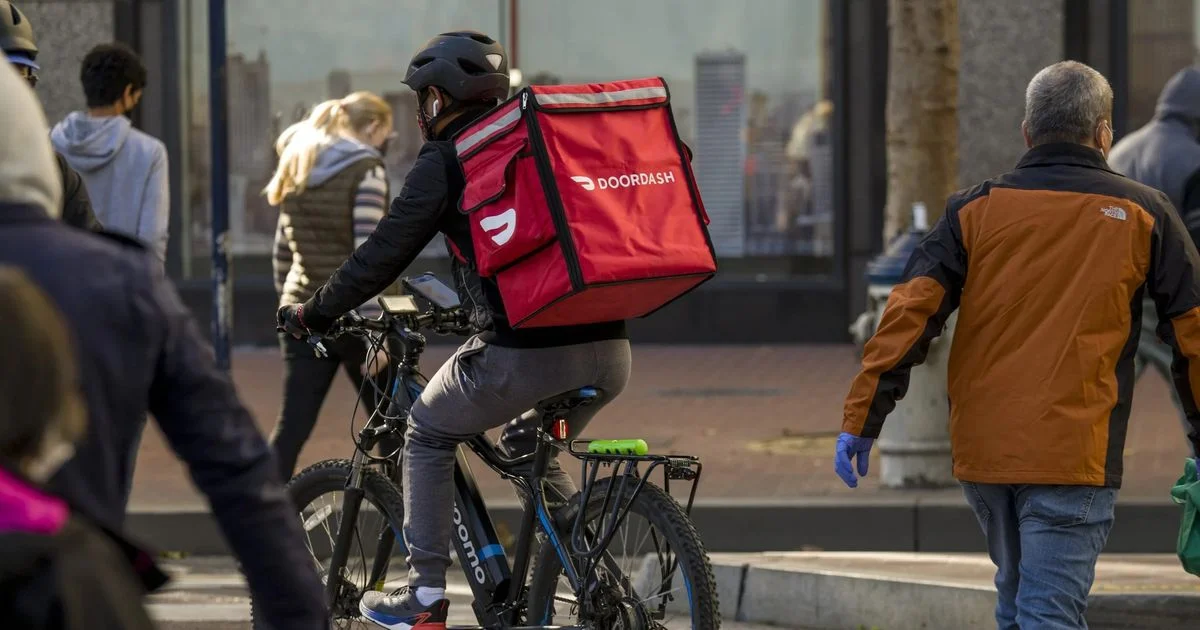
DoorDash CEO Tony Xu offered similarly deflating figures a week earlier, disclosing that his platform had received 'hundreds' of total AI-agent orders — not per week, not per day, but cumulative — against a run rate of billions of annual deliveries. The adoption curve isn't shallow. It's flat. The gap between narrative and reality here is industrial-grade. Venture capital and big-tech marketing have positioned AI agents as the next interface layer for commerce: autonomous software that orders your groceries, books your flights, and hails your car. The actual consumer response is something closer to polite refusal. Users cite accuracy concerns, fear of runaway spending, and the basic reality that ordering a burrito takes 45 seconds and doesn't need an intermediary intelligence. Both companies are pressing ahead regardless. DoorDash is testing a text-to-order feature that bypasses its own app, essentially building alternative front doors for agent-mediated commerce. Uber continues to integrate agent APIs. The logic is clear: if agents do become the dominant ordering interface, being absent from that channel is an existential risk. But the investment is speculative, not demand-driven. The consumer hesitation is rational, not Luddite. Early adopters who have used agents for purchases report ordering errors and anxiety about handing credit card authority to software that may not understand context — wrong restaurant, wrong address, wrong substitution logic. Trust infrastructure doesn't exist yet. There are no standardized refund protocols for agent-initiated mistakes, no clear liability frameworks, and no consumer insurance against rogue transactions. What's actually happening is a supply-side land grab dressed up as demand. Tech companies are building agent-compatible infrastructure because other tech companies are building agents, creating a self-referencing ecosystem where the only real customers so far are developers testing their own tools. The platforms dutifully report their microscopic agent order counts because Wall Street analysts ask about AI on every earnings call. The honest read: agentic commerce may eventually matter, but the current adoption data says consumers don't want it yet, don't trust it yet, and don't need it yet. The 4-out-of-320-million number isn't a starting point on an exponential curve. It's a market signal that the product-market fit hasn't been found.
Worth reading?
SKIP
Score
36
/100
Extractive: the current AI-agent push transfers value from platform R&D budgets and investor capital toward AI infrastructure vendors, while delivering effectively zero utility to consumers.
What Is GRIN?
GRIN stands for Generativity, Resilience, Innovation efficiency, and Novelty openness. These four dimensions capture the essential characteristics of any memetic intelligence — whether a nation, a corporation, a religion, or a movement.
About GRINGenerativity
1/5
Resilience
2/5
Efficiency
1/5
Novelty
3/5
Extractive
3/5
Inverted
Does this create new capability or just redistribute existing value?
Near-zero generativity demonstrated. 500 orders out of 320 million is not a new capability consumers are using — it's a feature nobody asked for, built to satisfy an investor narrative.
Verified Facts (7)
Uber CFO Balaji Krishnamurthy stated Uber provided 320 million rides and deliveries in the last week of October.
Of those Uber Eats orders, only about 500 came from AI agents.
Four ride-hail trips were facilitated by AI agents during that week.
DoorDash CEO Tony Xu stated his company had received 'hundreds' of total AI agent orders.
AI agents referenced include Meta's Muse and Instinct.
DoorDash announced in September it was testing a text-to-order feature.
Consumers cited ordering errors and concerns about agents misusing credit card data.
More latest news
Read all