MONTHLY REVENUE
$24K
BUILD COST
$200K
VS ADU YIELD
7×
PAYBACK PERIOD
~8mo
Leela Rea, 37, wanted income from her Vista, California property without returning to full-time work. The conventional move — building an accessory dwelling unit on her lot — came back at $500,000 to $600,000 for a 3-bed/2-bath structure that would rent for roughly $3,500 per month. That's a 170-year payback on construction costs alone, before maintenance. She walked away from the idea.
Extraction Map
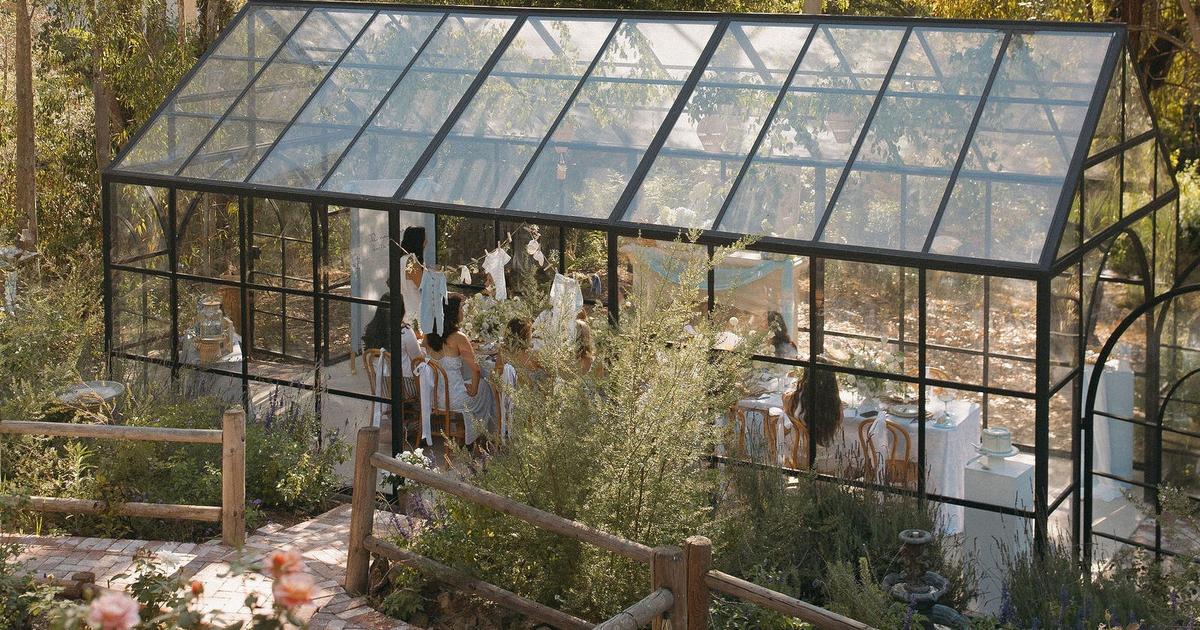
Instead, Rea drew on a decade in the wedding industry to identify a gap: Southern California has plenty of lavish venues charging $50,000 to $100,000 for catering alone, but almost nothing for intimate, affordable events — rehearsal dinners, baby showers, small photo shoots. She designed a custom greenhouse, hired a welder friend, and built the structure for approximately $200,000, including electrical, flooring, and a fireplace. Construction took about ten months. The property itself does the marketing. The hilltop home, purchased in 2024 for roughly $1 million at an 8% mortgage rate ($7,000/month payments), sits above the greenhouse amid 100-foot trees, seasonal creeks, and 150 French lavender plants lining the walkway. Rea describes an aesthetic closer to European countryside than San Diego County — a visual proposition that plays directly to the social-media-driven event economy. The numbers tell a clear story. At $24,000 per month in average revenue, the greenhouse recovers its $200,000 build cost in under nine months — compared to the ADU's roughly 14-year breakeven at $3,500/month rent on a $600,000 investment. Rea funded construction by selling two investment properties while keeping her primary residence in Carlsbad. She has filed a patent on her greenhouse design, suggesting she sees a replicable template, not a one-off. The business model exploits a structural mismatch in the Southern California event market. Large venues optimize for volume (4-5 weddings per day) and high per-event spend. Rea's greenhouse targets the underserved middle: clients who want a distinctive space without five-figure catering minimums. The Instagram-era premium on photogenic authenticity — what Rea frames as people wanting "something real" in an AI-saturated world — provides pricing power that a plain rental unit cannot access. There are real risks beneath the numbers. Revenue from events is seasonal and discretionary, unlike rental income which is contractual. The 8% mortgage rate on the $1 million property means $84,000 per year in debt service before the greenhouse earns a dollar. Zoning, permitting, insurance, and noise complaints from neighbors are unmentioned but ever-present for residential event venues. And the entire model depends on one person's taste, hustle, and local market knowledge — it is not passive income. Still, as a capital allocation decision, Rea's choice is instructive. She identified that the conventional real estate playbook — build an ADU, collect rent — delivers poor returns at current construction costs and interest rates. By converting the same backyard into an experience venue, she captured a dramatically higher revenue-per-square-foot while spending a third of the capital. The question is whether this is a replicable insight or a one-woman arbitrage that closes as soon as neighbors and regulators notice.
Worth reading?
RECOMMENDED
Score
72
/100
Mildly generative — real value creation through market-gap identification and creative capital allocation, but dependent on one operator's skill and potentially fragile to zoning enforcement and competition.
What Is GRIN?
GRIN stands for Generativity, Resilience, Innovation efficiency, and Novelty openness. These four dimensions capture the essential characteristics of any memetic intelligence — whether a nation, a corporation, a religion, or a movement.
About GRINGenerativity
4/5
Resilience
2/5
Efficiency
4/5
Novelty
4/5
Extractive
1/5
Inverted
Does this create new capability or just redistribute existing value?
Genuine value creation: a $200K asset generating $24K/month by filling a real gap in the event market. Not redistributive — she built something new that serves underserved demand.
Verified Facts (10)
Leela Rea, 37, built a greenhouse in her backyard in Vista, California
Purchased the property for approximately $1 million with a mortgage rate near 8%, monthly payments about $7,000
ADU estimate was $500,000 to $600,000 for a 3-bed/2-bath unit expected to rent for about $3,500/month
Greenhouse construction cost approximately $200,000 including electrical, flooring, and fireplace
Construction took about 10 months
Monthly greenhouse revenue averages $24,000
Rea and her husband previously sold a wedding venue business
She filed a patent on the greenhouse design
Sold two investment properties to fund construction; kept Carlsbad residence
Property features approximately 150 French lavender plants and 100-foot trees
More latest news
Read all