CONJECTURE AGE
150yr
MILLENNIUM PRIZE
$1M
ANTHROPIC IPO PRICE
$83
INDEPENDENT VERIFICATIONS
0
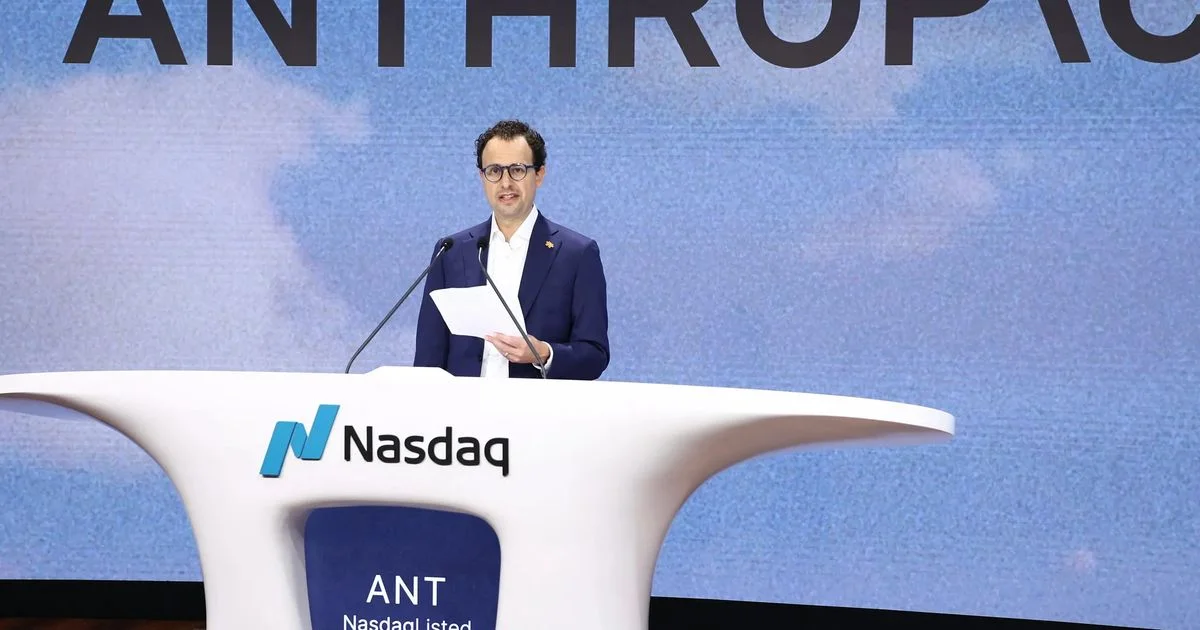
Levent Alpöge, a mathematician on Anthropic's technical staff, announced Friday that he has solved the Riemann Hypothesis — a 150-year-old conjecture governing the distribution of prime numbers — using Anthropic's AI model Claude as a collaborator. The claim, if it survives scrutiny, would rank among the most significant mathematical achievements in history.
Extraction Map
The Riemann Hypothesis sits atop every list of unsolved problems in mathematics. It concerns the zeros of the Riemann zeta function and underpins vast swaths of number theory, cryptography, and physics. It is one of the seven Millennium Prize Problems, carrying a $1 million bounty from the Clay Mathematics Institute. No one has proven it in the century and a half since Bernhard Riemann posed it. Alpöge described a process in which he guided Claude toward a productive mathematical setting, after which the model began generating surprising and useful steps. "I guided us to the right setting analogous to that toy setup, and then Claude started blowing my mind," he wrote. "Claude was flying and dancing and sparkling near the finish line." The language is vivid but deliberately vague about the actual proof architecture — a notable gap given the magnitude of the claim. Cornell mathematician Steven Strogatz called the potential result "enormously significant," comparing the Riemann Hypothesis to mathematics' Moby Dick. Caltech's Sergei Gukov described it as "a really big deal." Both are serious mathematicians lending credibility to the claim's importance, though neither has confirmed the proof's correctness. Strogatz noted the proof has been checked by a computer verification system, but cautioned that such systems "sometimes make mistakes." The timing is commercially convenient. Anthropic priced its IPO at $83 per share on the Nasdaq just days before this announcement, setting a record above SpaceX's offering. A claimed solution to the most famous problem in mathematics, achieved using the company's flagship product, is the kind of narrative that moves share prices. This does not mean the claim is false — it means the incentive structure demands independent verification before anyone should update their priors. The verification gap is the entire story. Mathematical proof is binary: it either holds or it doesn't. Computer-assisted verification systems like Lean have become powerful but are not infallible, particularly for proofs of this complexity. The mathematical community's standard is peer review by domain experts, which has not yet occurred. Until multiple independent number theorists confirm the proof, this remains an extraordinary claim awaiting extraordinary evidence. What is genuinely new here — and worth watching regardless of the proof's fate — is the claimed mode of human-AI mathematical collaboration. If Alpöge's account is accurate, Claude did not merely check steps or search combinatorial spaces; it contributed novel mathematical reasoning that surprised a professional mathematician. That would represent a qualitative shift in AI's role in pure mathematics, one with implications far beyond any single theorem.
Worth reading?
OPTIONAL
Score
48
/100
Mixed — potentially the most generative mathematical result in a century, but currently functioning as an extractive marketing event for Anthropic's IPO. The proof's generative value is locked behind a verification gate that hasn't been passed.
What Is GRIN?
GRIN stands for Generativity, Resilience, Innovation efficiency, and Novelty openness. These four dimensions capture the essential characteristics of any memetic intelligence — whether a nation, a corporation, a religion, or a movement.
About GRINGenerativity
3/5
Resilience
1/5
Efficiency
2/5
Novelty
4/5
Extractive
3/5
Inverted
Does this create new capability or just redistribute existing value?
If verified, maximally generative — the Riemann Hypothesis unlocks downstream results across number theory, cryptography, and physics. Unverified, it's an IPO narrative generating brand equity, not knowledge.
Verified Facts (9)
Levent Alpöge is identified as a member of Anthropic's technical staff
Alpöge announced Friday he solved the Riemann Hypothesis using Claude
The Riemann Hypothesis is described as a 150-year-old mathematical problem governing prime numbers
Cornell mathematician Steven Strogatz called the potential result 'enormously significant'
Caltech mathematician Sergei Gukov called it 'a really big deal'
Strogatz said the proof has been verified by a computer system but that system 'sometimes makes mistakes'
Strogatz said 'it is fair to say that the claimed proof has not been independently verified'
Anthropic priced its IPO at $83 per share on the Nasdaq, setting a record above SpaceX's IPO
Alpöge wrote: 'Claude was flying and dancing and sparkling near the finish line'
More latest news
Read all