COSTCO GENERATORS SOLD OUT
21/26
SOLAR GENERATOR PRICE
$900
INDIVIDUAL PREP SPEND
$1,200
SHIPPING DELAY
14 days
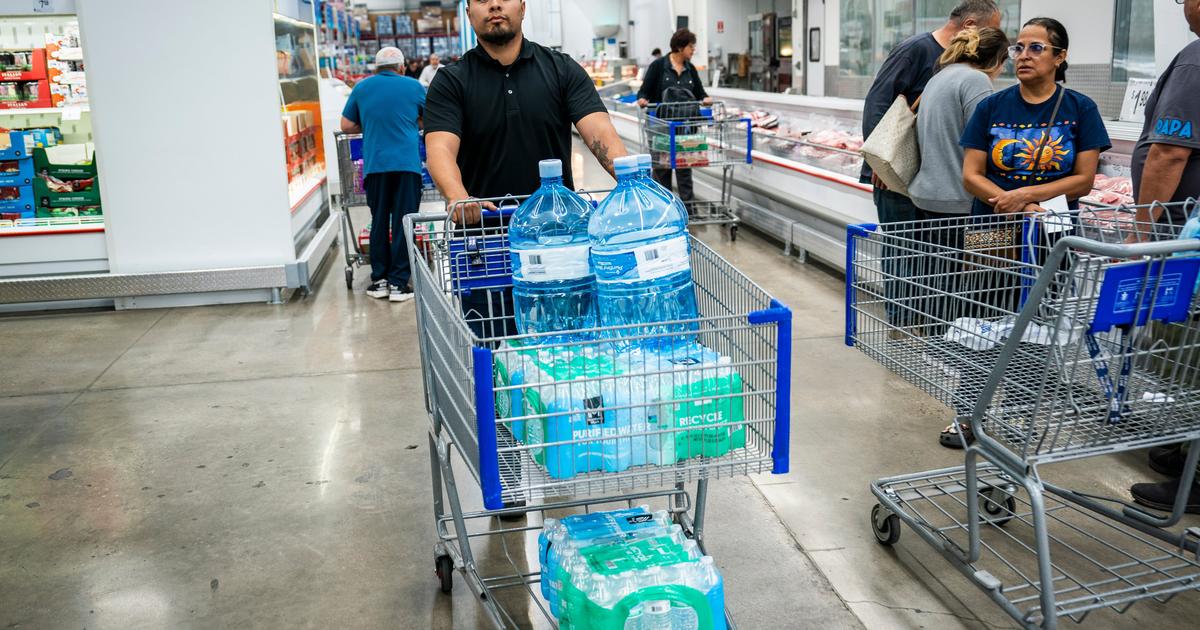
A rolling sequence of high-profile infrastructure failures is pushing American and European consumers into prepper mode, straining supply chains for generators, emergency food kits, and bottled water. The trigger list is striking in its breadth: the longest nationwide flight ground-stop since 9/11, a major Microsoft email outage, cyberattacks on European grocery chains that forced mass food spoilage, and financial-services system failures. Layered on top is diffuse anxiety about AI-driven job displacement and, at the extreme, existential risk.
Extraction Map
Retailers are scrambling. Mizuho Securities analyst David Bellinger visited a Costco and found a $900 solar generator he considered buying; by the next day, it was gone. When he ordered one online, 21 of 26 generator models were sold out. Walmart confirmed rising sales of propane and bulk bottled water around November 18, though the category remains a small share of total revenue. Tractor Supply reported elevated demand nationwide for fuel tanks, water storage, generators, batteries, and food-preservation equipment — canning and dehydrating supplies — with the surge beginning in the first week of November and accelerating after each subsequent incident. Emergency food companies are buckling under order volume. ReadyWise posted a website banner warning that shipments would be delayed until December 2026. My Patriot Supply warned of up to 14 business days for fulfillment, citing "unprecedented" order volume. Both sell long-shelf-life meal kits designed to sustain one person for a month. The anxiety is not confined to the United States. Bellinger's colleagues at Mizuho in London reported panic buying beginning in October, spreading to the U.S. by late that month. The UK government in October 2026 formally advised households to stockpile three days' worth of food, water, and essentials. Between October and November, multiple European supermarket chains suffered cyberattacks that disabled refrigeration systems, forcing large-scale food disposal. U.S. government officials have stated that the string of outages is not the result of coordinated cyberattacks by foreign adversaries. The American Red Cross recommends one gallon of water per person per day, with three days' supply for evacuation and two weeks for sheltering in place. The Department of Homeland Security's ready.gov provides checklists. Anduril co-founder Palmer Luckey, speaking at the NYT DealBook Summit on November 18, said how worried you should be "depends on how prepared you are." Individual spending is notable. AI consultant Heather Nianouris spent approximately $1,200 on Amazon — 16 boxes of tarps, batteries, zip ties, cases of bottled water, canned tuna, and camp-stove fuel — explicitly to avoid the scramble she experienced during COVID-19. She noted that even if nothing happens, the supplies are useful. Tractor Supply also reported rising ammunition sales, though it was unclear whether the driver was anxiety or hunting season; the chain does not sell firearms. The structural picture is a consumer base that has lost confidence in the reliability of digital infrastructure and is converting that anxiety into physical goods. Whether the threat model is rational is secondary; the economic behavior is real, the supply-chain pressure is measurable, and the pattern is spreading across borders. The question is whether this becomes a permanent shift in household spending patterns or a spike that fades once the news cycle moves on.
Worth reading?
SKIP
Score
32
/100
Mildly extractive. Fear-driven demand channels consumer spending toward low-utility hoarding rather than systemic infrastructure improvement. Retailers and emergency-food vendors capture revenue from anxiety; the underlying fragility — single-point digital infrastructure, cyberattack vulnerability — goes unaddressed.
What Is GRIN?
GRIN stands for Generativity, Resilience, Innovation efficiency, and Novelty openness. These four dimensions capture the essential characteristics of any memetic intelligence — whether a nation, a corporation, a religion, or a movement.
About GRINGenerativity
1/5
Resilience
2/5
Efficiency
2/5
Novelty
1/5
Extractive
3/5
Inverted
Does this create new capability or just redistribute existing value?
Near-zero generativity. No new capability is created — consumers buy generators and canned tuna, but the digital infrastructure failures driving the anxiety remain unfixed. Spending reshuffles dollars, not risk.
Verified Facts (11)
David Bellinger, Mizuho Securities analyst, found 21 of 26 generator models sold out on Costco's online store after a $900 solar generator sold out in-store overnight.
ReadyWise website announced shipping delays until December 2026 due to order surge.
My Patriot Supply warned of up to 14 business days for fulfillment, citing unprecedented order volume.
Tractor Supply VP Michael Cooper reported nationwide demand increase for fuel tanks, water storage, generators, batteries, and food-preservation equipment beginning the first week of November 2026.
Walmart confirmed increased sales of propane and bulk bottled water around November 18, 2026.
AI consultant Heather Nianouris spent approximately $1,200 on Amazon for 16 boxes of emergency supplies.
U.S. government officials stated the outages are not the result of coordinated cyberattacks by foreign adversaries.
UK government in October 2026 advised households to stockpile three days' worth of food, water, and essentials.
Palmer Luckey at NYT DealBook Summit on November 18, 2026: how worried you should be 'depends on how prepared you are.'
The longest nationwide flight ground-stop since 9/11 was cited as one of the triggering events.
European supermarket chains suffered cyberattacks between October and November 2026 that disabled refrigeration, forcing large-scale food disposal.
More latest news
Read all