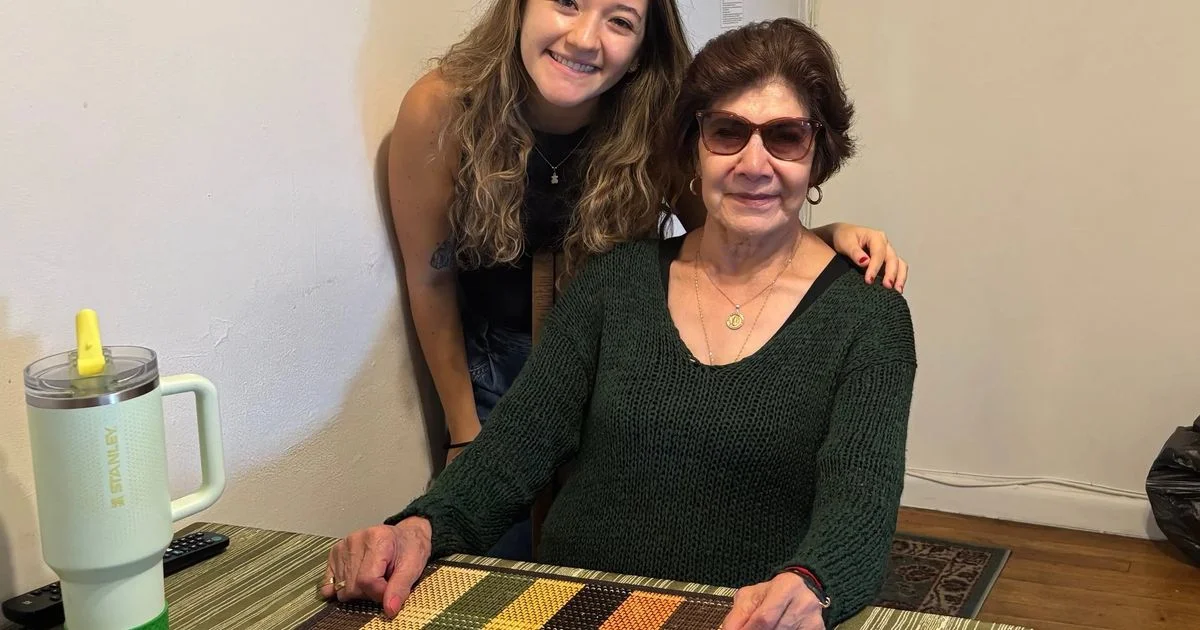
Andrea Fernandez Henao graduated into the 2023 WGA strike, bounced back to her parents' house in South Florida, and spent three years commuting two hours to a job in Miami while her ambitions calcified. The setup is familiar — young creative, priced out, dream deferred — but the pivot is not. She cold-called a 76-year-old Colombian woman named Carmelina whose WhatsApp profile picture was a bunch of pink flowers, and four minutes later had a room in Queens for $700 a month. The essay's real subject isn't housing logistics. It's the mechanics of belonging. Carmelina had been renting her spare bedroom since discovering, after a decade of widowhood, that she liked company. Henao was her third young tenant. The arrangement was less Airbnb, more informal adoption — Carmelina heated up Colombian food for Henao's arrival, left Spanish-language sticky notes on candles, and told her she was a good girl. Henao, who never met her maternal grandmother and lost her paternal one before they could bond, recognized what she'd found. The strongest passages are observational. Carmelina isn't employed at the neighborhood barbershop but shows up daily to sweep, bring lunch, and sit with the barbers. She buys Henao sweets despite being told Henao is quitting sugar. These details do the work that adjectives can't — they show a woman whose social metabolism runs on generosity and presence, not transaction. Henao credits Carmelina with unlocking something she'd lost in college: the willingness to be open with strangers. She started taking overnight film-crew gigs she'd been too anxious to accept. She began talking to people in elevators and calling friends during walks instead of listening to music. The essay frames this as Carmelina's influence, and it's convincing — not because the older woman gave advice, but because she modeled a way of being in a community that Henao had intellectually understood but emotionally abandoned. The writing is competent but not distinctive. The essay follows the personal-essay template precisely: setup (problem), inciting incident (the phone call), rising action (bonding), emotional climax (the grandmother revelation), denouement (she's moving to Manhattan but they'll stay in touch). Every beat lands where you expect it to. That's not a dealbreaker for the form — personal essays are scaffolding for emotional truth, not formal innovation — but it means the piece lives or dies on the specificity of its details, and there it mostly delivers. What the piece quietly documents is a housing arrangement that policy wonks would call intergenerational homesharing — older homeowners with empty rooms matched with younger renters who need affordability and flexibility. Programs like this exist in several US cities. Henao doesn't frame it as policy, and that's the right call; the essay works because it stays personal. But the structural reality is visible underneath: a 76-year-old woman in a 35-year tenancy and a 20-something priced out of the same city found each other through a friend-of-a-friend network that no app could replicate. The emotional core — a young woman without grandmothers finding one in a stranger — is genuine and earned. It's a small story told at the right scale.
Worth reading?
OPTIONAL
Score
28
/100
Readers who enjoy earnest first-person essays about unlikely friendships, especially those navigating their own post-college displacement or missing grandparent relationships.
Cultural Placement
Like a Humans of New York portrait stretched to essay length, with the domestic warmth of Carmen Maria Machado's memoir work but none of its formal ambition. Closest kin: the Modern Love column at its most earnest — immigrant-family emotional registers, New York as backdrop rather than character, the 'stranger who changed my life' arc that the form has run hundreds of times. Think Chimamanda Ngozi Adichie's personal essays minus the intellectual scaffolding, plus the unguarded sincerity of a really good Reddit post.
Honest assessment
A warm, competent personal essay that earns its emotional payoff through specific domestic details rather than literary craft. It documents an intergenerational living arrangement that's quietly more interesting as social infrastructure than the essay acknowledges. Worth five minutes if the premise speaks to you; not a piece you'll remember in a month.
What Is NOVEL?
28
/ 100
BedrockNews applies a structured analytical framework called NOVEL to cultural works — games, books, film, music, and more.
How NOVEL worksNerve
1/5
Originality
1/5
Voice
2/5
Endurance
1/5
Lineage
2/5
What did the artist risk? What could have failed?
Zero formal risk. Every structural choice — the chronological arc, the emotional reveal, the tidy ending — minimizes the chance of failure. Safe and competent.
Verified Facts (9)
Author graduated during the 100+ day WGA strike
Carmelina is a 76-year-old Colombian woman living in Queens
Monthly rent was $700, a special rate given through a family friend referral
Carmelina had lived in the same building for 35 years
Andrea was the third young woman to rent the spare bedroom
Carmelina's WhatsApp profile picture was a bunch of pink flowers
The initial phone call lasted approximately 4 minutes
Carmelina began renting after learning a woman from her church needed housing
Andrea had been widowed for 10 years at the time — correction: Carmelina had been widowed for 10 years
More latest news
Read all