LEVERAGE MULTIPLE
4.3×
CRUDE GAIN · SHORT WINDOW
~28.4%
NIKKEI BOUNCE
6.6%
NOMURA · NEXT HIGH
2 yrs
Since June 2026, Japanese equities have been stuck in a rut. Oil prices remain elevated, the Democratic sweep in the U.S. midterms has raised the specter of tighter AI regulation, and Nvidia CEO Jensen Huang's personal scandal hasn't helped sentiment. The Nikkei 225 broke below ¥60,000 around the midterms for the first time in roughly six months. For most retail investors, there was nothing obvious to do.
Extraction Map
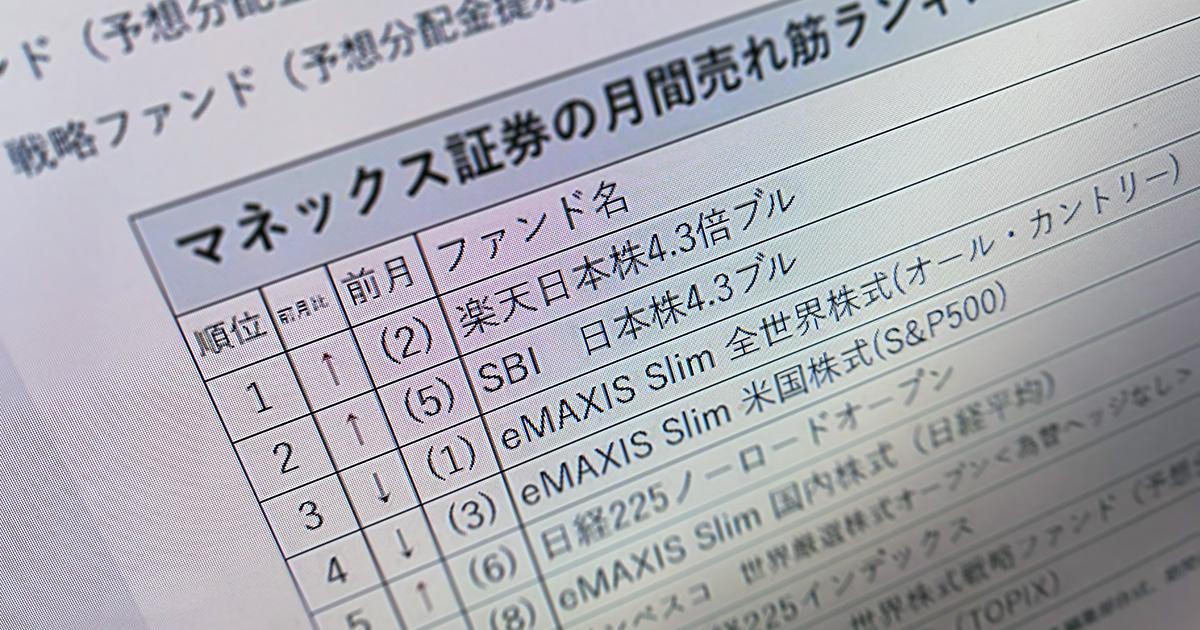
But somebody was buying — aggressively. According to Finasee, a Japanese asset-formation media outlet, leveraged mutual funds targeting 4.3× daily Nikkei returns dominated the sales rankings in October 2026. The "SBI Japan Stock 4.3 Bull" and "Rakuten Japan Stock 4.3× Bull" seized the #1 and #2 spots by sales volume, even as their NAVs were cratering alongside the index. The tell is in which ranking they topped. At SBI Securities, these products dominated the "sales amount" (yen volume) ranking but were nowhere to be found on the "sales count" (number of transactions) ranking. Translation: a small number of investors placed very large orders. These weren't panicking retail traders panic-buying a dip. They were concentrated, high-conviction bets from players with real capital. The trade paid off. The Nikkei rebounded approximately 6.6% after the midterm selloff. At 4.3× leverage, that translates to a crude gain of roughly 28.4% over a short window. That's the kind of return that makes headlines — and the kind that conceals the equally brutal math on the downside. Leveraged products amplify losses symmetrically, and they suffer from "decay" (減価) — a compounding drag that erodes value in volatile, sideways markets even when the underlying index is flat over time. The structural detail matters: these leveraged funds are ineligible for Japan's tax-advantaged NISA accounts. That alone filters out most of the country's growing army of index-investing retail participants — the "All Country" (オルカン) crowd steadily dollar-cost-averaging into global equity funds. The leveraged buyers are a different species entirely: likely semi-professional or institutional-adjacent investors who can stomach the risk, understand the decay mechanics, and have the capital to move the dollar-volume charts without moving the transaction-count charts. Nomura Securities added a sobering coda on November 10, projecting the Nikkei's next all-time high is roughly two years away — a "two-year recovery" from the H2 2026 drawdown. For the leveraged buyers, that timeline is irrelevant; they were trading a bounce measured in days, not years. For the retail majority, Nomura's forecast is a reminder that the market's recent pain has structural roots in energy costs, regulatory headwinds, and global uncertainty. The episode crystallizes a familiar pattern in Japanese retail finance: the growing bifurcation between passive, tax-sheltered, long-horizon index investors and a smaller cohort of aggressive tactical traders exploiting volatility with instruments most retail participants don't touch. The leveraged fund surge isn't a sign of irrational exuberance — it's a sign that capital with edge and risk tolerance moves fastest when everyone else is frozen.
Worth reading?
SKIP
Score
28
/100
Extractive. Value is being redistributed from future retail imitators (who will try this at the wrong time) to a small cohort of sophisticated large-ticket investors who timed a tactical bounce. The fund providers extract fees on both sides.
What Is GRIN?
GRIN stands for Generativity, Resilience, Innovation efficiency, and Novelty openness. These four dimensions capture the essential characteristics of any memetic intelligence — whether a nation, a corporation, a religion, or a movement.
About GRINGenerativity
1/5
Resilience
1/5
Efficiency
2/5
Novelty
2/5
Extractive
4/5
Inverted
Does this create new capability or just redistribute existing value?
Zero new value created. A leveraged bet on a short-term bounce is pure redistribution — the underlying economy, productivity, and corporate earnings are unchanged by the trade.
Verified Facts (7)
SBI Japan Stock 4.3 Bull and Rakuten Japan Stock 4.3× Bull ranked #1 and #2 by sales volume in October 2026 per Finasee
Leveraged funds appeared in SBI Securities' sales amount ranking but not in the sales count (transaction number) ranking
Nikkei 225 fell below ¥60,000 around the U.S. midterm elections, then rebounded approximately 6.6%
6.6% × 4.3 = approximately 28.38% crude leveraged gain
Leveraged funds are ineligible for NISA accounts
Nomura Securities on November 10 projected the Nikkei's next all-time high is approximately 2 years away
Leveraged products carry 'decay' (減価) risk from daily rebalancing
More latest news
Read all