ANNUAL REVENUE
8 figures
SEED ROUND · 2016
$350K
PRICE BREAKPOINT
<$25
EMPLOYEES
15-20
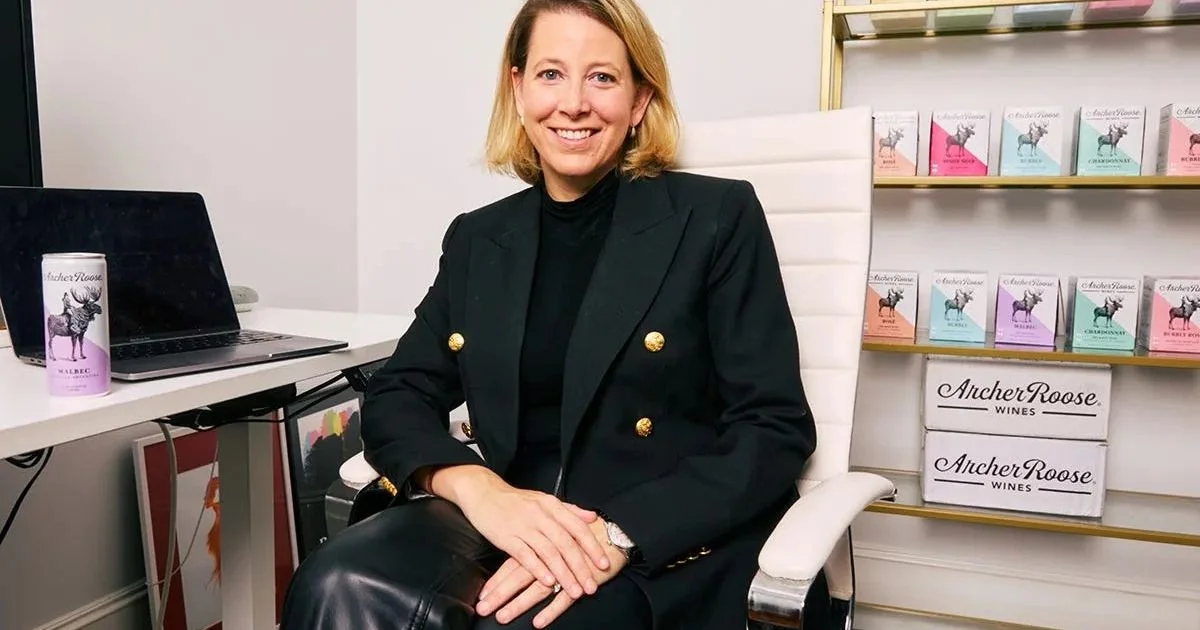
Marian Leitner-Waldman's Archer Roose Wines started from a structural observation, not a lifestyle pitch. For wine bottles priced under $25, consumers pay more for glass, shipping, and packaging than for the liquid inside. Canned wine inverts that ratio — aluminum is lighter, infinitely recyclable, and rides existing infrastructure. The company launched in 2015 with Leitner-Waldman's MBA savings and a $350,000 friends-and-family round in 2016.
Extraction Map
The distribution strategy was the real lever. Traditional wine distributors wouldn't touch canned product, so Archer Roose went to beer distributors instead — companies already built for cans, cold chain, and high-volume retail. That single channel decision unlocked grocery, convenience, and event venues that most wine startups never reach. Product development was deliberately expensive. Leitner-Waldman partnered with Chilean winemaker Luca Hodgkinson and Cornell food scientist Gavin Sacks to study how different wine varietals interact with can liners over time — research the industry had largely neglected. Investors pushed back on the R&D spend, but the bet was that repeat purchase in single-serve wine depends entirely on taste consistency. The company sources wine from Chile, ships it in flexitanks to the US, and packages domestically — a model proposed by Leitner-Waldman's husband David Waldman, who chairs the board. The couple deliberately limited themselves to one full-time operator to avoid forcing employees to report to a married pair. The team now runs 15-20 employees, fully remote, working with five winemakers globally. Constellation Brands took a minority stake in 2022, providing both capital and industry legitimacy for a brand that didn't fit neatly into existing wine categories. Actress Elizabeth Banks joined as chief creative officer and co-owner in 2021. Revenue has reached eight figures, though the company doesn't disclose exact numbers. The 2027 roadmap focuses on low-alcohol options responding to consumer demand, and — notably — sharing intellectual property around can-liner chemistry with the broader wine industry. That's an unusual move: building the category rather than hoarding competitive advantage, a signal that Archer Roose sees market expansion as more valuable than margin protection. The underlying question is whether canned wine moves from novelty to default format for sub-$25 wine. If packaging and transport really do constitute the majority of cost for cheap bottles, the economics favor the can. The risk is that wine culture's glass-bottle bias proves stickier than the spreadsheet suggests.
Worth reading?
RECOMMENDED
Score
76
/100
Mildly generative — the business creates real value by reducing packaging waste, lowering per-unit transport costs, and opening wine to beer-distribution channels, though it remains a single-brand story without systemic industry transformation yet.
What Is GRIN?
GRIN stands for Generativity, Resilience, Innovation efficiency, and Novelty openness. These four dimensions capture the essential characteristics of any memetic intelligence — whether a nation, a corporation, a religion, or a movement.
About GRINGenerativity
4/5
Resilience
3/5
Efficiency
4/5
Novelty
4/5
Extractive
1/5
Inverted
Does this create new capability or just redistribute existing value?
Genuine value creation through format innovation. Flipping the cost ratio so consumers pay for wine, not glass, expands the market and lowers waste. Still one brand, not an industry shift.
Verified Facts (12)
Marian Leitner-Waldman is 39 years old and based in Boston
She previously worked at Gavi (the vaccine alliance) and the Global Partnership for Education at the World Bank
Her husband David Waldman previously founded his own winery in the Republic of Georgia
The company raised $350,000 through a friends-and-family round in 2016
They partnered with Cornell food science professor Gavin Sacks on can-liner research
Chilean winemaker Luca Hodgkinson agreed to collaborate with the brand
Constellation Brands took a minority stake in 2022
Elizabeth Banks joined as chief creative officer and co-owner in 2021
The company has 15 to 20 employees and works with 5 winemakers globally
Revenue has reached eight figures
Canned products began selling in 2017
Plans for 2027 include more low-alcohol options
More latest news
Read all