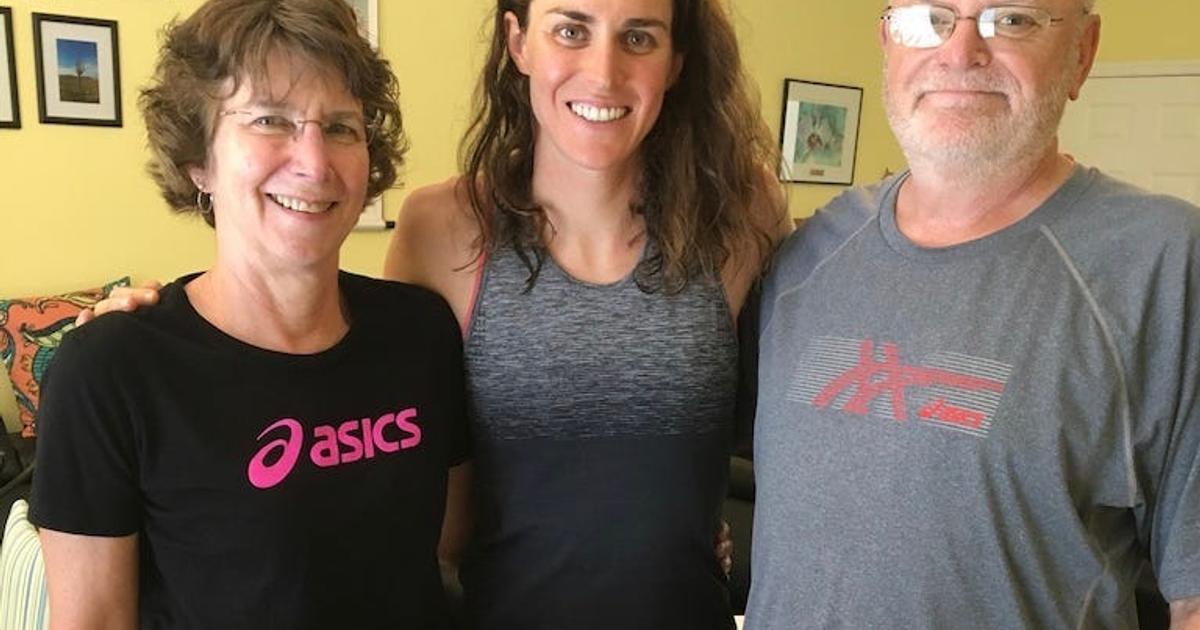
Nancy Jorgensen's essay is a quiet demolition of the dominant parenting-for-excellence narrative. Her daughter Gwen didn't get a swimming scholarship. Didn't make it as a competitive runner. Was working as a CPA at a Big Four firm when USA Triathlon cold-called her desk. Seven years later she stood on the Olympic podium with a gold medal. The timeline alone is a rebuke to the 10,000-hours-from-age-five industrial complex. The structural insight is about serial pivots, not singular talent. Gwen's swimming ended with a coach telling her to try something else. Her running ended with a stress fracture and a DNF. Her accounting career was interrupted by a phone call she literally laughed off. Each failure didn't destroy her — it freed capacity for the next thing. Nancy frames this as the product of a specific parenting choice: love that was explicitly decoupled from performance. The violin negotiation scene is the essay's most revealing moment. Young Gwen bargains her way out of orchestra rehearsal and into extra swim practice at the YMCA. Nancy agrees — not because swimming was the strategic play, but because she recognized the same discipline in the pool that she valued in the instrument. This is parenting by principle rather than by outcome, and it's harder than it looks precisely because you can't point to a spreadsheet. What Nancy doesn't say is as important as what she does. There's no mention of sport psychologists, nutritional periodization, or competitive travel circuits. The family's investment was emotional infrastructure: the conversation after Gwen was cut from swimming where they told her their love was unconditional, the encouragement to stay open to what the world might offer. When USA Triathlon came calling, Gwen had the psychological flexibility to say yes to something absurd — she didn't even own a bicycle. The financial independence thread is subtle but load-bearing. When Nancy offered to support Gwen financially so she could train full-time, Gwen refused. She found local sponsors, reduced her work hours, and maintained her own economic agency. Only 18 months in did she leave accounting entirely. This isn't the story of a family bankrolling an athletic dream — it's the story of a young professional making sequential bets with her own resources. The essay's weakness is its retrospective clarity. Told from the vantage of a gold medal, every pivot looks like destiny. Nancy acknowledges she never planned for an Olympic daughter, but the narrative still has a teleological pull — each setback leading neatly to the next chapter. The messy middle, the periods of genuine doubt or aimlessness, get compressed. What did the months between getting cut from swimming and joining the track team actually feel like? The essay gestures at identity crisis but doesn't linger. Still, the core message lands because it's structurally honest. Nancy didn't build an athlete. She built a person who could absorb failure, maintain self-worth independent of outcomes, and remain open to opportunities that didn't exist in any plan. That Gwen ended up on an Olympic podium is remarkable. That she could have ended up happy as a CPA is the actual point.
Worth reading?
OPTIONAL
Score
44
/100
Parents anxious about the optimization treadmill who need permission to let their kids meander. Also worth five minutes for anyone who enjoyed David Epstein's 'Range' and wants a single-family case study.
Cultural Placement
Like Anne Lamott's 'Operating Instructions' crossed with Malcolm Gladwell's talent-myth deconstructions, but told in a compressed Business Insider personal essay format. The mechanism is closer to David Epstein's 'Range' — the argument that late specialization and serial pivoting outperform early lockdown — but delivered as maternal memoir rather than research synthesis. The emotional register sits somewhere between a commencement speech and a parenting magazine column, with the restraint of the former and the accessibility of the latter.
Honest assessment
A well-told personal essay that works because the underlying facts are extraordinary — CPA to Olympic gold in seven years via a cold call she laughed off. The writing is competent but conventional; the story does the heavy lifting. Read it for the anecdote, not the prose.
What Is NOVEL?
44
/ 100
BedrockNews applies a structured analytical framework called NOVEL to cultural works — games, books, film, music, and more.
How NOVEL worksNerve
2/5
Originality
2/5
Voice
2/5
Endurance
3/5
Lineage
2/5
What did the artist risk? What could have failed?
Low risk throughout. The contrarian move — 'I didn't plan this' — is the safest possible frame for a gold medalist's parent. No structural or formal gambles taken.
Verified Facts (12)
Gwen Jorgensen was a CPA at a Big Four accounting firm before being scouted by USA Triathlon
She did not receive a college sports scholarship for swimming and entered as a walk-on
USA Triathlon contacted her at her desk based on her college swimming and track records
She did not own a bicycle when first approached; USA Triathlon provided one and a coach
Within 18 months she left accounting to train full-time for triathlon
Within 3 years she placed 38th at the Olympics
Within 7 years of starting triathlon she won an Olympic gold medal
Her mother Nancy Jorgensen is a music educator who encouraged violin lessons
Gwen negotiated out of orchestra rehearsal for extra swim practice at the YMCA
In high school Gwen convinced her school to exempt her from first period to swim
Her college swim coach advised her to pursue other interests after two years
Her final college running race ended in a DNF due to a stress fracture
More latest news
Read all