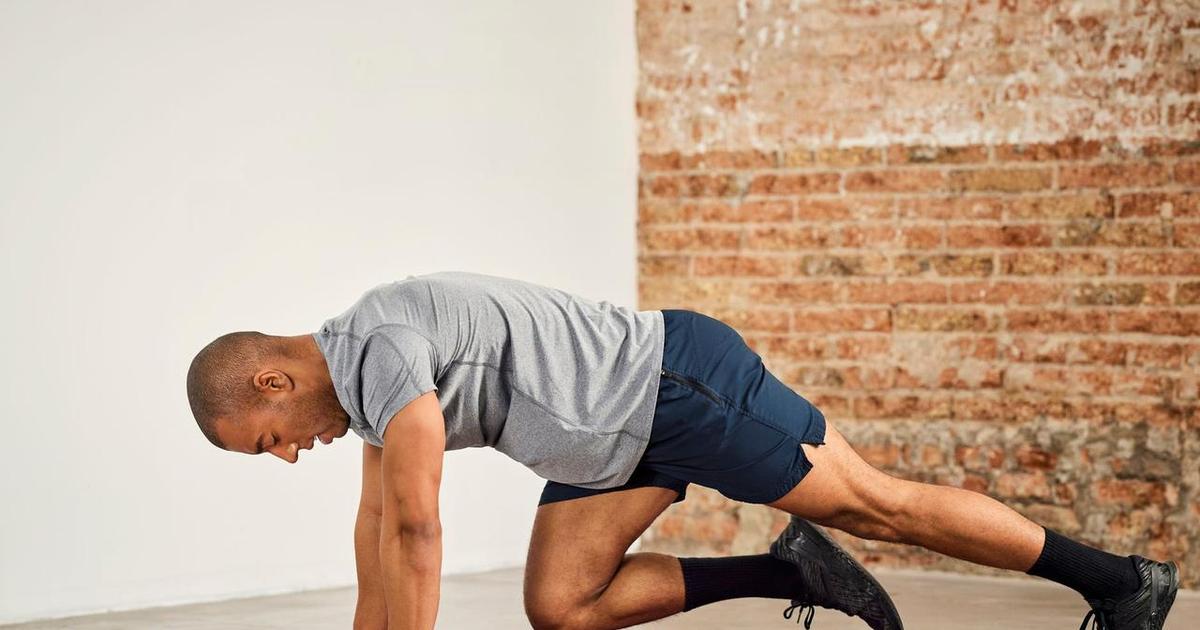
Mountain climbers are one of those exercises everyone has seen, most people have attempted, and very few perform correctly. This piece from personal trainer Miriam Fried, founder of MF Strong in New York, makes a simple case: if you want functional core strength, ditch the crunches and learn to hold a plank that actually moves. The core argument — and it's a good one — is that crunches are not functional. They isolate a narrow band of abdominal muscle through a limited range of motion, and they do nothing for the stabilizer muscles that actually protect your spine and transfer force through your body. Mountain climbers, done right, train the entire core as a unit while simultaneously elevating heart rate. It's a compound movement disguised as a simple drill. Fried's most useful insight is about progression. The common failure mode isn't laziness — it's ambition. People try to go fast before they can hold a solid high plank. Hips sag, shoulders drift forward of the wrists, and the lower back takes the load the core should be carrying. The fix is boring but effective: slow down, nail the plank first, and earn speed over weeks. The article walks through the two most common form errors — hips too high (pike position, which shifts work to hip flexors) and hips too low (sag position, which loads the lumbar spine). Both reduce core activation and increase injury risk. The correction for each is the same: think of your body as a rigid plank from head to heels, and move your legs underneath that structure. Fried also pushes back on the spot-reduction myth directly. No amount of crunches will burn belly fat. Core training builds the muscular foundation that makes every other movement — running, lifting, carrying groceries — safer and more efficient. This reframing from aesthetics to function is the article's quiet strength. For beginners, the recommended on-ramp is modified planks — hands elevated on a box or chair, or knees on the floor — held for progressively longer durations before adding the climbing motion. It's standard progressive overload advice, but it's the kind of thing most fitness content skips in favor of flashier programming. This is a reprint from January 2022, which is worth noting: nothing here has changed because the biomechanics haven't changed. The advice is durable precisely because it's basic. No equipment, no gym membership, no novelty — just a floor and the willingness to move slowly until you've earned the right to move fast.
Worth reading?
OPTIONAL
Score
36
/100
Fitness beginners who have never been taught proper plank form and need a quick, trustworthy reference. If you already train regularly, you know all of this.
Cultural Placement
Like a Men's Health form-check sidebar stretched to article length, with the corrective philosophy of physical therapist Kelly Starrett's 'Becoming a Supple Leopard' but none of its depth. Sits in the tradition of Insider's accessible health explainers — competent, clear, and deliberately surface-level. Think of it as the bodyweight equivalent of a Serious Eats recipe basics post: nothing you haven't heard, but organized well enough to actually use.
Honest assessment
A clean, accurate form guide for mountain climbers that does exactly what it promises and nothing more. Useful as a quick reference for beginners; invisible to anyone with six months of training experience. The reprint status (originally 2022) confirms its nature as evergreen filler, not timely insight.
What Is NOVEL?
36
/ 100
BedrockNews applies a structured analytical framework called NOVEL to cultural works — games, books, film, music, and more.
How NOVEL worksNerve
1/5
Originality
1/5
Voice
2/5
Endurance
3/5
Lineage
2/5
What did the artist risk? What could have failed?
Zero risk taken. This is the safest possible fitness content — a well-known exercise explained correctly. No controversial claims, no novel programming, no creative format choices.
Verified Facts (5)
Miriam Fried is a New York-based personal trainer and founder of MF Strong
Crunches are described as less effective than planks and mountain climbers for core training
Common form errors include hips too high and hips too low
Originally published January 22, 2022; republished November 18, 2026
Spot reduction of fat is described as impossible
More latest news
Read all