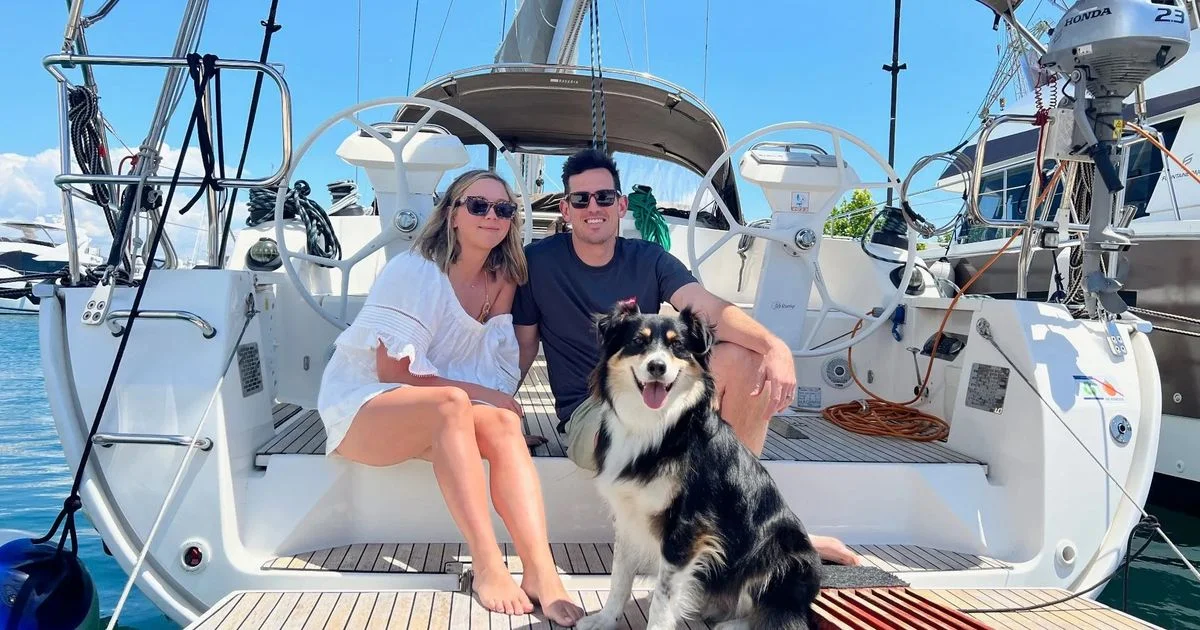
Hannah Bailey and her husband didn't stumble into liveaboard life. They engineered it. After her husband's naval career planted the seed, they spent two and a half years funneling most of their income into a dedicated boat fund, targeting a six-figure savings threshold before even looking at hulls. By August 2022, they flew to Croatia — a known market for ex-charter fleet sailboats — inspected several vessels, and put down a deposit on one that balanced comfort, speed, and space. The final price exceeded €100,000, inflated by unfavorable exchange rates. The financial architecture is as deliberate as the sailing itself. They estimated an annual budget of roughly AUD 50,000 to sustain liveaboard life. Bailey negotiated reduced hours to keep her Australian job through year's end, while her husband cashed out long-service and annual leave. After that runway expired, she launched a marketing consultancy and worked remotely via Starlink from wherever the boat happened to be. Two income sources, one flexible, one finite — structured to cover the gap between dream and sustainability. By May 2023, they moved aboard full-time with their Australian Shepherd. The early months were dominated not by sailing — which Bailey says was the easiest part — but by the relentless maintenance tax of boat ownership. Solar panels, battery systems, new electronics: the original systems failed at the worst moments, triggering unplanned upgrades and spending. The mornings were frustration; the afternoons were Aperol spritzes at anchor. This is the honest texture of the lifestyle that glossy YouTube compilations skip. The ocean crossings delivered what you'd expect and what you wouldn't. Bailey describes confronting genuine fear — towering waves, howling wind in pitch darkness — and learning to function inside it rather than escape it. She frames this not as adventure-tourism adrenaline but as a recalibration of what stress actually means: her previous ceiling was a missed work deadline. The sensory reward — hundreds of dolphins, humpback whales at arm's length, mornings powered by solar-generated electricity — is presented as proportional to the discomfort, not separate from it. Over nearly three years, they visited 20 countries across five continents, reaching their primary goal of French Polynesia by sail. Bailey is explicit that this was always time-limited by design. They never intended permanence. The couple has since returned to Australia, and she's already thinking about the next boat, the next route. The piece is honest about what was sacrificed — convenience, comfort, the ease of a supermarket run — and what was gained: a kind of self-sufficiency and perspective shift that she argues wouldn't have been possible if they'd waited for retirement. What makes this story structurally interesting rather than merely aspirational is the specificity. Six figures saved. €100,000+ purchase price. AUD 50,000 annual operating budget. Starlink for remote work. Two and a half years of aggressive saving. These aren't round numbers dropped for effect — they're the load-bearing beams of a lifestyle that collapses without them. Bailey doesn't pretend this is accessible to everyone, but she does demonstrate that the barrier is primarily organizational discipline rather than extraordinary wealth. The implicit argument is about temporal arbitrage: the same experience at 35 versus 65 is a fundamentally different experience, and the couple chose to pay the comfort premium now rather than the regret premium later. Whether that trade appeals depends entirely on what you value, but the accounting is transparent enough to let you decide for yourself.
Worth reading?
OPTIONAL
Score
28
/100
Anyone actively researching liveaboard sailing finances who wants a concise, honest-enough first-person data point with real numbers. Skip if you've read more than three of these already.
Cultural Placement
Like the financial specificity of Mr. Money Mustache crossed with the sensory texture of a Sailing La Vagabonde vlog, but written as a single reflective essay rather than serialized content. Sits in the lineage of 'radical lifestyle change' personal essays that Business Insider and similar outlets publish regularly — the genre that runs from Tim Ferriss's 4-Hour Workweek through the FIRE movement blogs to the current wave of liveaboard and van-life confessionals. Bailey's version distinguishes itself through honest cost accounting and a refusal to pretend permanence, but operates within extremely well-worn formal territory.
Honest assessment
A perfectly competent entry in the 'we quit our jobs and sailed the world' genre, elevated slightly by specific financial figures and an honest admission that the lifestyle is temporary and uncomfortable. It delivers exactly what Business Insider's audience expects from this format — no more, no less. Useful as a data point for aspiring liveaboards, forgettable as prose.
What Is NOVEL?
28
/ 100
BedrockNews applies a structured analytical framework called NOVEL to cultural works — games, books, film, music, and more.
How NOVEL worksNerve
1/5
Originality
1/5
Voice
2/5
Endurance
1/5
Lineage
2/5
What did the artist risk? What could have failed?
Almost no formal risk. This is a well-tested editorial format — first-person lifestyle pivot essay with financial details — published on a platform where it's standard inventory. The life choice was risky; the writing about it isn't.
Verified Facts (10)
Purchased the sailboat in Croatia in August 2022
Paid over €100,000 for the sailboat
Estimated annual budget of approximately AUD 50,000
Moved aboard full-time in May 2023 with an Australian Shepherd
Explored 20 countries across five continents
Used Starlink internet for remote work aboard the boat
Unfavorable exchange rates added thousands of dollars to the final sale price
Husband's naval career provided sailing foundation
Bailey launched a marketing consultancy for remote income
Spent two and a half years saving before purchase
More latest news
Read all