Get it
ブックダーツ ブックマーク ステンレス bag 12コ入り
on Amazon.co.jp
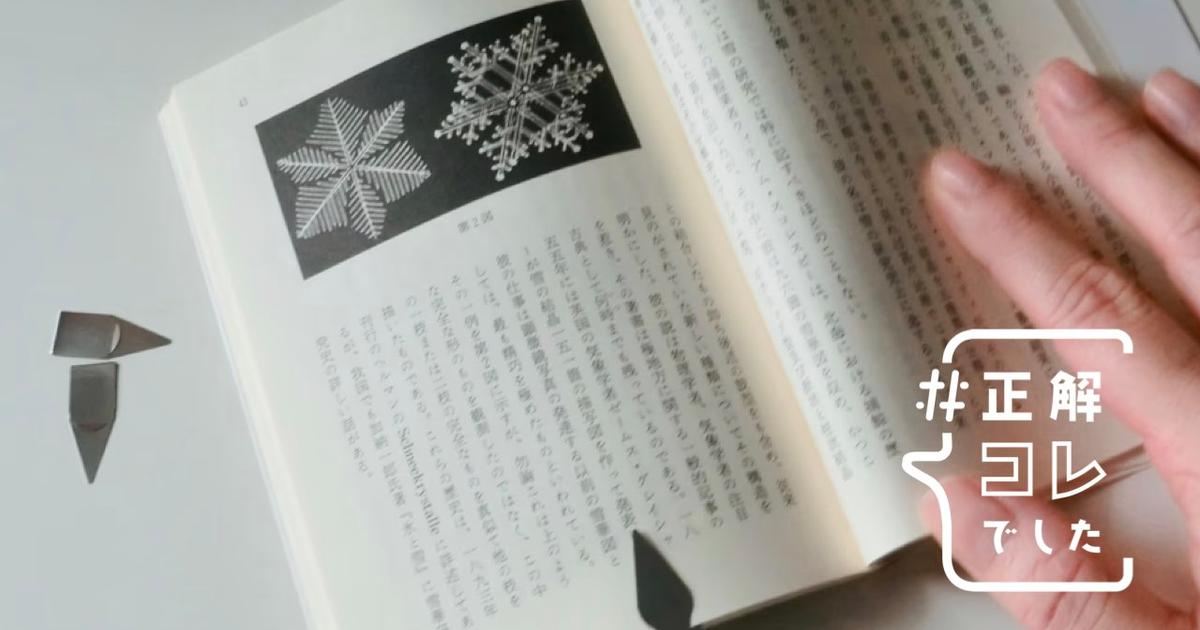
Here is the quiet truth about physical book reading in 2026: the friction isn't the reading itself, it's the re-entry. You put a book down mid-page, pick it up two days later, and spend thirty seconds scanning for where you stopped. A bookmark gets you to the page. It does not get you to the line. Book Darts solve this with an almost comically simple mechanism. Each dart is a 0.1mm-thick arrow-shaped metal clip, manufactured in Oregon, that slides onto a page edge and points at the exact line where you left off. They come in stainless steel, bronze, and brass. At ¥770 for 12 or in a 50-piece tin, they're priced like premium stationery — not cheap for what they are, but not absurd either. The review by freelance writer Fuyuko Nakatani at Business Insider Japan is a straightforward product test. She bought the 12-pack in stainless steel, used them on bunkobon (Japanese pocket paperbacks), and found they clip onto thin paper more easily than expected. The arrow shape lets you mark favorite passages, study material, or illustrations without underlining or dog-earing. Because they're metal, they survive being tossed in a bag without bending or getting grimy the way paper sticky notes do. The downsides are real and honestly reported. The metal tip can tear pages if you flip carelessly. They're light enough to lose easily — Nakatani started carrying hers in a pill case inside a book pouch. And they're more expensive per unit than any sticky flag you'll find at a convenience store. These are tradeoffs, not dealbreakers, but they matter if you're rough with your books. What makes Book Darts interesting as a product category is their position between bookmark and annotation. They function like reusable, non-destructive sticky tabs that happen to point at a specific line. For anyone who keeps multiple books going simultaneously — bedside stacks, study texts, reference volumes — the ability to mark dozens of spots across several books without damaging any of them is the actual value proposition. Nakatani's verdict is enthusiastic: she plans to order the 50-piece tin immediately. That tracks. This is a product that either clicks with your reading habits or doesn't. If you read one book at a time on a Kindle, Book Darts are irrelevant. If you have six physical books open on your nightstand and care about keeping them in good condition, they're a small upgrade that compounds over time.
Worth reading?
OPTIONAL
Score
36
/100
Physical book readers who keep multiple books going simultaneously, care about preserving book condition, and enjoy Japanese stationery culture. Skip if you read exclusively on e-readers.
Cultural Placement
Like the Wirecutter's best 'boring problem, elegant fix' reviews but filtered through Japanese stationery culture's obsession with incremental refinement. Think the same design philosophy behind Midori Traveler's Notebook or Kokuyo's campus notebooks — products where the form factor IS the innovation. Closer to Monocle's product pages than a tech gadget review, with the specific enthusiasm of a bunbougu (stationery) hobbyist community endorsement.
Honest assessment
This is a competent, honest product review that does exactly what it sets out to do: tell you whether Book Darts are worth ¥770. It's not trying to be more than that. If you're the target reader — someone with a nightstand stack of physical books — the review gives you enough information to decide in three minutes.
What Is NOVEL?
36
/ 100
BedrockNews applies a structured analytical framework called NOVEL to cultural works — games, books, film, music, and more.
How NOVEL worksNerve
1/5
Originality
2/5
Voice
2/5
Endurance
2/5
Lineage
2/5
What did the artist risk? What could have failed?
Zero risk taken. This is a friendly product endorsement in a 'things I bought' series. The writer liked it and said so. Nothing could have failed.
Verified Facts (7)
Book Darts are manufactured in Oregon, USA
Available in stainless steel, bronze, and brass
Each dart is 0.1mm thick
12-pack costs ¥770 (tax included)
50-piece tin version also available
Author is Fuyuko Nakatani, freelance writer
Article published November 19, 2026 on Business Insider Japan
More latest news
Read all