EDIT TIME CUT
75%
VIDEO PRODUCTION
2h → 30m
JUNIOR TRAINING
1-4 yrs
HEADCOUNT ADDED
0%
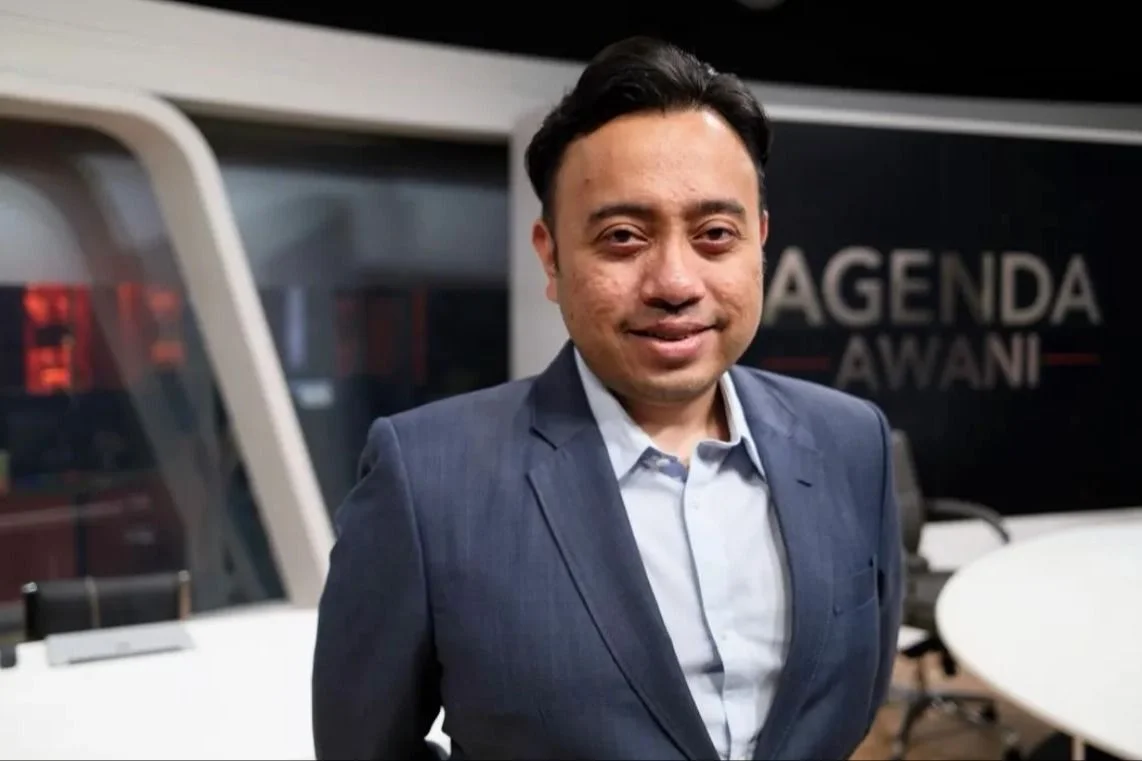
A single number frames the entire debate: a news video that once required two hours of editing now takes thirty minutes with AI assistance. That 75% time saving sounds like pure upside until you ask what happens to the 90 freed minutes. According to Shafizan Johari, a Malaysian media transformation practitioner interviewed by Business Insider Taiwan at the 10th Taipei International Media Forum, the answer in most newsrooms is straightforward — management demands more content, not more rest.
Extraction Map
Johari's observation is that AI's first-order effect in newsrooms is a pure throughput multiplier. Media organizations produce more text, video, audio, and social content without hiring additional staff. In an industry squeezed by platform-dependent traffic, fragmented reading habits, and shrinking budgets, that productivity gain is irresistible. The economics are obvious: same headcount, more output, lower unit cost per piece. But Johari's real concern is second-order and structural. Junior reporters typically need one to four years of hands-on work — writing flawed drafts, making editing mistakes, learning to verify sources — before they become competent professionals. When AI automates precisely those entry-level tasks, the apprenticeship pipeline breaks. The newsroom loses its training ground. Johari noted that some new hires cannot even write a complete sentence when they start; the gap between that baseline and professional competence was historically closed through repetition, correction, and mentorship embedded in daily production work. The verification problem compounds this. Johari is blunt: "AI cannot fact-check for you, and even if AI fact-checks for you, you cannot trust it 100%." Senior reporters possess the domain knowledge, source networks, and judgment to catch AI-generated errors. Junior reporters who never built those muscles through practice cannot perform that quality-control function. Speed without judgment means errors propagate faster and at greater scale. Johari's prescription is characteristically pragmatic. He urges journalism students in Malaysian universities to read more and build deeper subject-matter expertise than their AI tools possess. He encouraged a young reporter in his thirties — with a photography background and field experience in Iran and Syria — to publish a photo-story collection, preserving craft skills that might otherwise atrophy as newsroom workflows become AI-dependent. The deeper structural question is whether the journalism industry is cannibalizing its own future workforce to meet present productivity demands. If the apprenticeship pipeline dries up, the pool of senior journalists capable of editorial judgment, source development, and verification shrinks over time. The industry then faces a talent cliff: plenty of AI-augmented output, but fewer humans qualified to ensure any of it is trustworthy. Whether journalists "disappear" is therefore not primarily a headcount question. It is a capability question. If newsrooms treat the freed time exclusively as a production multiplier and never reinvest it in training, they will optimize themselves into a workforce that can produce content at scale but cannot vouch for its accuracy — the one thing that distinguishes journalism from content generation.
Worth reading?
SKIP
Score
36
/100
Extractive — newsrooms capture AI's productivity gains as increased output volume while depleting the training pipeline that produces the senior journalists needed to maintain content quality.
What Is GRIN?
GRIN stands for Generativity, Resilience, Innovation efficiency, and Novelty openness. These four dimensions capture the essential characteristics of any memetic intelligence — whether a nation, a corporation, a religion, or a movement.
About GRINGenerativity
2/5
Resilience
1/5
Efficiency
3/5
Novelty
2/5
Extractive
4/5
Inverted
Does this create new capability or just redistribute existing value?
Net negative. AI multiplies output volume but does not create new journalistic capability. The generative potential (freeing time for deeper reporting) is systematically redirected to quantity over quality.
Verified Facts (6)
A news video that previously required 2 hours of editing can be completed in 30 minutes with AI assistance
Junior reporters typically need 1 to 4 years to become mature writers
Shafizan Johari stated: 'AI cannot fact-check for you, and even if AI fact-checks for you, you cannot trust it 100%'
Johari encouraged a young reporter in his 30s with photography background and field experience in Iran and Syria to publish a photo-story collection
Interview conducted at the 10th Taipei International Media Forum organized by the Taipei Magazine Business Association
Some new hires initially cannot write complete sentences according to Johari
More latest news
Read all