SHORT TRIGGER
$200
NVDA CURRENT
$142
FROM OCT HIGH
-30%
CALL OPTIONS GAIN
2×
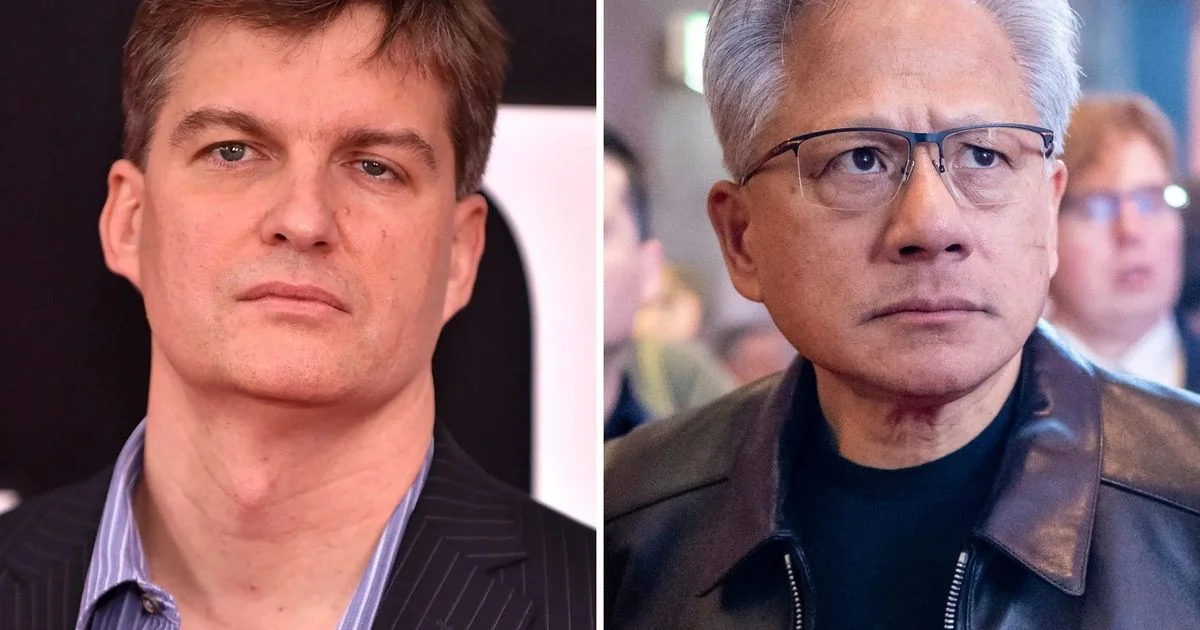
Michael Burry, the investor whose subprime mortgage short was immortalized in The Big Short, has laid out a precise price target for his next bearish bet against Nvidia: $200 per share. The stock currently trades around $142, meaning Burry is waiting for a 41% rally before pulling the trigger. His reasoning is blunt — market euphoria will overshoot, and the underlying problems haven't changed.
Extraction Map
Burry's timing instincts on Nvidia have been sharp in recent weeks. On November 20, he disclosed selling most of his Nvidia put options and buying cheap, far-dated call options — just before Jensen Huang's reinstatement as CEO sparked what the market dubbed the "Jensen 2.0 rally," Nvidia's biggest surge since 2003. Those calls have already doubled. He hasn't decided what to do with them yet. The Huang reinstatement followed a turbulent period for Nvidia that had nothing to do with chip fundamentals. Reports of extramarital affairs — including an alleged relationship with a suspected Chinese spy — led to Huang's removal as CEO. The Commerce Department is now moving to blacklist Megaspeed, a Nvidia customer at the center of the espionage scandal. These are governance and geopolitical shocks, not demand signals. But Burry's bear thesis predates the Huang drama entirely. His short position through 2026 was built on structural concerns: uncertain returns on the massive capital expenditure flowing into AI infrastructure, and tightening conditions in data center financing markets. Huang's return doesn't address either problem. As Burry wrote on Substack: "My entire Nvidia short thesis never factored in the removal of Jensen Huang, so it remains intact and fully in force." The strategic logic is a classic contrarian setup. Burry is explicitly waiting for optimism to reflate the stock — the Jensen comeback narrative, continued AI spending announcements, perhaps a few strong quarters — before betting against it again. He's not fighting the rally; he's planning to sell into it at a specific price. The $200 target implies he expects the market to give back its enthusiasm once the underlying capex-to-revenue math reasserts itself. Nvidia has shed over 30% from its October highs, erasing roughly $1 trillion in market value before the Huang rally began recovering some ground. The stock remains the single most important barometer of the AI trade. If Burry's thesis proves correct — that AI infrastructure spending is running ahead of monetizable returns — the implications extend far beyond one chipmaker to the entire ecosystem of cloud providers, data center operators, and AI startups leveraged to the same capital cycle. For now, Burry holds his cheap call options and waits. The market's job is to climb the wall of worry back toward $200. His job, as he sees it, is to be ready when it gets there.
Worth reading?
SKIP
Score
32
/100
Extractive — Burry's strategy is a pure directional bet that redistributes value between longs and shorts. No new capability is created; this is a zero-sum wager on sentiment overshooting fundamentals.
What Is GRIN?
GRIN stands for Generativity, Resilience, Innovation efficiency, and Novelty openness. These four dimensions capture the essential characteristics of any memetic intelligence — whether a nation, a corporation, a religion, or a movement.
About GRINGenerativity
1/5
Resilience
2/5
Efficiency
1/5
Novelty
3/5
Extractive
4/5
Inverted
Does this create new capability or just redistribute existing value?
Zero generative value. This is a directional trading bet — no new technology, capability, or productive capacity is created. Value transfers between longs and shorts.
Verified Facts (8)
Burry stated he plans to short Nvidia when stock approaches $200 per share
Nvidia stock currently around $142 per share, down over 30% from October highs
On November 20, Burry disclosed selling most Nvidia put options and buying cheap far-dated call options
Those call options have doubled in value
Burry wrote: 'My entire Nvidia short thesis never factored in the removal of Jensen Huang, so it remains intact and fully in force'
Huang's removal was linked to reports of extramarital affairs including an alleged relationship with a suspected Chinese spy
Jensen Huang's reinstatement triggered Nvidia's biggest stock surge since 2003
Commerce Department moving to blacklist Megaspeed, a Nvidia customer at center of espionage scandal
More latest news
Read all