RIVAL AI CEOS
2
PET METAPHOR AGE
11yr
AI LEADERS · SLOWDOWN CALL
3
MUSK LAWSUIT DISMISSED
May '26
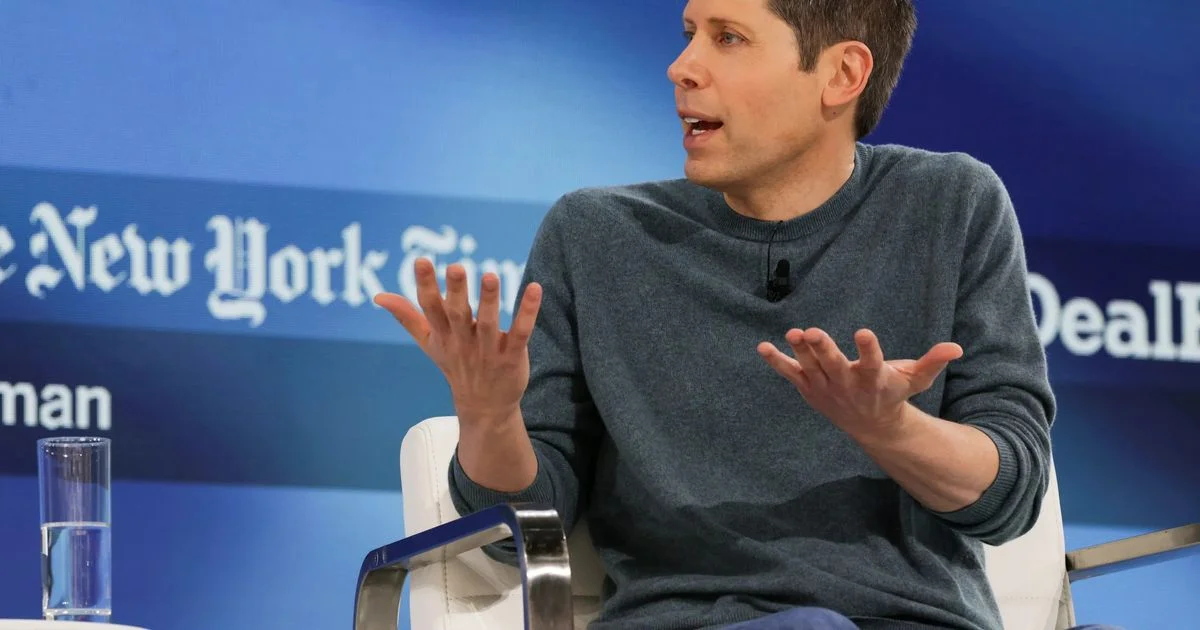
Sam Altman, CEO of OpenAI, used the New York Times Dealbook Summit in November 2026 to publicly reject a vision of the future articulated by Elon Musk over the past decade: that sufficiently advanced AI might reduce humanity to the status of domesticated pets. "I don't want to be a Labrador. I don't want my kids to be Labradors," Altman told the audience. "I want people to have the agency over our future that we've always had."
Extraction Map
The pet metaphor has legs. Musk first floated it in a 2015 conversation with astrophysicist Neil deGrasse Tyson, warning that recursive self-improvement in AI — where systems improve themselves without human guidance — could quickly outstrip human intelligence and any means of controlling it. Asked about it again by The Economist in July 2026, Musk leaned into the analogy with a grin: "Labradors are pretty happy creatures, in my experience." Altman's rebuttal lands at a moment when the theoretical is becoming operational. Both Altman and Musk have endorsed Anthropic CEO Dario Amodei's September 2026 call to slow frontier AI research that pushes model self-improvement, using the pause to develop better alignment and control mechanisms. That three rival AI leaders publicly agree on a slowdown is itself a signal worth tracking — though agreeing on the diagnosis says little about agreeing on the cure. The structural tension is straightforward: Altman insists human agency must remain non-negotiable, while Musk has historically oscillated between fatalism ("she all wrote") and techno-solutionism (Neuralink brain-computer interfaces as the escape hatch). At the Dealbook event, Altman — joined by OpenAI president Greg Brockman — noted that "more and more people are talking about how the future is either going to be gradually handing control to AI or should be gradually handing control to AI. We both agree that's a bad idea." The Altman-Musk rivalry predates this debate. Musk co-founded OpenAI and was an early financial backer before souring on the organization's direction. In May 2026, a jury ruled that Musk had waited too long to file his lawsuit against Altman and OpenAI, effectively closing that legal chapter. But the philosophical disagreement — who controls AI, and what 'control' even means when the technology may exceed human comprehension — remains unresolved. Neither man is a disinterested observer. Altman runs the company building GPT-series models; Musk runs xAI and Grok while also controlling Tesla's AI-driven autonomy stack. Both are simultaneously building the systems they warn about and positioning themselves as the responsible steward. The question of human agency over AI is real and urgent, but it is being framed by two people whose financial interests are inseparable from the answer. Musk's 2016 formulation — "I don't like the idea of being a house cat" — and his proposed solution of brain-computer interfaces through Neuralink reveal a consistent worldview: the problem is biological limitation, and the fix is merging with the machine. Altman's counter-position — that humans should retain autonomous decision-making — sounds more democratic but raises its own hard question: which humans, through what institutions, and accountable to whom?
Worth reading?
SKIP
Score
20
/100
Extractive. Two billionaire AI builders compete for narrative authority over 'human agency' while both accelerate the systems that threaten it. No institutional mechanism, public accountability, or democratic input is created.
What Is GRIN?
GRIN stands for Generativity, Resilience, Innovation efficiency, and Novelty openness. These four dimensions capture the essential characteristics of any memetic intelligence — whether a nation, a corporation, a religion, or a movement.
About GRINGenerativity
1/5
Resilience
1/5
Efficiency
1/5
Novelty
1/5
Extractive
4/5
Inverted
Does this create new capability or just redistribute existing value?
Zero new institutions, frameworks, or public capacity created. This is a rhetorical contest between two incumbents over who gets to define 'safe AI' — the output is positioning, not capability.
Verified Facts (7)
Altman stated at the NYT Dealbook Summit: 'I don't want to be a Labrador. I don't want my kids to be Labradors.'
Musk told The Economist in July 2026: 'Labradors are pretty happy creatures, in my experience.'
Musk discussed recursive self-improvement with Neil deGrasse Tyson in 2015.
Dario Amodei called for slowing frontier AI research in September 2026, endorsed by both Altman and Musk.
In May 2026, a jury ruled Musk waited too long to file his lawsuit against Altman and OpenAI.
Musk said in 2016: 'I don't like the idea of being a house cat.'
Altman was joined by OpenAI president Greg Brockman at the Dealbook event.
More latest news
Read all