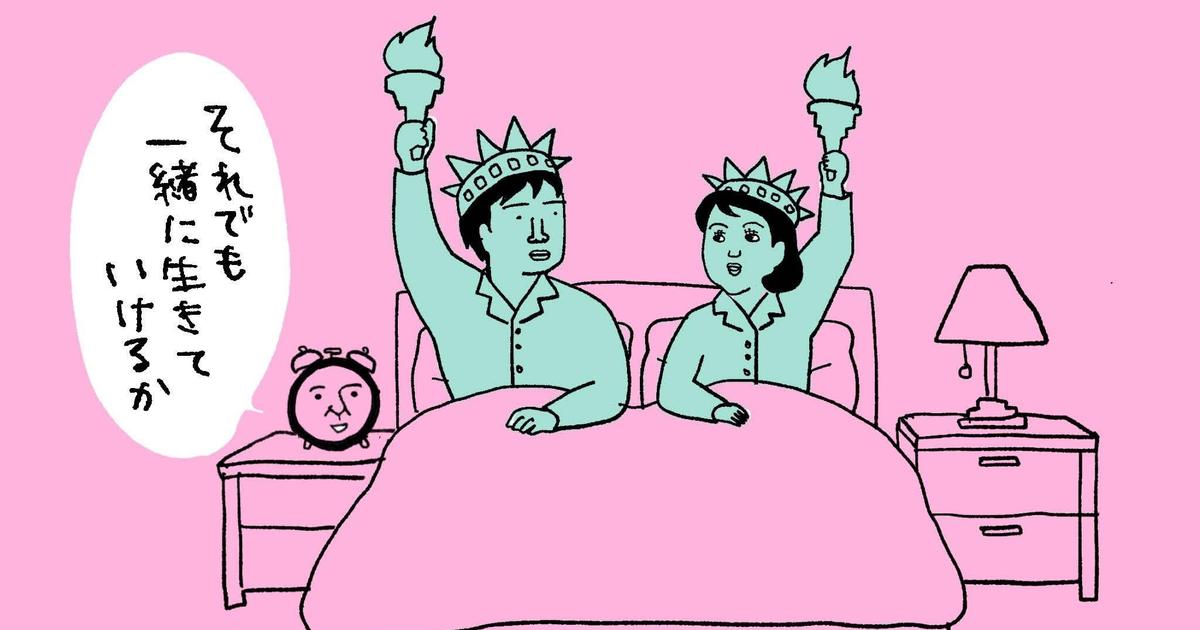
Masaru Sato is a former intelligence analyst turned public intellectual whose advice column for Business Insider Japan operates more like a philosophical consultation than an agony aunt feature. In this installment, a man in his late thirties — pseudonym Yoshio — writes in about a sexless marriage. No children, no apparent hostility, just a partner who has stopped being interested in physical intimacy, and the creeping humiliation of repeated rejection. Sato's first move is diagnostic, not prescriptive. He reframes Yoshio's pain away from sexual frustration and toward something more structural: the injury is to dignity, not libido. Being refused repeatedly by the person who is supposed to want you uniquely creates a wound that masturbation cannot touch. This reframe is the column's sharpest contribution — it names the actual mechanism of suffering without melodrama. The philosophical architecture is explicit and load-bearing. Sato identifies two legitimate freedoms in collision: Yoshio's freedom to desire sexual intimacy with his wife, and his wife's freedom to refuse it. Neither is wrong. The column refuses to assign blame, instead treating the deadlock as a structural feature of marriage itself — two separate bodies with divergent and time-varying needs yoked together by contract and affection. The practical advice is specific without being formulaic. Talk, but not in the moment of rejection. Use 'I-messages' — say 'I feel unwanted when this happens' rather than 'Why won't you?' If direct conversation fails, bring in a professional third party. Sato explicitly warns against the two most common male failure modes: hiring a detective (which destroys the trust foundation) and visiting sex workers in secret (which adds guilt to an already painful situation without resolving anything). Sato draws on Erich Fromm's 'The Art of Loving' and his own Christian ethics to argue that sexual desire is not shameful and bodily connection is a legitimate dimension of love — but that the other person's body is never your property. The ethical stance he articulates is unusually clean: acknowledge your desire honestly, acknowledge your partner's autonomy equally, and work the gap between them through conversation rather than coercion or subterfuge. The column's limitation is also its strength: it is entirely one-sided by design. We hear nothing from the wife. Sato acknowledges this — he notes the causes of lost desire are often complex, possibly unknown even to the person experiencing them — but the format cannot do more. The advice to seek couples counseling is the column's honest admission that a solo voice dispensing wisdom has structural limits. The final heuristic Sato offers for when to consider divorce is precise: not when sex doesn't resume, but when your partner cannot engage with this conversation at all — when they show no interest in your suffering. That's the diagnostic he leaves Yoshio with, and it's a good one.
Worth reading?
OPTIONAL
Score
52
/100
Anyone navigating intimacy mismatches in a long-term relationship, especially men who frame the problem as sexual frustration when it's actually about rejection and dignity. Also useful for readers curious about how Japanese public intellectuals handle personal advice.
Cultural Placement
Like Dear Abby rebuilt by a moral philosopher who reads Fromm and Bonhoeffer — the structure of a magazine advice column, but the analytical rigor of a philosophy seminar. Closest English-language parallel is probably the later 'Dear Sugar' columns by Cheryl Strayed, which similarly treated personal crises as occasions for structural thinking rather than emotional validation. The Japanese context adds Sato's specific intellectual brand: a former intelligence analyst who approaches personal problems with the same diagnostic precision he applies to geopolitics. The interlocutor format (Shimao asking questions, Sato answering) gives it a Socratic texture that Western advice columns rarely attempt.
Honest assessment
A well-constructed advice column that does one thing cleanly: reframe sexless marriage as a collision of legitimate freedoms rather than someone's fault. Sato's diagnostic precision elevates the form, but the conclusions — talk openly, use I-messages, see a counselor — are standard therapeutic wisdom delivered with unusual philosophical rigor. Worth reading if you're in Yoshio's situation; otherwise, it's a competent example of the genre.
What Is NOVEL?
52
/ 100
BedrockNews applies a structured analytical framework called NOVEL to cultural works — games, books, film, music, and more.
How NOVEL worksNerve
2/5
Originality
3/5
Voice
3/5
Endurance
2/5
Lineage
3/5
What did the artist risk? What could have failed?
Low structural risk. The advice-column format guarantees a sympathetic audience. Sato's willingness to discuss sex openly in a Japanese business publication is mildly brave, but the conclusions are safe and humane.
Verified Facts (5)
Advice-seeker pseudonym is Yoshio, male, late 30s, company employee, married in mid-20s
Sato recommends Erich Fromm's 'The Art of Loving' (Akira Suzuki translation, Kinokuniya Shoten)
Sato identifies 'I-messages' (アイ・メッセージ) as a psychological communication technique
Sato states divorce should be considered only when partner cannot engage with the conversation at all or shows no interest in the other's suffering
Column is part of the series 'Sato Masaru no Onayami Tetsugaku Sodan' on Business Insider Japan
More latest news
Read all