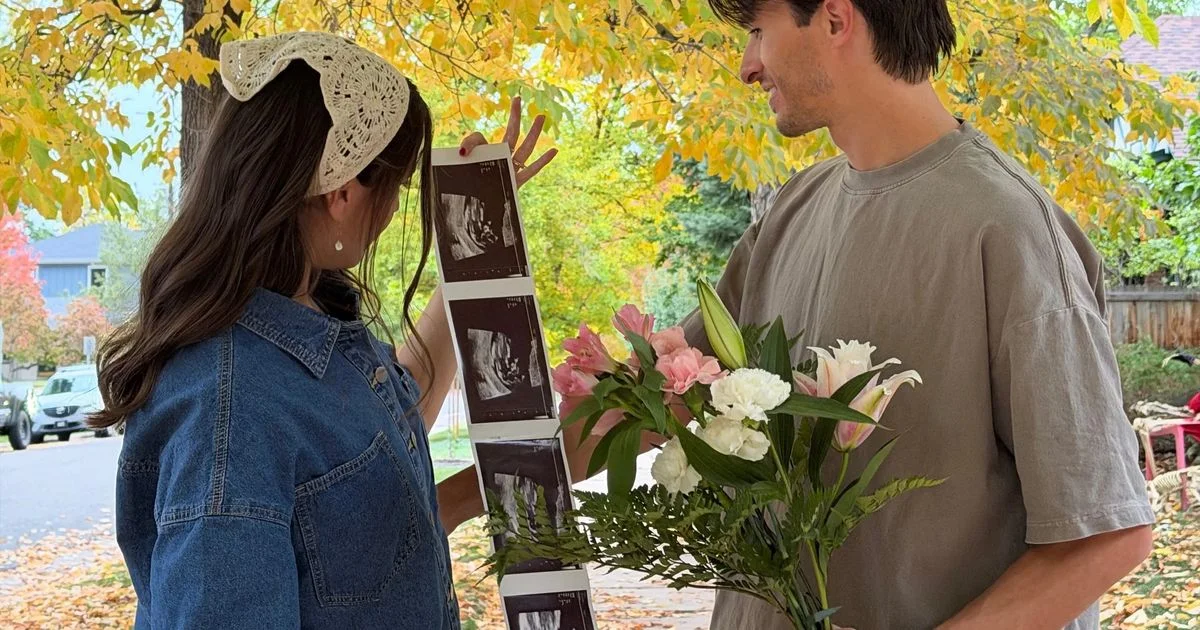
Lexi Marshall and her husband are expecting their first child this spring. Instead of assembling cribs and comparison-shopping strollers, they've spent the final pre-baby months apart — she in Santa Barbara doing prenatal yoga, Himalayan salt caves, and a sound-bath cruise on a restored 1976 yacht; he backpacking through roadless southwest Colorado mountains with no cell signal. The essay frames this as a generational shift. Their parents settled in, built routines around the baby's arrival, saved big trips for later (if ever). Marshall and her husband are doing it backwards — travel first, registry later. The crib is still a browser tab. Her father disapproves of the gallivanting. The strongest moment is the accidental intimacy of the yacht trip. A friend got seasick, so Marshall ended up alone on the sound bath, which turned into an impromptu baby blessing. She learned the baby's sex at lunch in downtown Santa Barbara and FaceTimed her husband from the table. These are specific, lived details that earn the reader's attention. Marshall connects her approach to the restaurant owner at The Daisy, who taught herself to cook during a pregnancy sabbatical in the Scottish Highlands — a parallel that works because it's concrete rather than aspirational. The couple moved to Colorado on their own terms, building a life around saying yes. The baby, Marshall insists, won't end that. The essay is self-aware enough to hedge: she acknowledges she might feel differently at seven months, that her parents' concerns are valid, that paper-readiness and real readiness aren't the same thing. She concedes she might become exactly the nesting homebody she's resisting. This honesty rescues the piece from smugness. What the essay doesn't do is interrogate the economic scaffolding that makes this choice possible. Solo trips to Santa Barbara, backpacking sabbaticals, the freedom to delay practical preparation — these require money, flexible work, and the absence of medical complications. The generational framing (we do things differently than our parents) obscures a class framing that would be more honest. As a personal essay, it delivers what the form promises: a specific person thinking through a specific choice with enough self-doubt to feel genuine. It's not trying to be advice. It's trying to be a snapshot of one couple's last months before everything changes, and on that narrow ambition, it works.
Worth reading?
OPTIONAL
Score
28
/100
Expecting parents in their late 20s to mid-30s who enjoy lifestyle essays and want to feel permission to delay nesting — and who won't mind that the essay never examines the privilege enabling that choice.
Cultural Placement
Like a Motherly or Cup of Jo personal essay but with more self-doubt and less manifesto energy, pitched somewhere between the confessional intimacy of Heather Havrilesky's parenting columns and the lifestyle-as-identity framing of a Bon Appétit travel feature. The mechanism is familiar: use a personal decision to gesture at a generational thesis, then walk it back just enough to avoid being preachy. It's closer to Instagram-caption memoir than Anne Lamott — the observations are real but the stakes stay decorative.
Honest assessment
A clean, self-aware personal essay that delivers a specific snapshot of one couple's pre-baby months. It's pleasant and honest about its own uncertainty, but it operates entirely within the most well-trodden parenting-essay template and never risks a genuinely surprising thought. Read it if the subject matter is personally relevant; skip it otherwise.
What Is NOVEL?
28
/ 100
BedrockNews applies a structured analytical framework called NOVEL to cultural works — games, books, film, music, and more.
How NOVEL worksNerve
1/5
Originality
1/5
Voice
2/5
Endurance
1/5
Lineage
2/5
What did the artist risk? What could have failed?
Zero risk taken. The essay hedges every claim it makes, pre-apologizes for its own thesis, and never commits to a position that could actually alienate a reader.
Verified Facts (7)
First child expected spring 2026
Author stayed in Santa Barbara for four days including a sound bath on a restored 1976 yacht
Husband backpacked through southwest Colorado mountains with no cell signal for one week
Gender reveal happened at The Daisy restaurant in downtown Santa Barbara via FaceTime
The Daisy owner self-taught cooking during pregnancy while on sabbatical in the Scottish Highlands
Couple previously moved to Colorado on their own
Crib described as still being a browser tab
More latest news
Read all