GRADS UNDEREMPLOYED
42.5%
SWE ATTENDEES
14,000
LINE START TIME
4:30AM
STUDENTS AT FAIR
~40%
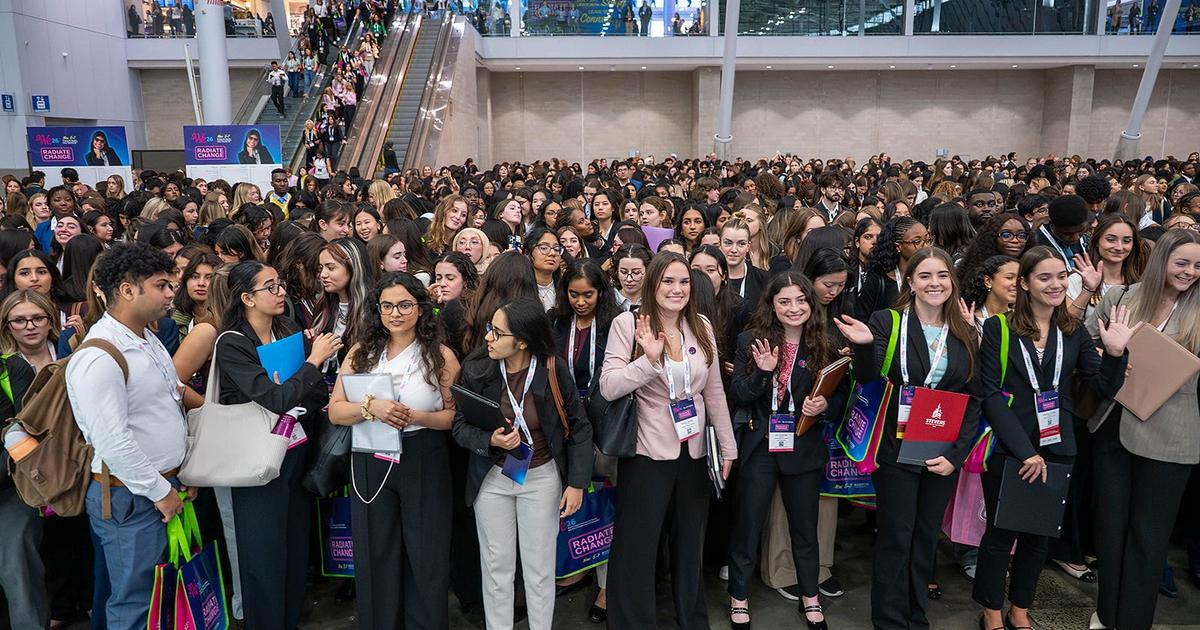
American college students are lining up at 4:30 AM, elbowing through crowds, and sprinting past each other to reach corporate recruiting booths at engineering career fairs. The spectacle — captured in viral TikTok videos from the Society of Women Engineers (SWE) conference in Boston — is not enthusiasm. It is desperation made visible.
Extraction Map
The numbers frame the picture sharply. Federal Reserve data shows 42.5% of recent college graduates are underemployed, working jobs that don't require their degree. SWE's chief growth officer Jennifer Scott estimates 14,000 people attended the conference, roughly 40% of them students. The event once drew over 20,000. The Grace Hopper Celebration, another major women-in-engineering conference, canceled its career fair entirely this year. Fewer fairs, fewer campus recruiting visits, fewer entry-level postings — the pipeline is contracting at every stage. What remains is a brutal sorting mechanism. Isabella Wong, a 20-year-old biochemistry student at Simmons University, waited in line only to receive a QR code from a recruiter — a digital brush-off dressed up as engagement. Allan Morales, a sophomore chemical engineering student at the University of Michigan, discovered most recruiters wouldn't even consider anyone below junior year. The career fair promises face-to-face access; it delivers triage. The system does produce winners, but on terms that reveal the extraction. Isabel Amaya, a 21-year-old information science student at the University of Washington, secured an internship at last year's SHPE conference that converted to a full-time offer. Jocelyne Suerte, a 21-year-old mechanical engineering student at the University of Houston, landed offers from both SWE and SHPE by pre-researching which companies conducted on-site interviews and targeting only those booths. The candidates who succeed are the ones who already have leverage — prior internships, existing offers, strategic intelligence about the process itself. Meanwhile, the structural shift is clear. Companies have cut entry-level and early-career hiring. Campus recruiting visits have declined. Students report friends abandoning their field entirely, switching industries, or deliberately delaying graduation to maintain internship eligibility — gaming the credentialing system because the employment system has stopped functioning for them. The career fair has become a pressure valve that absorbs anxiety without addressing cause. Thousands of students invest travel costs, conference fees, and days of preparation to compete for a diminishing pool of positions. Employers benefit from a buyer's market with minimal commitment — a QR code costs nothing. The extraction runs in one direction: students bear all the costs of job search while employers externalize recruitment friction onto the candidates themselves. If this pattern holds for twenty years, the implicit contract of STEM education — study hard, acquire skills, get hired — dissolves entirely. What replaces it is a credentialing arms race where internships become prerequisites for internships, career fairs become competitive events requiring their own preparation strategies, and the actual allocation of talent to work happens through increasingly opaque and costly channels that favor incumbents and the already-connected.
Worth reading?
SKIP
Score
20
/100
Extractive. Employers capture a deep buyer's market while externalizing all search costs — travel, time, emotional labor — onto students competing for shrinking opportunity.
What Is GRIN?
GRIN stands for Generativity, Resilience, Innovation efficiency, and Novelty openness. These four dimensions capture the essential characteristics of any memetic intelligence — whether a nation, a corporation, a religion, or a movement.
About GRINGenerativity
1/5
Resilience
1/5
Efficiency
1/5
Novelty
1/5
Extractive
4/5
Inverted
Does this create new capability or just redistribute existing value?
Zero new capability created. Career fairs redistribute existing jobs through a more expensive, more competitive channel. No net increase in positions, skills, or productive capacity.
Verified Facts (12)
Federal Reserve data: 42.5% of recent college graduates are underemployed, working jobs that don't require their degree.
SWE's chief growth officer Jennifer Scott estimates approximately 14,000 attended the conference, about 40% students.
SWE conference attendance previously exceeded 20,000.
Grace Hopper Celebration career fair canceled this year.
SHPE conference: participants lined up starting at 4:30 AM.
Isabella Wong is a 20-year-old biochemistry student at Simmons University.
Isabel Amaya is a 21-year-old information science student at the University of Washington.
Allan Morales is a sophomore chemical engineering student at the University of Michigan.
Jocelyne Suerte is a 21-year-old mechanical engineering student at the University of Houston.
Suerte obtained offers from both SWE and SHPE conferences.
Amaya's friends received offers from Bank of America and Bloomberg at SHPE.
One candidate at SHPE received an offer from Micron.
More latest news
Read all