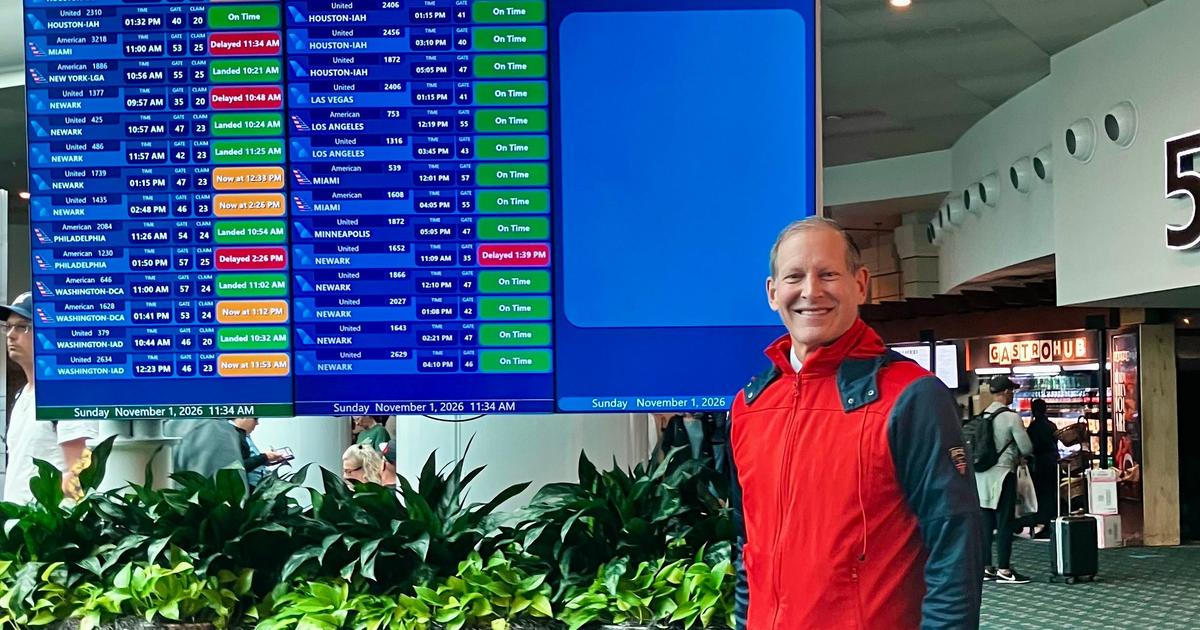
Richard Woulfe's story runs on a mechanism most career narratives skip: the difference between retiring from something and retiring to nothing. At 60, fresh off a pandemic that killed his luxury scuba-travel business and caring for a dying father in Chicago, Woulfe didn't experience a midlife crisis. He experienced a midlife vacancy — the realization that decades of remaining life with nothing to push against felt worse than starting over. His resume reads like a hospitality throughline: corporate incentive travel from 1986, then high-end dive-trip logistics for wealthy clients across Papua New Guinea, Indonesia, the Philippines, and the Maldives (15-plus visits). The pivot to flight attendant wasn't a reinvention so much as a lateral transfer of the core skill — managing people's comfort in transit — into a new container. He applied to multiple major airlines, landed an in-person interview within 72 hours, and started a six-week training program in April 2024 at age 61. What makes this more than a feel-good anecdote is the demographic reality underneath. Woulfe arrived at training expecting to be the oldest person in the room. Instead he found candidates aged 64, 67, and 70. U.S. airlines were hiring thousands of cabin crew post-pandemic, and the applicant pool included a cohort of Gen-Xers who had no intention of stopping. This isn't a quirky outlier — it's a signal about a generation that may not have enough saved to retire and, in many cases, doesn't want to. Woulfe frames his age as an asset, not a liability. He points to what he calls Gen-X traits — composure under pressure, flexibility, willingness to learn new skills, and a habit of actually listening to people. His personal rule when a passenger complains: always respond with 'I understand what you're saying.' It's basic hospitality craft, but it's the kind of soft skill that takes decades of client-facing work to make automatic. Two years in, the job delivers what he wanted: unpredictability. San José, Guadalajara, Vancouver, Montréal, plus small domestic stops like Columbia, South Carolina and Durango, Colorado. He's not chasing luxury anymore — he's chasing variety and motion, which turns out to be the deeper constant across all three careers. The honest limitation of this piece is that it's a first-person profile, not reporting. We don't hear about the pay cut from luxury travel to union cabin-crew wages, the physical toll of the job on a 63-year-old body, or the seniority system that determines whether you fly Montréal or a red-eye to Tulsa. Woulfe is a compelling narrator, but the story is shaped to inspire, not to inform. Still, the core message lands because it's specific rather than generic: if you've spent your career in hospitality and service, the skills transfer. The question isn't whether you can learn a new job at 60 — it's whether you can tolerate starting at the bottom of a seniority ladder after decades of expertise. Woulfe's answer is yes, and two years of evidence support it.
Worth reading?
OPTIONAL
Score
32
/100
Anyone in their 50s or 60s considering a career change who needs a quick shot of 'someone else did it.' Also useful for people in hospitality who haven't considered airline work as a lateral move.
Cultural Placement
Like a Humans of New York portrait stretched to feature length, with the structural bones of a Business Insider 'I quit my job' template. The closest tonal predecessors are the NPR StoryCorps segments and Cal Newport's career-craft writing — real people narrating real transitions — but without Newport's analytical framework. It sits in the booming 'second act' personal-essay genre that Business Insider, CNBC Make It, and The Guardian's 'Experience' column have industrialized since 2020, where the mechanism is aspiration-by-proximity: you read someone else's leap and feel permission to consider your own.
Honest assessment
A well-executed entry in Business Insider's career-pivot factory — Woulfe is a genuinely interesting subject and the piece lets his voice carry it. But it asks no hard questions about pay, physicality, or seniority economics, and it follows the template so faithfully that readers of the genre will recognize every beat before it arrives. Worth five minutes if the subject resonates with your life; not worth seeking out otherwise.
What Is NOVEL?
32
/ 100
BedrockNews applies a structured analytical framework called NOVEL to cultural works — games, books, film, music, and more.
How NOVEL worksNerve
1/5
Originality
1/5
Voice
3/5
Endurance
1/5
Lineage
2/5
What did the artist risk? What could have failed?
Zero structural risk. This is the Business Insider career-pivot template executed faithfully — inspiring subject, chronological arc, upbeat close. Nothing could have failed except the interview falling flat.
Verified Facts (10)
Richard Woulfe, 63 years old, flight attendant based in Fort Worth, Texas
Career started in 1986 at a corporate incentive-travel event company
Obtained scuba instructor certification at age 19
Began scuba-travel career around 2008
Visited the Maldives more than 15 times
Turned 60 in March 2023
Started 6-week airline training program in April 2024 at age 61
Fellow training candidates included people aged 64, 67, and 70
Destinations include San José (Costa Rica), Guadalajara, Vancouver, Montréal, Columbia (SC), Durango (CO)
Friend who encouraged him has been a flight attendant since 2018
More latest news
Read all