MONTHLY GOLD SALES
$200M
AVG ANNUAL RETURN
~8%
COSTCO STOCK · 10YR
~25%
SELLOUT SPEED
Hours
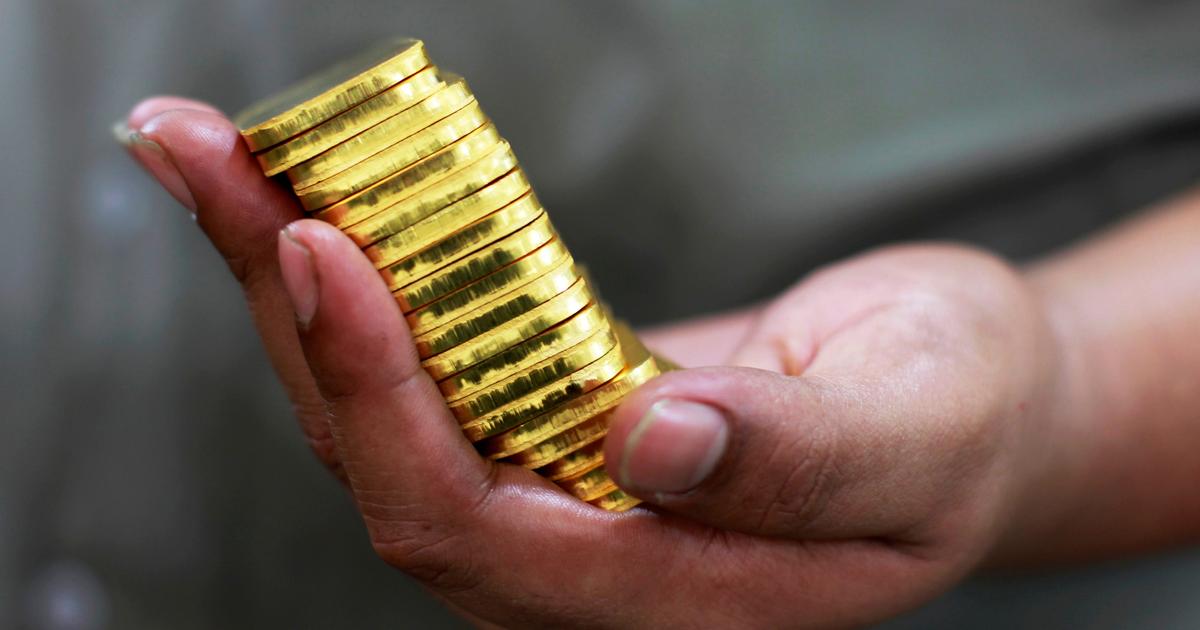
Costco now moves an estimated $200 million per month in gold bullion and silver coins, with new inventory selling out within hours of listing. The warehouse retailer has turned precious metals into an impulse buy, wrapping a centuries-old store-of-value asset in the dopamine hit of a Costco run. The company's CFO confirms prices carry a markup over spot, meaning Costco extracts a spread on every ounce.
Extraction Map
The article sources a single gold advisor — Taylor Huff, CEO of My Gold Advisor — whose entire business model depends on people buying and holding physical gold. His advice is predictable: don't flip, hold for at least a year, and treat gold like savings you never touch. This is not independent analysis. It's a sales pitch dressed as financial education. Huff's framing obscures the actual economics. Gold has averaged roughly 8% annual returns, which sounds decent until you compare it to Costco's own stock at ~25% annually over the past decade. The article acknowledges this gap but immediately pivots to gold's "risk-free" framing — a misleading characterization for a volatile commodity that lost 28% of its value between 2012 and 2015 and pays no dividends. The resale friction is the buried story. Physical gold must be sold through dealers who buy below spot price. That 8% annual gain can evaporate in transaction costs, storage fees, and the dealer's cut. The article's advice to "research dealers early" is tacit acknowledgment that liquidating physical gold is expensive and inconvenient — the opposite of a liquid investment. JPMorgan's data point on 8% average annual gains is presented without context on volatility, drawdowns, or opportunity cost. The article functions less as consumer guidance and more as a content funnel: it validates the anxiety that drives gold purchases, offers reassurance through an interested party, and links to an Amazon affiliate book on gold investing at the bottom. The Costco gold phenomenon is a symptom, not a strategy. When millions of retail buyers rush to convert dollars into metal they'll bolt to their floor in a fireproof safe, the signal is widespread distrust in financial institutions and currency stability. That distrust may be rational, but channeling it through a warehouse retailer's markup and a dealer's buy-back discount is an expensive way to act on it. For most buyers, the honest math points to gold ETFs (lower spreads, instant liquidity, no safe required) or simply holding index funds. Physical gold's appeal is emotional — the tangibility, the prepper-adjacent self-reliance narrative. Costco has figured out how to monetize that emotion at scale, and this article helps them do it.
Worth reading?
SKIP
Score
20
/100
Extractive. Costco takes a spread over spot, dealers take a cut on resale, storage costs accrue to the buyer, and a gold advisor with a business interest provides the only sourced guidance. Value flows from anxious retail buyers to intermediaries at every stage.
What Is GRIN?
GRIN stands for Generativity, Resilience, Innovation efficiency, and Novelty openness. These four dimensions capture the essential characteristics of any memetic intelligence — whether a nation, a corporation, a religion, or a movement.
About GRINGenerativity
1/5
Resilience
1/5
Efficiency
1/5
Novelty
1/5
Extractive
4/5
Inverted
Does this create new capability or just redistribute existing value?
Zero new capability created. Physical gold generates no yield, no jobs, no innovation. This is pure value parking — dollars converted to inert metal with friction at both ends.
Verified Facts (7)
Costco sells an estimated $200 million per month in gold bullion and silver coins.
New gold bars sell out within hours according to Costco's CFO.
Gold averages approximately 8% annual price appreciation per JPMorgan.
Costco stock has averaged approximately 25% annual returns over the past 10 years.
Taylor Huff is CEO of My Gold Advisor.
Some buyers have successfully flipped Costco gold for short-term profits using membership and credit card benefits.
U.S. Mint coins generally command higher premiums than bullion or jewelry.
More latest news
Read all