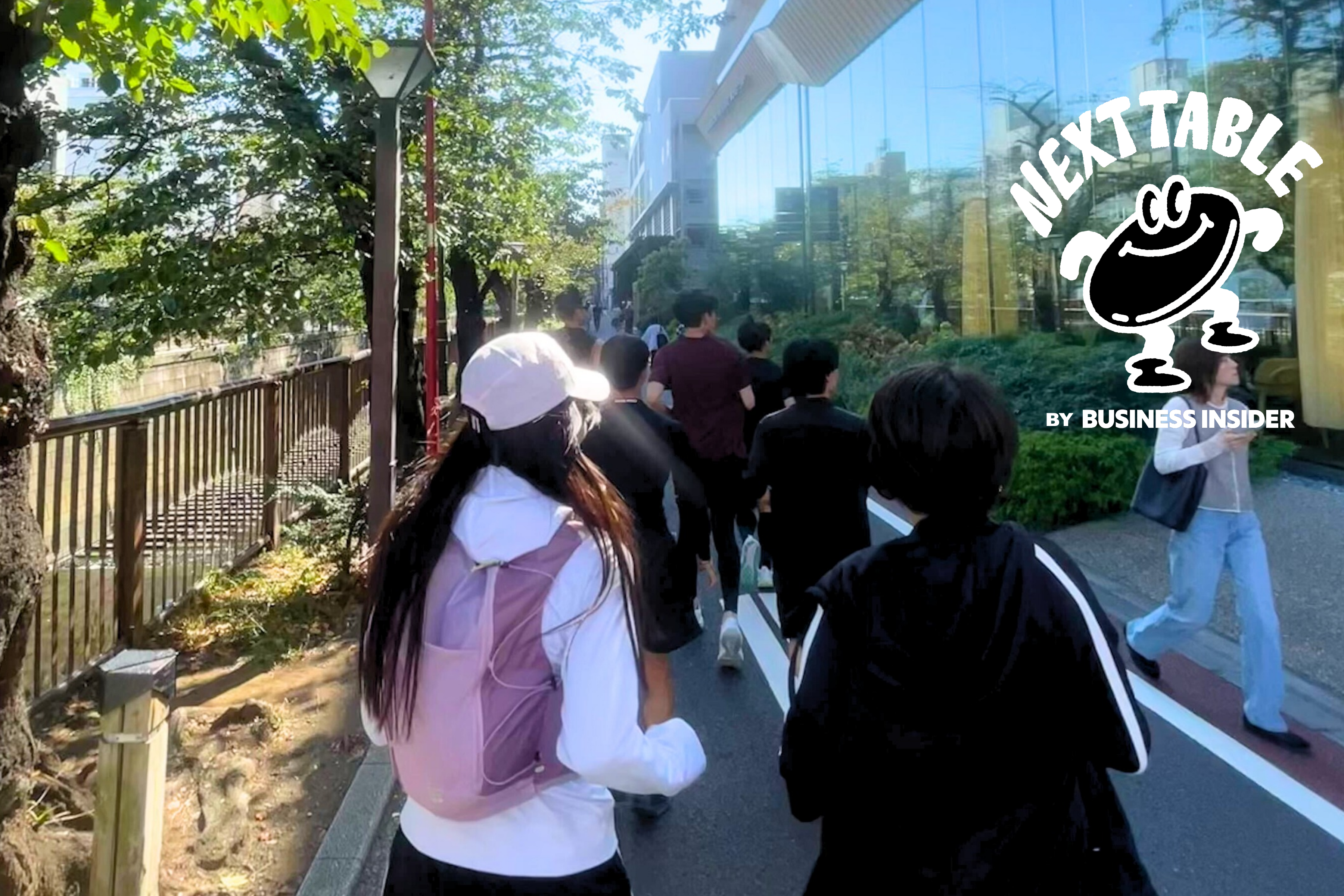
On a Sunday morning in October 2026, about 20 people — mostly in their twenties — gathered at a café in Daikanyama, Tokyo, to run 2.6 kilometers along the Meguro River and then drink iced coffee to DJ sets. No alcohol. No velvet ropes. Participation cost: ¥1,500 for the coffee rave portion, free for the run alone. The event, organized by a group called TUNAGARI, is one node in a growing network of running communities across Tokyo. Some groups meet three to four times per week, drawing anywhere from dozens to over a hundred participants per session. The format is consistent: low-pressure group runs at self-selected pace, followed by socializing in a café or public space. The barrier to entry is a pair of shoes and an Instagram search. What's striking isn't the running — it's the social architecture. The writer, a recent university graduate and Business Insider Japan intern, describes arriving alone and anxious about cliques, only to be greeted immediately by a stranger asking if it was their first time. The vibe is explicitly engineered for first-timers: solo participants mix freely with friend groups, conversations happen organically while running side by side, and the post-run café setting provides a low-stakes second act for people who didn't connect during the run. The coffee rave element is the more interesting innovation. Picture the energy of a club night — DJs, music requests, people dancing near the booth — but mapped onto a daytime café with caffeine instead of alcohol. The article describes an atmosphere that's simultaneously calm enough to sit at a counter sipping coffee and lively enough that people are requesting tracks and moving to music. It's a hybrid space that doesn't really have a clean precedent in Japanese social culture. The demographic signal matters. These are working professionals and recent graduates choosing to spend weekend mornings running with strangers rather than spending Friday nights drinking with colleagues. Japan's drinking culture has long served as social lubricant for professional networking and friendship-building, and this cohort is quietly building parallel infrastructure that doesn't require it. The ¥1,500 price point undercuts most izakaya outings. There's a global context here too. Sober-curious movements, daybreaker-style morning raves, and running clubs as social networks have been building in London, New York, and Berlin for years. What's notable is the speed of adoption in Tokyo, where after-work drinking culture (nomikai) has historically been more structurally embedded in professional life than in most Western cities. These events aren't positioned as anti-alcohol — they're positioned as a better offer. The question isn't whether this is a trend. The question is whether it's a durable shift in how young Japanese adults build weak-tie social networks — the kind of connections that historically happened at nomikai, university clubs, and company events. If running communities and coffee raves are genuinely replacing those structures for a generation, the downstream effects on everything from alcohol industry revenue to workplace social dynamics are significant.
Worth reading?
OPTIONAL
Score
48
/100
Readers interested in Japanese youth culture, sober-curious social movements, or the structural decline of drinking as social infrastructure. Skip if you've already read the Western version of this story and don't need the Tokyo-specific details.
Cultural Placement
Like a Japanese iteration of London's Run Dem Crew crossed with Daybreaker's sober morning raves, filtered through the specific social physics of Tokyo's post-nomikai generation. The closest journalistic precedent is the wave of 2018-2020 English-language pieces about running clubs as 'the new nightlife' (GQ, The Guardian), but this version lands differently because Japan's drinking culture is more structurally central to professional socializing than its Anglo counterparts. Think of it as the same mechanism as coworking spaces replacing offices — not rejecting the function, just rebuilding the container.
Honest assessment
A warm, well-observed piece of participation journalism that documents a real cultural shift but doesn't interrogate it deeply. It tells you what coffee raves feel like from the inside, which is genuinely useful — but it doesn't ask why this generation is building sober social infrastructure, what it means for Japan's entrenched drinking culture, or whether these communities have staying power beyond the novelty phase. Good reporting, shallow analysis.
What Is NOVEL?
48
/ 100
BedrockNews applies a structured analytical framework called NOVEL to cultural works — games, books, film, music, and more.
How NOVEL worksNerve
2/5
Originality
2/5
Voice
3/5
Endurance
3/5
Lineage
2/5
What did the artist risk? What could have failed?
Low risk. First-person participation journalism is a safe format, and the topic is feel-good by nature. No uncomfortable questions asked about why this generation is opting out of drinking culture.
Verified Facts (6)
Event organized by TUNAGARI, held on a Sunday in October 2026 in Daikanyama, Tokyo
Running course: approximately 2.6 km along the Meguro River
Approximately 20 participants, mostly in their twenties
Cost: free for running only, ¥1,500 for coffee rave with drink included
Some Tokyo running communities meet 3-4 times per week with groups ranging from dozens to over 100 participants
Event discovered via Instagram search for 'coffee rave' (コーヒーレイブ)
More latest news
Read all