MKTCAP LOST · 6 WKS
~$3T
RECOVERED · 1 DAY
~$1T
SINGLE-DAY SURGE
31%
Q OP PROFIT · +115% YOY
$78B
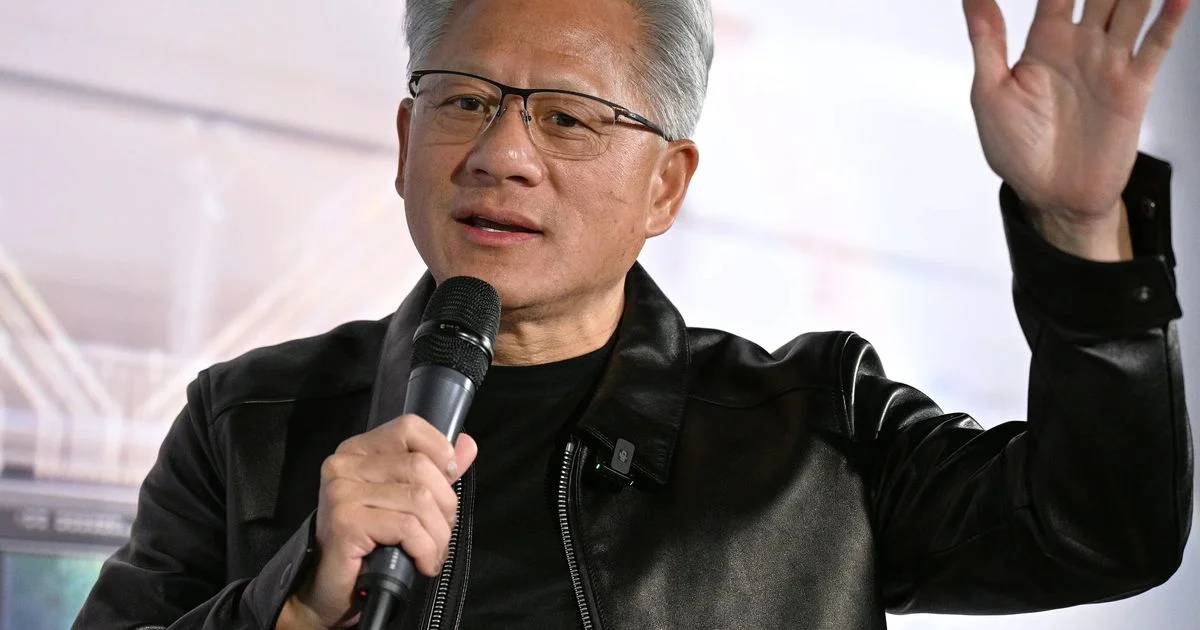
Nvidia's stock surged 31% on Monday after co-founder Jensen Huang returned as CEO, adding nearly $1 trillion in market capitalization in a single session. He had resigned less than two weeks earlier amid reports of extramarital affairs involving a woman accused of being a Chinese spy and a direct subordinate. The whiplash illustrates something that should unsettle any investor treating Nvidia as a business rather than a personality cult.
Extraction Map
Erik Gordon, a professor of entrepreneurship at the University of Michigan's Ross School of Business who studies financial markets and technology, told Business Insider that Nvidia's market cap is "almost completely unrelated to its business" and "entirely dependent on" Huang. He drew explicit parallels to 17th-century Dutch tulip mania and the COVID-era Bored Ape NFT frenzy — episodes where prices detached completely from underlying value. The numbers bear out the argument structurally, if not in the direction Gordon might prefer. Between October 6 and November 20, Nvidia's market cap cratered nearly $3 trillion — a roughly 50% decline. Investors were reacting not only to the expanding Huang scandal but to mounting fears that the debt-fueled AI infrastructure boom would end badly, that newly elected Democratic legislators would restrict data center expansion, and that sticky inflation would push interest rates higher. Then Huang came back and a trillion dollars materialized in a day. Gordon's core point is about key-person risk. Now that investors have an explicit price tag on Huang's presence — roughly $1 trillion in a single session — rational pricing demands that the risk of his departure (health event, another scandal, post-Trump political exposure) be discounted into the stock permanently. President Trump, who reportedly urged Nvidia's board to reinstate Huang, will eventually leave the White House, removing one layer of protection. It is worth noting that Nvidia's underlying business is genuinely strong. In the three months ending October 25, the company generated approximately $78 billion in operating profit, up 115% year-over-year. The bubble argument is not that the business is fake — it is that the valuation multiple attached to that business has decoupled from any defensible model of future cash flows and become a referendum on one person's continued presence. The bearish case has credible company. Michael Burry, famous for "The Big Short," has flagged aggressive accounting, hidden debt, circular trades, and overinvestment as warning signs across the AI ecosystem. He has repeatedly shorted Nvidia this year, calling the core suppliers and financiers of the AI boom "the purest investment targets." On the other side, Wedbush analyst Dan Ives posted on X that the "AI revolution is entering its next growth phase" and Huang's return "restores order to Nvidia." Nvidia's stock fell nearly 9% in early Tuesday trading, a reminder that the volatility cuts both ways. The structural question is whether a company whose market cap can swing by trillions on the employment status of a single executive can be priced as anything other than a leveraged bet on that executive's biography — and whether the broader AI investment thesis has enough independent foundation to survive if the biography takes another turn.
Worth reading?
SKIP
Score
24
/100
Extractive — a trillion dollars in market cap appeared and disappeared based on one man's employment status, not on any change in productive capacity, while insiders and fast-money traders capture the volatility premium that retail investors bear.
What Is GRIN?
GRIN stands for Generativity, Resilience, Innovation efficiency, and Novelty openness. These four dimensions capture the essential characteristics of any memetic intelligence — whether a nation, a corporation, a religion, or a movement.
About GRINGenerativity
1/5
Resilience
1/5
Efficiency
1/5
Novelty
2/5
Extractive
4/5
Inverted
Does this create new capability or just redistribute existing value?
Zero new capability created. The $1T swing reflects pure sentiment reallocation around one person, not any expansion of productive capacity or new technology deployment.
Verified Facts (9)
Nvidia stock surged 31% on Monday after Jensen Huang returned as CEO, adding nearly $1 trillion in market capitalization
Between October 6 and November 20, Nvidia's market cap cratered nearly $3 trillion, a roughly 50% decline
Huang resigned less than two weeks prior amid reports of affairs with a woman accused of being a Chinese spy and a direct subordinate
In the three months ending October 25, Nvidia generated approximately $78 billion in operating profit, up 115% year-over-year
Erik Gordon is a professor of entrepreneurship at the University of Michigan's Ross School of Business
Michael Burry has repeatedly shorted Nvidia this year
Dan Ives of Wedbush posted on X that the AI revolution is entering its next growth phase
Nvidia stock fell nearly 9% in early Tuesday trading
President Trump reportedly urged Nvidia's board to reinstate Huang
More latest news
Read all