STARTUP COST
$35
MONTHLY REV · OCT
$100K
COMMISSION RATE
20%
MONTHLY OVERHEAD
$1,500
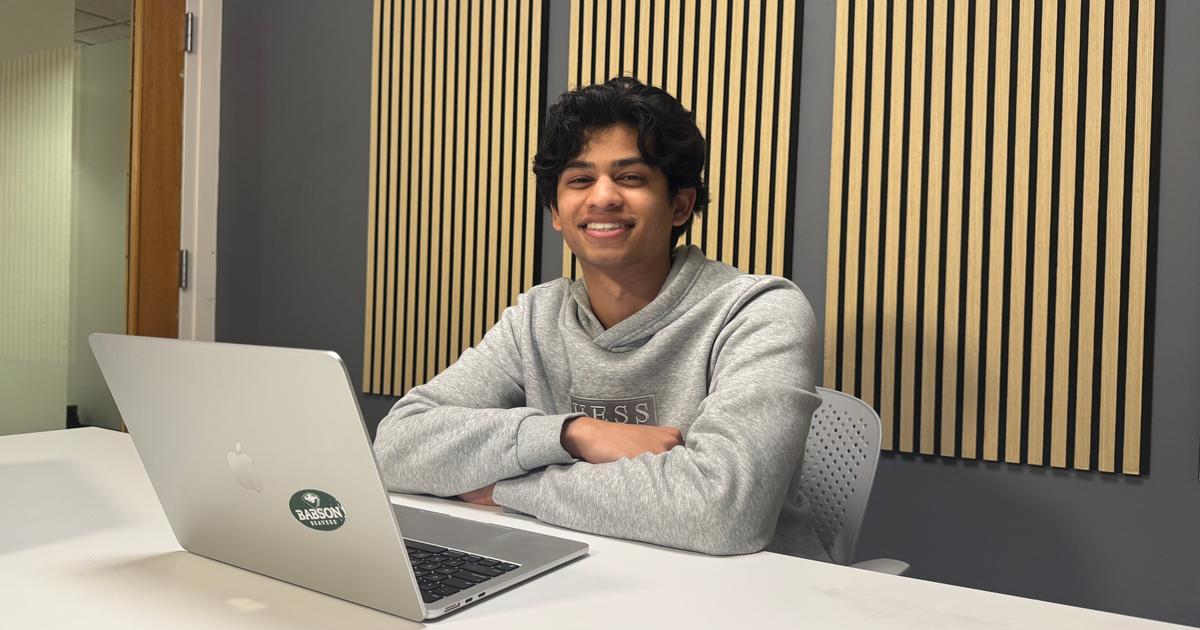
Stavya Nilawar, a Babson College student, runs Nilawar, a creator marketing agency that pairs AI companies with YouTube creators for sponsored integrations and branded video production. The entire startup cost was $35 — a domain and two email accounts. Monthly revenue crossed $100,000 in October 2026, verified by Business Insider via bank statements. Monthly overhead rarely exceeds $1,500, nearly all of it paying a virtual assistant who sends 200-300 cold emails daily.
Extraction Map
The business model is straightforward brokerage. Nilawar takes 20% of project fees for connecting brands (CodeRabbit, Wispr Flow, a Jack Link's × MrBeast campaign) with creators. He found his initial roster by manually scrolling TikTok, opening profiles one by one, and harvesting email addresses. Once he had 10-15 creators, he flipped to outbound sales on the brand side. Nilawar's four operating rules are more pragmatic than inspirational. First, pick your niche based on where money is moving, not personal passion — he chose AI companies specifically because they were growing fast and had marketing budgets to burn. Second, seek mentors already operating at scale; his current mentor runs a similar agency doing roughly $10 million annually. Third, build repeatable outbound sales infrastructure before anything else. Fourth, treat early failures as cheap tuition, not existential signals. The near-crisis that tested these principles: a three-creator campaign where one creator repeatedly missed deadlines and delivered subpar work. The brand demanded partial cancellation, leaving Nilawar — then 18 — potentially on the hook for $25,000 he didn't have. He negotiated a resolution and internalized the lesson that agency work is as much conflict mediation as deal-making. What makes this story structurally interesting is the compression of the value chain. There is no proprietary technology, no inventory, no capital expenditure beyond email infrastructure. The moat, such as it is, rests on response speed (the team targets 2-5 minute reply times) and relationship density. Nilawar started during a gap semester before college and runs the business around a rigid class schedule: 8-11:15 AM classes, then five hours of work, then another 1-2 hours after dinner. The AI-creator sponsorship niche is growing because AI companies are flush with venture capital and competing aggressively for consumer attention — YouTube integrations are a proven channel for that. Nilawar is surfing a wave that isn't his to control: when AI marketing budgets contract, the pipeline contracts with it. The 20% commission model scales linearly with deal volume but carries counterparty risk on every project, as the $25,000 near-miss demonstrated. This is a classic low-capital, high-hustle arbitrage play — genuinely generative for the individual, instructive as a case study in lean operations, but not a model that builds durable systemic value. The competitive moat is thin, the dependency on a single booming sector is total, and the margin structure means Nilawar captures $20K of that $100K monthly revenue before taxes and expenses. It works until it doesn't, and the founder seems clear-eyed enough to know that.
Worth reading?
OPTIONAL
Score
52
/100
Mildly generative at the individual level — real matchmaking service, real revenue, minimal extraction — but structurally fragile and dependent on a single sector's inflated marketing budgets.
What Is GRIN?
GRIN stands for Generativity, Resilience, Innovation efficiency, and Novelty openness. These four dimensions capture the essential characteristics of any memetic intelligence — whether a nation, a corporation, a religion, or a movement.
About GRINGenerativity
2/5
Resilience
1/5
Efficiency
4/5
Novelty
2/5
Extractive
1/5
Inverted
Does this create new capability or just redistribute existing value?
Real but narrow. Nilawar creates genuine matching value between AI brands and creators, but builds no proprietary technology, no IP, no platform. The generativity is personal, not systemic.
Verified Facts (9)
Startup cost was approximately $35, spent on a website domain and two email accounts
Monthly revenue crossed $100,000 in October, verified by Business Insider via monthly bank statements
Monthly expenses rarely exceed $1,500, with approximately $1,000 going to a virtual assistant
The agency takes 20% of project fees as commission
Clients include AI companies CodeRabbit and Wispr Flow, plus a Jack Link's × MrBeast campaign
Nilawar started during a gap semester before enrolling at Babson College
Virtual assistant sends 200-300 emails per day
The $25,000 near-loss incident occurred when Nilawar was 18 years old
Current mentor runs a similar agency with approximately $10 million in annual revenue
More latest news
Read all