Get it
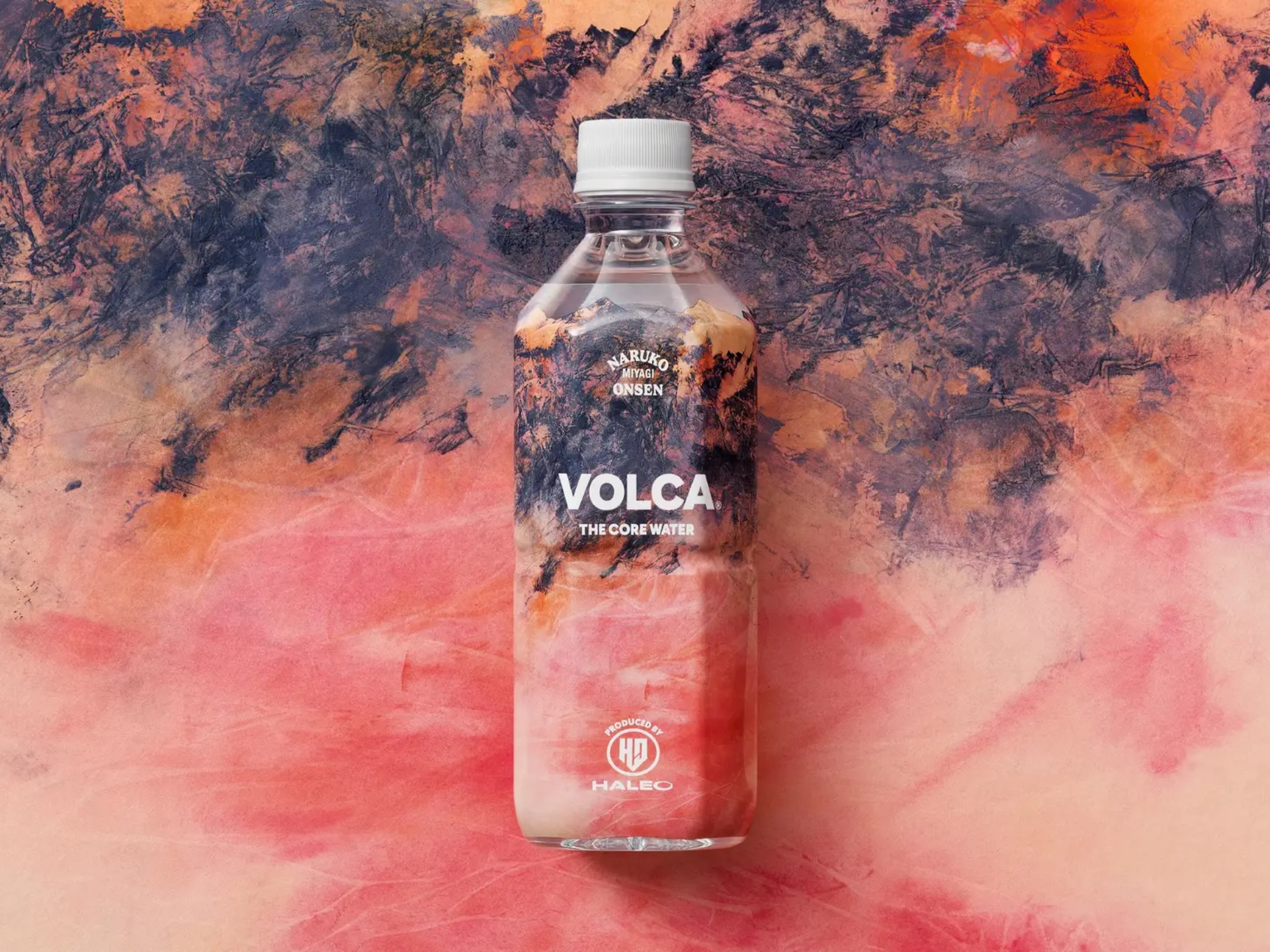
VOLCA
on Official site
WELL DEPTH
1,000m
SILICA PARTICLES
1-5nm
PFAS STANDARD
50ng/L
WELL DRILLED
1991
Body Plus International, a health and fitness supplement company led by CEO David Holton, has launched VOLCA, a bottled water brand sourced from the Tamanari-gō hot spring in Nakayamadaira Onsen, one of the Naruko hot spring villages in Miyagi Prefecture. The well was drilled in 1991 at a depth of 1,000 meters for a planned ryokan and has been used locally for drinking water and small-scale bottling ever since. VOLCA now packages that same source under a premium "core water" brand identity.
Extraction Map
The marketing leans heavily on two pillars: PFAS anxiety and nano-mineral science. Japan's April 2026 water quality standard — PFOS and PFOA combined at 50 nanograms per liter — is invoked as context for why consumers should think harder about water sourcing. VOLCA then pivots to its own claim: silica nanoparticles measured at 1-5 nanometers, with zeta potential measurements conducted by Ruth Laboratory in May 2026. A footnote clarifies these measurements vary by sampling conditions and do not indicate health benefits — a legally necessary disclaimer that sits in tension with the brand's entire positioning. The regional revitalization narrative is real but structurally vague. VOLCA says it aims to return value generated by the business to the local community and pass natural resources to the next generation. No specifics are offered: no revenue-sharing percentages, no local employment numbers, no community governance structure, no reinvestment commitments. The language is aspirational, not contractual. The business model is straightforward commodity extraction dressed in sustainability language. Deep geothermal water — a shared natural resource — is bottled by a private company whose core competency is supplement marketing. The value chain runs from public resource to private brand premium. Whether Naruko's community captures meaningful value beyond the implicit economic activity of a bottling operation is entirely at the company's discretion. Holton's biography — 30 years in health, fitness, and supplement development — explains the product's positioning at the intersection of wellness culture and water anxiety. The East Japan earthquake and COVID-19 are cited as personal catalysts for recognizing water and food as "foundational resources." This is sincere-sounding but functions as origin-myth branding, not structural analysis. The PFAS framing deserves scrutiny. Japan's new 50 ng/L standard applies to public water utilities, which are now obligated to test and comply. Invoking PFAS concern to sell bottled spring water implies tap water is unsafe — a framing that could undermine public confidence in municipal water systems that are, in fact, now regulated to address exactly this issue. The article never states VOLCA's own PFAS levels. What we have is a competently marketed premium water brand using real but unquantified regional-benefit claims and real but disclaimed mineral-science claims. The product may be perfectly fine water. The question is whether the value flows are as generous as the language suggests, or whether this is primarily a margin extraction play on a public geothermal resource with community goodwill as the marketing wrapper.
Worth reading?
SKIP
Score
20
/100
Extractive. A private company captures the brand premium on a shared geothermal resource with no disclosed mechanism for community value return beyond aspirational language.
What Is GRIN?
GRIN stands for Generativity, Resilience, Innovation efficiency, and Novelty openness. These four dimensions capture the essential characteristics of any memetic intelligence — whether a nation, a corporation, a religion, or a movement.
About GRINGenerativity
1/5
Resilience
1/5
Efficiency
1/5
Novelty
1/5
Extractive
4/5
Inverted
Does this create new capability or just redistribute existing value?
No new capability created. A 35-year-old well gets rebranded with nano-silica marketing. Value is redistributed from consumer wallets to a supplement company, not generated for the region.
Verified Facts (6)
VOLCA's water source is the Tamanari-gō hot spring in Nakayamadaira Onsen, Naruko, drilled in 1991 at 1,000 meters depth
Japan's PFAS water quality standard (PFOS + PFOA combined ≤50 ng/L) took effect April 2026
Silica nanoparticles measured at 1-5 nanometers; zeta potential measurements conducted by Ruth Laboratory (ルース研究所) in May 2026
Measurements noted to vary by sampling conditions and not to indicate health benefits (per article footnote)
VOLCA operated by Body Plus International, CEO David Holton, with approximately 30 years in health/fitness product development
Water is non-heat-treated (非加熱) and bottled with minimal processing
More latest news
Read all