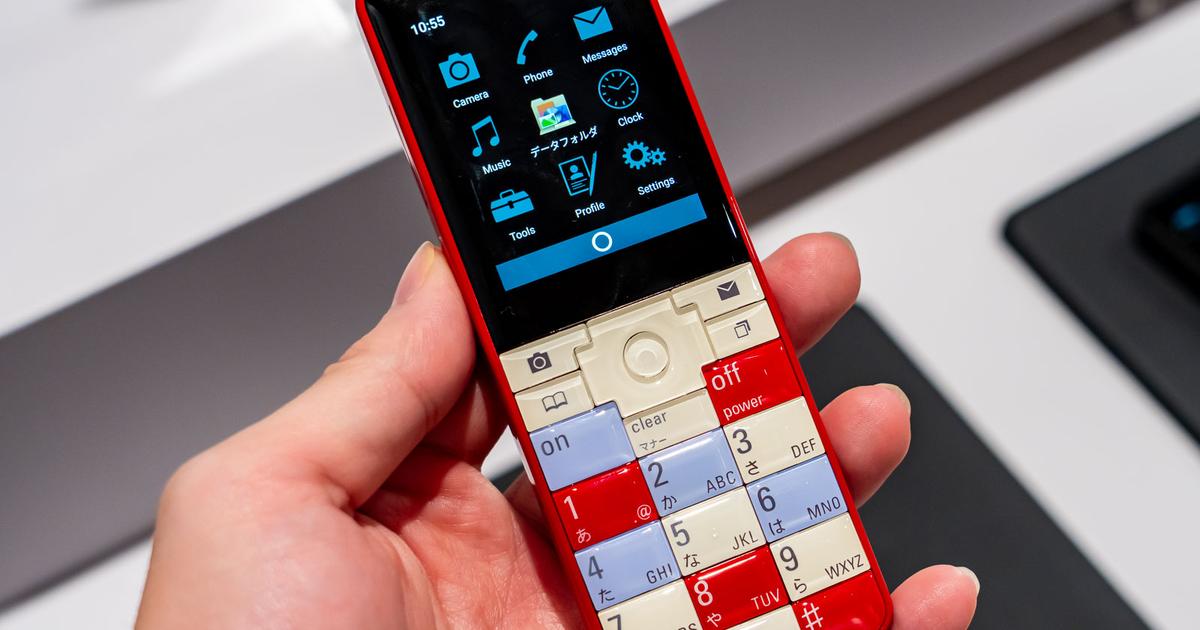
KDDI's INFOBAR ZERO is a deliberate provocation dressed in Naoto Fukasawa's minimalist design language. Announced November 18 and shipping December 25 at ¥32,780, this is a 4G candybar phone with VoLTE calling, SMS, a 2-megapixel camera, a music player that requires sideloading files via USB-C, and almost nothing else. No LINE. No browser. No app store. No Spotify. No 5G. The menu fits in a 3×3 grid. KDDI is selling you the absence of things. The INFOBAR lineage earns this move more credibility than it would from anyone else. The original 2003 INFOBAR was Fukasawa's argument that phones didn't need to be clamshells — a bar you pulled from your pocket and used immediately. That phone was a design landmark. The series continued through several iterations until the INFOBAR xv in 2018, which still had LINE and tethering. ZERO strips even those concessions away, returning to the ur-concept: a phone is for calling and texting. The hardware execution looks characteristically sharp. A non-touch straight-bar form factor with physical tenkey, directional pad, and dedicated call/end keys. The menu animations and icon design carry the INFOBAR visual identity. Manufacturing is by CPSpeed. The right side panel carries an engraved INFOBAR ZERO logo; the left holds the SIM slot and strap hole. It's the kind of object you'd want to hold even if you never made a call. Here's the tension KDDI can't design around: Japan runs on LINE. It's not a messaging app — it's infrastructure. Family groups, work coordination, school notifications, restaurant reservations, government services. Dropping to SMS-only doesn't just mean losing stickers and group chats; it means falling off the communication grid that Japanese daily life is built on. The article flags this directly, and it's the central friction point. This isn't like buying a Light Phone in the US where iMessage and SMS still reach most of your contacts. The dumbphone/detox phone market is real and growing globally — Light Phone, Punkt, Nokia feature phones — but those products exist in ecosystems where SMS remains a functional fallback. Japan's near-total migration to LINE makes INFOBAR ZERO a harder sell as a primary device. KDDI likely knows this. The ¥32,780 price and the INFOBAR brand positioning suggest this is aimed at the second-phone or weekend-phone market: people who want a beautiful object to carry when they deliberately leave the smartphone behind. Fukasawa's comment at the launch event is revealing. He described the original 2001 concept as a response to the clamshell monoculture — and noted that ZERO is similarly positioned as 'the opposite of the smartphone.' The symmetry is elegant, but the competitive landscape is different. In 2003, the INFOBAR offered a better form factor for the same functions. In 2026, it offers fewer functions in a better form factor. That's a lifestyle proposition, not a utility one. The manufacturing choice matters too: battery is non-replaceable, which undercuts the longevity argument that dumbphone buyers often care about. No 5G support means this device is betting on 4G network availability for its entire lifespan. For a product whose philosophy is 'less but longer,' these are real constraints.
Worth reading?
OPTIONAL
Score
60
/100
Design-conscious Japanese au subscribers who want a beautiful second phone for weekends, travel, or deliberate disconnection — and who have already solved the LINE problem with another device.
Cultural Placement
Like the Light Phone II but with the industrial design pedigree of a Muji appliance and the market headwinds of launching a landline in a WhatsApp country. The INFOBAR ZERO sits in the lineage of Naoto Fukasawa's original 2003 INFOBAR — itself a reaction against clamshell conformity — but now aimed at smartphone conformity instead. Think of it as the Leica M-D of phones: a premium object defined by what it removes, priced for people who can afford a second device they don't need. The closest design-world parallel is the Punkt MP02, but with twenty years of au Design project visual language behind it.
Honest assessment
INFOBAR ZERO is a genuinely beautiful object with a coherent design philosophy, hobbled by the reality that Japan's communication infrastructure has moved to LINE in a way that makes SMS-only phones functionally isolating. It works as a second device for intentional disconnection or as a collector's piece. As a primary phone in 2026 Japan, it's an aesthetic choice with real social costs.
What Is NOVEL?
60
/ 100
BedrockNews applies a structured analytical framework called NOVEL to cultural works — games, books, film, music, and more.
How NOVEL worksNerve
3/5
Originality
2/5
Voice
4/5
Endurance
2/5
Lineage
4/5
What did the artist risk? What could have failed?
Moderate commercial risk. Shipping a no-LINE phone in Japan takes nerve, but ¥32,780 pricing and the INFOBAR collector base provide a safety net. KDDI isn't betting the company — they're betting a product line.
Lineage tree
INFOBAR (2003)
direct ancestor — the original bar-form anti-clamshell statement
INFOBAR xv (2018)
immediate predecessor — still had LINE and tethering
Fukasawa 2001 concept
origin point — 'pocket to call' bar-type design thesis
Light Phone II
category peer — American minimalist phone with e-ink
Punkt MP02
category peer — Swiss dumbphone with similar design-object positioning
Verified Facts (13)
Direct retail price: ¥32,780 (tax included)
Pre-orders began November 18; release date December 25
Previous model INFOBAR xv launched November 2018 — 8-year gap
4G only, no 5G support
Approximately 2-megapixel rear camera with LED flash
Non-replaceable battery
USB Type-C port for charging and wired audio
Manufactured by CPSpeed
Designer: Naoto Fukasawa, who designed all INFOBAR models
Supports VoLTE voice calls and SMS
No LINE, no app store, no music streaming, no tethering
KDDI president Koji Matsuda and designer Fukasawa appeared at the November 18 announcement
Fukasawa referenced his 2001 concept model as the design origin
More latest news
Read all