SIMULTANEOUS IPOS
2
COMPUTE ESCALATION
3-10×
PLAYERS · DUOPOLY
2
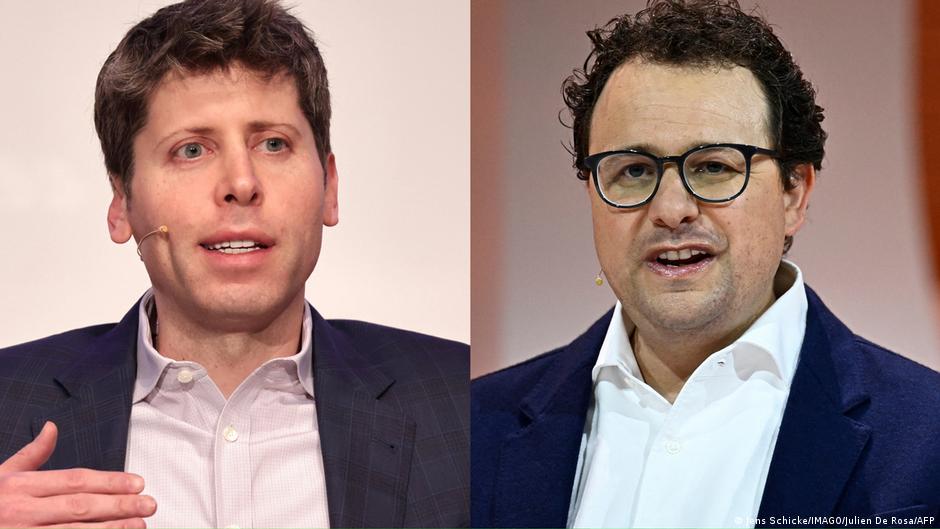
The rivalry between Sam Altman and Dario Amodei is entering a new phase. Both AI bosses are planning public listings and hope to use the money to outpace each other in the race to build superintelligent AI. That single sentence from DW contains the entire structural story: two private companies that have consumed tens of billions in venture capital now need public-market money to keep the compute furnace burning.
Extraction Map
This is not a normal IPO cycle. Normal IPOs happen when a company has a proven business model and wants liquidity for early investors. Anthropic and OpenAI are racing to IPO because private capital alone cannot sustain the escalating cost of frontier AI training runs. Each generation of model requires roughly 3-10x more compute than the last. The IPO is not an exit — it is a reload. The framing as a rivalry between two personalities — Altman vs. Amodei — obscures the structural dynamic. Both companies are locked in a mutual escalation spiral where neither can slow down without ceding ground. Public investors become the new source of fuel for a race whose finish line (superintelligent AI) remains undefined, unmeasured, and unpriced. Anthropic's purported edge is structural: it converted from a public benefit corporation framework with a unique governance model that theoretically limits pure profit extraction. This gives institutional investors a narrative of "responsible AI" that may command a premium. OpenAI's messy nonprofit-to-capped-profit conversion, complete with board drama and executive departures, creates governance risk that public markets will price in. But the core extraction dynamic is identical for both. Retail and institutional investors will pour capital into companies that burn cash at extraordinary rates, with no proven path to profitability at the scale required to justify their valuations. The value flows upward: founders retain control, early VCs get liquidity, and public shareholders absorb the long-tail risk of a technology whose economic returns remain speculative. The superintelligence framing does real work here. It transforms a capital-intensive commodity business (selling API access to large language models) into a moonshot narrative that justifies indefinite cash burn. As long as both companies can claim they are "racing toward superintelligence," neither has to demonstrate unit economics. The race itself becomes the product sold to investors. The honest question is whether public markets are the right vehicle to fund speculative research into transformative technology. History says they are not — the Manhattan Project, Apollo, and the internet were all government-funded. When private companies use public markets to fund pre-revenue moonshots, the pattern that emerges is usually: founders get rich, early investors exit, and public shareholders hold the bag when the narrative shifts.
Worth reading?
SKIP
Score
28
/100
Extractive. Public markets are being recruited as the next tranche of fuel for a capital arms race whose benefits accrue to founders, early investors, and compute providers — not to the retail investors funding it.
What Is GRIN?
GRIN stands for Generativity, Resilience, Innovation efficiency, and Novelty openness. These four dimensions capture the essential characteristics of any memetic intelligence — whether a nation, a corporation, a religion, or a movement.
About GRINGenerativity
2/5
Resilience
1/5
Efficiency
1/5
Novelty
2/5
Extractive
4/5
Inverted
Does this create new capability or just redistribute existing value?
Ambiguous at best. The IPOs fund compute purchases, not new capability directly. Any generative output depends on whether superintelligence materializes — a bet, not a plan.
Verified Facts (3)
The rivalry between Sam Altman and Dario Amodei is entering a new phase
Both AI bosses are planning public listings
Both hope to use the money to outpace each other in the race to build superintelligent AI
More latest news
Read all