GLOBAL COAL PIPELINE
56%
FOSSIL PROJECTS APPROVED
38
GLOBAL EMISSIONS SHARE
~5%
PACIFIC GDP ON FUEL
25%
Australia is co-presiding over the COP31 climate summit in Turkey with a stated mission to champion renewable energy, electrification, and reduced reliance on coal, oil, and gas. Climate minister Chris Bowen has framed the moment as one for "faster implementation" of proven clean energy solutions. The country has set an 82% renewable electricity target for 2030 and is already a world leader in rooftop solar, generating roughly half its electricity from renewables.
Extraction Map
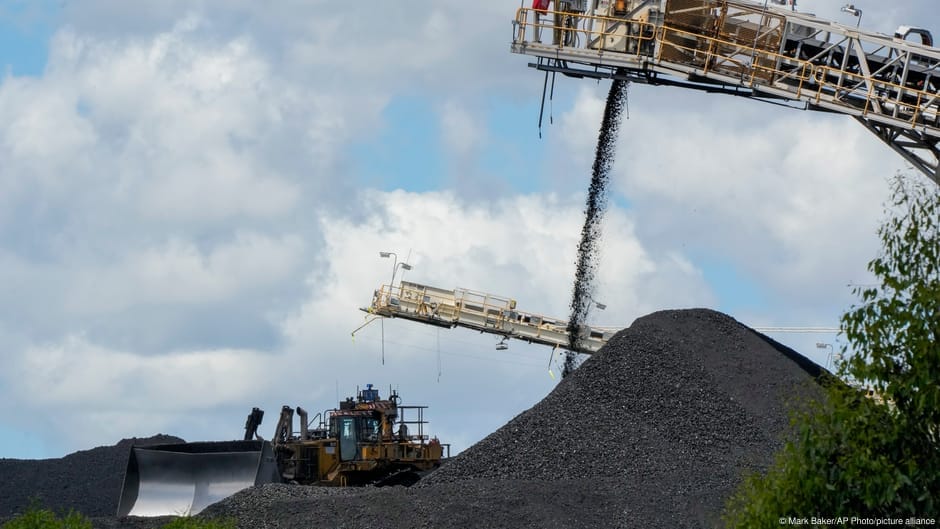
The problem is the other half of the ledger. Australia is the world's third-largest fossil fuel exporter and second-largest coal exporter. It holds 56% of global coal mine projects currently in the pipeline, according to 350.org. Fossil fuel exports accounted for 80% of the nation's total carbon footprint in 2022 and contributed near 5% of global emissions. The Labor government under Anthony Albanese has approved the construction, expansion, or extension of 38 coal, oil, and gas projects since taking office on a pro-climate platform four years ago. The most glaring recent approval came in 2025: a major gas export project in Western Australia extended until 2070. Albanese justified it as balancing "security of energy supply" with "support [for] the transition which reduces our emissions." That framing — transition, not phaseout — is the core tension. Australia has backed the Global Stocktake's language on transitioning away from fossil fuels and signed onto a 57-nation pledge in Colombia in April 2025 to develop exit road maps. But those commitments have not materialized in domestic resources policy. Critics from Greenpeace, Climate Analytics, 350.org, and The Climate Project are unified in their assessment: the credibility gap is unsustainable. "You cannot aspire to lead on climate abroad if you're not getting your own house in order," said Thomas Houlie of Climate Analytics. The push toward 82% renewable electricity by 2030 is behind schedule, and emissions reductions in transport and industry remain limited. The Pacific dimension sharpens the moral stakes. Small island nations like Tuvalu and Vanuatu generate negligible emissions but face existential threats from rising seas and intensifying cyclones. Australia's diesel-reliant Pacific neighbors spend up to 25% of GDP on fossil fuel imports versus just 6% on health. As COP31 co-president, Australia has promised to "elevate the views and experiences" of these nations. Pacific civil society is not persuaded. "They are sick of Australia's double talk on climate," said Greenpeace Pacific's Shiva Gounden. A Climate Analytics report outlines a phaseout pathway that could begin immediately: end coal power by 2034, rapidly reduce oil and gas consumption, reach near-total renewable electricity by 2040, and shutter fossil fuel export projects before they become obsolete. The roadmap exists. The political will to follow it does not. The structural question is whether COP presidency functions as a lever for domestic transformation or as diplomatic cover for continued extraction. Australia's renewables progress is real but insufficient while 38 new fossil projects proceed and the world's largest coal pipeline sits in Australian soil. The gap between what the country says at summits and what it approves at home is the story.
Worth reading?
SKIP
Score
28
/100
Extractive — Australia captures the reputational benefits of climate leadership while continuing to externalize the emissions and climate costs of fossil fuel exports onto vulnerable Pacific nations and the global commons.
What Is GRIN?
GRIN stands for Generativity, Resilience, Innovation efficiency, and Novelty openness. These four dimensions capture the essential characteristics of any memetic intelligence — whether a nation, a corporation, a religion, or a movement.
About GRINGenerativity
2/5
Resilience
1/5
Efficiency
2/5
Novelty
1/5
Extractive
4/5
Inverted
Does this create new capability or just redistribute existing value?
Domestic renewables create real capacity — 50% renewable electricity, rooftop solar leadership — but 38 new fossil approvals and a 2070 gas extension lock in extractive infrastructure that cancels generative gains.
Verified Facts (11)
Australia is the world's third-largest exporter of fossil fuels
Australia is home to 56% of the world's coal mine projects currently in the pipeline, per 350.org
Australia is the world's second-largest coal exporter
The Labor government has approved the construction, expansion or extension of 38 coal, oil and gas projects since coming to power four years ago
Fossil fuel exports accounted for 80% of Australia's total carbon footprint in 2022 — and near 5% of global emissions
In 2025, Australia approved the extension of a major gas export project in the country's west until 2070
Pacific neighbors spend up to 25% of GDP on fossil fuel imports — as opposed 6% on health, per University of New South Wales report
Australia generates around half of its electricity from renewables
Australia is planning for 82% renewable electricity in its grid by 2030
Australia and 56 countries pledged at the Colombia summit in April to develop a fossil fuel exit road map
Climate Analytics report outlines end to coal power generation by 2034 and renewables generating almost all electricity by 2040
More latest news
Read all