BOUNDARIES CROSSED
7 of 9
EU GDP GROWTH · 1990
70%
EU CO2 DROP · 1990
~40%
RESOURCE USE · 50YRS
3×
Earth has crossed seven of nine planetary boundaries critical for sustaining life. The question is no longer whether economic models must change, but which alternative actually works at scale — and the honest answer is that nobody has proven one yet.
Extraction Map
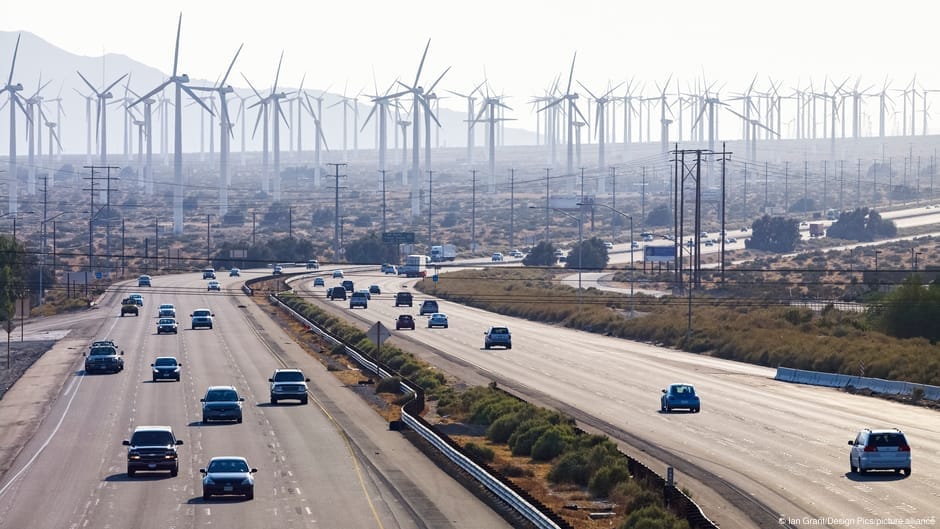
Green growth — the idea of expanding GDP while cutting emissions and resource use — has real traction in specific domains. The EU's economy grew 70% since 1990 while carbon emissions dropped roughly 40%. The UK, US, Japan, and Australia have all posted years of simultaneous GDP growth and falling CO2, even accounting for offshored production. But Helmut Haberl's 2020 meta-review of more than 800 studies found that complete decoupling of growth from emissions remains "relatively rare" globally. In India, Africa, and Southeast Asia, emissions are still rising in absolute terms even as economic efficiency improves. The harder problem is resources, not carbon. The UK's economy grew and its emissions fell — but it used 7% more raw materials in 2023 than in 2001. Globally, resource consumption has tripled over 50 years and could jump another 60% by 2060. The rebound effect is the mechanism: when efficiency lowers costs, production and consumption expand to partially eat the savings. Green technologies reduce per-unit resource intensity, but aggregate demand overwhelms the gains. Degrowth proposes the opposite path: planned economic contraction in wealthy nations to let ecosystems recover, while poorer countries continue growing. A 2020 University of Leeds–Lausanne study found degrowth compatible with climate targets without sacrificing quality of life. But there is no conclusive evidence that a modern economy can function entirely on degrowth principles long-term. The European Environment Agency's 2021 report made the uncomfortable point explicit: declining GDP is not automatically good for the environment just because growing GDP has been bad for it. The structural bind is real. GDP growth drives tax revenue, employment, and institutional stability. Shrinking an economy triggers social upheaval. But the EEA concluded that achieving green growth within ecological limits would require "unprecedented" decoupling — and whether that is feasible "is currently uncertain." Both paths carry enormous risk; neither has been demonstrated at civilizational scale. Haberl's framing offers the clearest exit ramp: a needs-based economy that measures prosperity by quality of life rather than GDP volume. GDP, as currently calculated, ignores income distribution, unpaid labor, environmental damage, and wellbeing. Redefining what "growth" means could dissolve some of the green-growth-vs-degrowth binary — but it requires rewriting the institutional firmware of every major economy, from tax codes to labor markets. The honest takeaway: partial decoupling has been achieved in wealthy nations for carbon, but not for resources. Neither green growth nor degrowth has earned the right to claim it can solve the problem at the scale and speed required. The rebound effect, hard-to-decarbonize industries like steel and chemicals, and the politics of economic contraction remain unsolved. The debate is less about which theory is right and more about which combination of tools — efficiency, sharing, sufficiency, hydrogen, circular materials — can close the gap before planetary boundaries close it for us.
Worth reading?
OPTIONAL
Score
40
/100
Generative in aspiration but structurally unproven — green growth creates new capability in energy and efficiency but has not solved resource extraction or the rebound effect, leaving the core extractive dynamic (resource overshoot borne by future generations and poorer nations) intact.
What Is GRIN?
GRIN stands for Generativity, Resilience, Innovation efficiency, and Novelty openness. These four dimensions capture the essential characteristics of any memetic intelligence — whether a nation, a corporation, a religion, or a movement.
About GRINGenerativity
2/5
Resilience
2/5
Efficiency
2/5
Novelty
2/5
Extractive
3/5
Inverted
Does this create new capability or just redistribute existing value?
Real but partial. Renewables and efficiency tech create genuine new capability, but resource decoupling hasn't materialized. The rebound effect claws back gains. No model has proven it generates value without ecological drawdown at scale.
Verified Facts (7)
Earth has already crossed seven of the nine planetary boundaries critical for sustaining life, including climate change, ocean acidification and biosphere integrity.
Haberl published a major report in 2020 evaluating more than 800 studies on green growth.
In the European Union, the bloc-wide economy has grown by more than 70% since 1990. Meanwhile, the EU's carbon emissions have dropped by around 40%.
The UK still used 7% more resources in 2023 than it did in 2001.
Global resource consumption has tripled over the last 50 years. If the world continues on the current pathway, that could increase by another 60% by 2060.
A 2020 study by researchers from the universities of Leeds and Lausanne showed that the concept of degrowth supported the world's climate goals.
The fact that GDP growth has been harmful for the environment does not necessarily mean that declining GDP would be good for the environment (EEA 2021).
More latest news
Read all