ALLIANCE SINCE 1945
80 yrs
PLAN B OPTIONS
0
APEC · SHENZHEN
Nov 18-19
TRUMP TERM LEFT
2 yrs
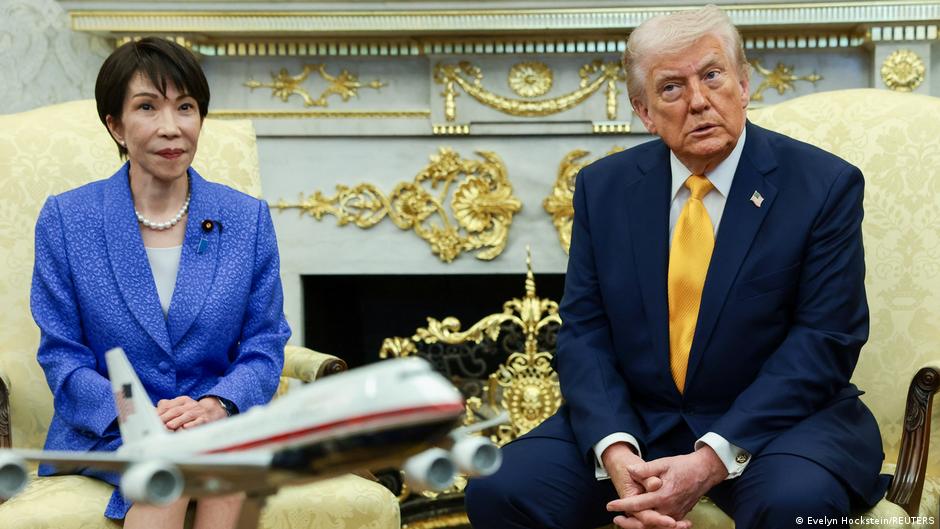
Japan is watching the countdown to next week's APEC summit in Shenzhen with mounting anxiety. The meeting will bring Trump, Xi Jinping, and Putin into proximity at a moment when Washington's Indo-Pacific commitment looks more transactional than at any point since 1945. Tokyo's fear is specific: a weakened president, stung by midterm losses, pivoting to foreign policy for a quick win that sacrifices allied equities.
Extraction Map
Foreign Minister Toshimitsu Motegi met Secretary of State Marco Rubio on the sidelines of the G7 foreign ministers' meeting in Paris, producing a carefully worded statement about "strengthening deterrence and response capabilities" and maintaining "close communication." The diplomatic language is standard. The urgency behind it is not. Japan is probing for signals about whether Washington will treat Taiwan as a bargaining chip — a concern sharpened by Trump's own description of US arms sales to Taiwan as "a good negotiating chip with China." The rare earth dispute illustrates the asymmetry. After Prime Minister Sanae Takaichi's comments on Taiwan triggered Chinese export restrictions on Japan, Tokyo looked to Washington for backup. It didn't come. The Trump administration treated the feud as "Tokyo's problem," according to Margarita Estévez-Abe of Syracuse University. This is the extractive logic at work: the US captures the benefit of Japan's forward-leaning posture on Taiwan without sharing the cost when Beijing retaliates. Beyond China, Japan watches Trump's outreach to Moscow and Pyongyang with alarm. The US relies on Japan as its primary military base in the Indo-Pacific — a structural reality that should, in theory, prevent Washington from emboldening Russia and North Korea against its own host nation. But as Estévez-Abe notes, if American softness does raise the threat level, Japanese trust in the alliance will erode — a slow-burn structural risk with no quick fix. Japan has no realistic alternative. Sebastian Maslow of the University of Tokyo puts it bluntly: "The reality still is that Japan has no 'plan B' if the alliance unravels." Military modernization efforts are embedded within the US alliance framework. An autonomous defense capability would require years of industrial buildup and access to critical intelligence Japan currently gets from Washington. Tokyo has hedged around the margins — defense cooperation with EU states and NATO, a quasi-alliance with Australia, minilateral frameworks with the Philippines and others across the Indo-Pacific. These are real moves, but they are supplements to the US alliance, not substitutes. None of these partners can replace America's nuclear umbrella, intelligence apparatus, or force-projection capability in the Western Pacific. The strategic bet Japan is making — that no major clash erupts for two more years until a "strategically more amenable" administration arrives — is acknowledged by experts as hope, not strategy. Maslow argues Tokyo must demonstrate its commitment through greater defense spending and economic security measures. The question is whether any amount of Japanese effort can compensate for an ally that increasingly views alliances as transactional inputs rather than structural commitments.
Worth reading?
SKIP
Score
28
/100
Extractive — the US captures basing rights, forward posture, and strategic leverage from Japan while increasingly treating allied interests as tradeable commodities in bilateral deals with Beijing, Moscow, and Pyongyang.
What Is GRIN?
GRIN stands for Generativity, Resilience, Innovation efficiency, and Novelty openness. These four dimensions capture the essential characteristics of any memetic intelligence — whether a nation, a corporation, a religion, or a movement.
About GRINGenerativity
1/5
Resilience
1/5
Efficiency
2/5
Novelty
2/5
Extractive
4/5
Inverted
Does this create new capability or just redistribute existing value?
Zero new capability created. Japan's security architecture remains parasitic on a single alliance, and US transactionalism actively discourages the autonomous capacity-building that would be generative.
Verified Facts (10)
APEC summit scheduled for November 18-19 in Shenzhen, China
Japanese Foreign Minister Toshimitsu Motegi held talks with US Secretary of State Marco Rubio at G7 foreign ministers' meeting in Paris
Both sides agreed to 'further advance security cooperation to strengthen the deterrence and response capabilities of the Japan-US alliance'
Trump described US arms sales to Taiwan as 'a good negotiating chip with China' after the May summit with Xi
China imposed rare earth export restrictions on Japan after PM Takaichi's comments on Taiwan
Sebastian Maslow is a professor of politics at the University of Tokyo
Margarita Estévez-Abe is associate professor at Syracuse University's Maxwell School of Citizenship and Public Affairs
Maslow stated: 'The reality still is that Japan has no plan B if the alliance unravels'
Japan's PM is Sanae Takaichi
November 3 midterm election results
More latest news
Read all