SUPERMARKETS HIT
700
OF FRENCH NETWORK
7%
TOTAL FR STORES
~10,000
IRGC WARRANTS
2
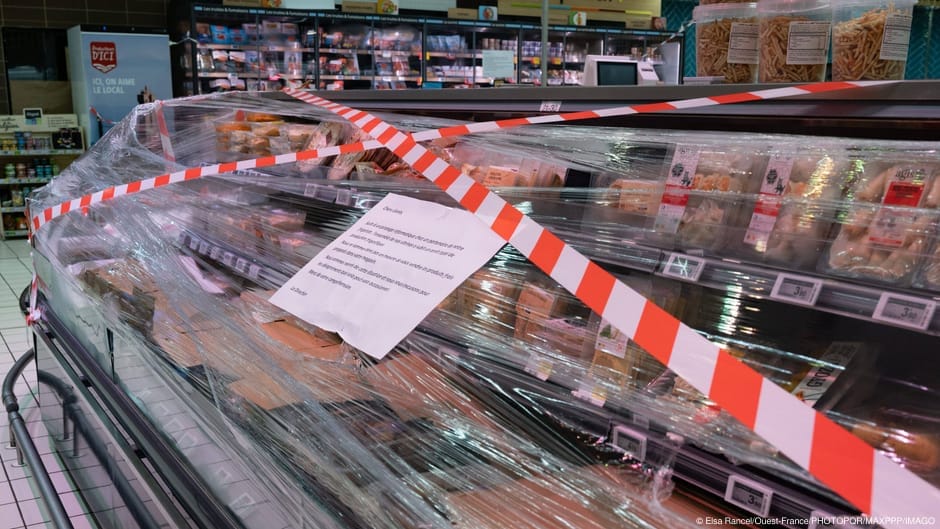
On the night of October 11, someone reached through the internet and turned off the refrigerators in 700 French supermarkets. Not metaphorically — the attack used web interfaces to initiate indefinite defrost cycles and simultaneously disabled the temperature alarms that would have caught the problem. Produce spoiled. In isolated cases, fires broke out. Paris prosecutor Laure Beccuau has now opened an investigation into Shahid Kaveh, an offensive cyber unit within Iran's Islamic Revolutionary Guard Corps, and requested arrest warrants for two of its officials.
Extraction Map
France is treating this as a national security event. Foreign Minister Jean-Noël Barrot, speaking at a G7 foreign ministers' meeting that included US Secretary of State Marco Rubio, said Paris would "rule nothing out" in its response, including measures it "may not disclose publicly." France summoned the Iranian ambassador on Tuesday and announced it would seek European-level sanctions. The EU's spokesperson confirmed a "swift and united response" was under discussion, invoking the bloc's cyber diplomacy toolbox. Tehran's denial was theatrical. Iran's Foreign Ministry called the accusations "baseless and one-sided," accused France of "projecting its own governance failures," and delivered a line that will circulate for a while: "A government that cannot even manage the temperature of its own refrigerators now seeks to shift the blame onto foreign actors." Behind the rhetoric, Tehran also threatened retaliatory measures if sanctions materialize. The technical details matter more than the diplomatic theater. French cyber intelligence identified Shahid Kaveh as conducting "large-scale campaigns targeting industrial equipment for the purpose of sabotage," primarily aimed at Israel and the US but extending to France and other European countries. The attack vector — web-accessible control interfaces on commercial refrigeration — is trivially replicable. Sweden's Civil Defense Minister Carl-Oskar Bohlin made this point explicitly: similar incidents hit Swedish supermarkets last week, and the method "would have been easy to copy" from the October reports. A failed attack on French blood bank cooling systems this month raises the stakes further. This is the first major state-attributed cyberattack to target mundane commercial infrastructure at scale across a NATO country. Not power grids, not military systems, not financial networks — grocery store fridges. The attack surface is enormous: tens of thousands of networked industrial control systems in every European country, many with default credentials and internet-facing management panels. The IRGC reportedly targeted 700 of France's roughly 10,000 supermarkets, meaning they hit 7% of the national supermarket network in a single operation. The broader context is an escalating confrontation between the West and Iran, now overlapping with cyber doctrine. Barrot explicitly tied the fridge hack discussions to the broader Iran conflict being debated with Rubio at the G7, noting that "the risk of a renewed escalation with Iran could not be ruled out." Sanctions, arrest warrants, and undisclosed countermeasures are the announced response — but the structural vulnerability remains: Europe's commercial and industrial IoT infrastructure was never designed to withstand state-level offensive cyber operations, and no sanctions regime changes that overnight. Sweden's Bohlin offered the most honest assessment: expect more. AI-assisted vulnerability scanning will make discovery of these soft targets faster and cheaper. The fridge hack was a proof of concept. The blood bank attempt was the escalation. The question now is whether Europe can harden millions of networked industrial systems before the next operation targets something that can't be measured in spoiled produce.
Worth reading?
SKIP
Score
24
/100
Extractive. A state actor exploited structural fragility in civilian infrastructure to impose asymmetric costs — spoiled goods, fire risk, diplomatic disruption — at near-zero cost to the attacker.
What Is GRIN?
GRIN stands for Generativity, Resilience, Innovation efficiency, and Novelty openness. These four dimensions capture the essential characteristics of any memetic intelligence — whether a nation, a corporation, a religion, or a movement.
About GRINGenerativity
1/5
Resilience
1/5
Efficiency
1/5
Novelty
2/5
Extractive
4/5
Inverted
Does this create new capability or just redistribute existing value?
Purely destructive. No new capability created — value was destroyed (spoiled food, fire damage) and diplomatic bandwidth consumed. The only 'generativity' is forced investment in IoT security after the fact.
Verified Facts (10)
Attack began overnight on October 11-12, raised temperatures in supermarket refrigerators and freezer units
Paris prosecutor Laure Beccuau opened investigation into Shahid Kaveh, requested arrest warrants against two officials
Shahid Kaveh described as 'an offensive cyber unit affiliated with the Electronic and Cyber Center of the Islamic Revolutionary Guard Corps'
Attack targeted roughly 700 of France's roughly 10,000 supermarkets
Attack used web interfaces to 'initiate abnormal, indefinite defrost cycles' and disable automated alerts
A failed attack on cooling units at French blood banks occurred this month
Sweden's Civil Defense Minister Carl-Oskar Bohlin warned more cyberattacks could be expected as AI tools make it easier to detect vulnerabilities
French Foreign Minister Barrot said government would 'rule nothing out' including measures 'we may not disclose publicly'
Iran's Foreign Ministry said it 'categorically rejects the French government's baseless and one-sided accusations'
Iran accused France: 'A government that cannot even manage the temperature of its own refrigerators now seeks to shift the blame onto foreign actors'
More latest news
Read all